AI Risk and Global Governance: The 20% Probability Dilemma
Navigating the existential risks of Artificial Intelligence requires international cooperation. Experts warn that without binding rules, the potential for catastrophic consequences is too high to ignore.
Source: thepaper.cn
Imagine a technology that possesses the power to fundamentally alter the trajectory of human civilization. We are currently standing at a pivotal moment where Artificial Intelligence is no longer just a theoretical concept or a niche research area, but a dominant force reshaping global economics, healthcare, and warfare. The conversation has shifted from 'how can we build this?' to 'how do we ensure it does not destroy us?' This urgency was the central theme of the 2026 Global Governance Forum in Xiong'an, where experts gathered to discuss the existential risks posed by advanced AI systems.
Key Insights on AI Safety
- The 20% Risk Threshold: Leading AI scientists, including pioneers like Geoffrey Hinton and Yoshua Bengio, have estimated that there is a 20% probability that AI could lead to catastrophic outcomes. This figure is not a prediction of doom, but a call to action. Just as society would never accept a 20% failure rate in aviation or pharmaceuticals, we must demand the same rigor for AI development.
- From Content to Behavior: As AI evolves from generating text to becoming autonomous agents, the focus of safety monitoring must shift. We are moving from analyzing static content to understanding complex, dynamic behaviors. This includes predicting how swarms of AI agents might coordinate to perform tasks beyond their original programming.
- The Velocity and Scale Shock: The speed at which AI operates creates a 'velocity shock,' while the scale of interconnected systems creates a 'scale shock.' These two factors combined mean that threats can materialize and spread faster than human regulators can respond, making real-time monitoring and international coordination more critical than ever.
- The 'Black Box' Dilemma: Despite advancements in explainable AI, the internal mechanisms of trillion-parameter models remain largely opaque. We are increasingly reliant on systems we do not fully understand. The danger lies in the 'control illusion'—believing we are in charge when we may not be.
- Global South Anxiety: Developing nations are expressing deep anxiety about the AI race. Without the infrastructure to compete, they face the risk of becoming technologically dependent, mirroring historical patterns of economic exploitation. Ensuring that the benefits of AI are shared equitably is a major governance challenge.
- The Imperative for US-China Cooperation: The most significant hurdle is the lack of a unified global framework. Nicolas Miailhe argues that without active cooperation between the United States and China—the two dominant AI superpowers—effective governance is impossible. Their shared interests in preventing catastrophic risks provide a realistic foundation for starting bilateral talks.
- Education in the Age of AI: The integration of AI into education requires a shift in how we value human thinking. The focus must move from rote memorization to critical thinking and the ability to verify AI outputs. We must ensure that human creativity and judgment remain central, rather than being replaced by algorithmic efficiency.
- The Path to Reciprocal Trust: Building trust in AI governance is difficult because it often starts from zero. The solution is to start small. By establishing concrete cooperation mechanisms on specific issues like incident monitoring, nations can build the trust necessary to tackle larger, more complex challenges later.

Deep Analysis: The Governance Gap
The rapid advancement of Artificial Intelligence has created a profound governance gap. We are witnessing a scenario where humanity is acquiring 'god-like' capabilities without the corresponding wisdom to wield them safely. The current geopolitical landscape is characterized by intense competition, which paradoxically fuels the risk of AI proliferation. When nations race to deploy super-intelligent systems without shared safety protocols, the potential for accidental misuse or unintended consequences rises dramatically.
The concept of the 'black box' is not merely a technical curiosity; it is a systemic risk. As models scale to trillions of parameters, their decision-making processes become indistinguishable from magic. This opacity makes it incredibly difficult to predict how a system might behave in novel situations. Furthermore, the rise of 'agent swarms'—networks of AI systems working in concert—complicates the threat landscape. A single rogue agent is dangerous; a coordinated swarm of them could overwhelm human defenses.
The economic disparity highlighted by the Global South is a critical factor often overlooked in Western-centric tech discussions. If the benefits of the AI revolution are concentrated in a few nations or corporations, global instability will increase. The 'velocity shock' of AI development means that by the time we fully understand the risks, the technology may already be ubiquitous. This necessitates a shift from reactive regulation to proactive, international standard-setting. The proposed cooperation between the US and China is not just a diplomatic maneuver; it is a survival strategy. Establishing a baseline of safety rules, such as preventing the use of AI for cyberattacks or autonomous weaponry, is the only way to prevent a runaway arms race.

Frequently Asked Questions
What is the '20% probability' of AI destruction?
This figure refers to estimates from leading AI researchers regarding the likelihood of catastrophic or existential risks associated with Artificial Intelligence. It is used to highlight the severity of the potential threat, suggesting that the risks are not negligible and require immediate attention.
Why is US-China cooperation essential for AI safety?
The United States and China are the world's two leading AI superpowers. Their technological advancements and market dominance mean that their policies and regulations set the global standard. Without their cooperation, global safety standards cannot be effectively enforced, and the risk of an AI arms race increases significantly.
How can we ensure AI benefits are shared globally?
To prevent a new era of technological dependency, developing nations must be included in the governance process. This involves international funding for infrastructure, technology transfer agreements, and global frameworks that prioritize equitable access to AI tools rather than just competitive advantage.
Source: https://www.thepaper.cn/newsDetail_forward_34335688
Related posts

Record High Child Casualties in Conflict: UN Warns of New Era of Crisis
UN reveals 24,174 children severely harmed in conflicts in 2025, marking a historical peak. Explore the devastating impact of explosive weapons and AI in warfare on child safety.

FTC Sues Dollar General: Overcharging Shoppers Billions
The FTC and 20 states accuse Dollar General of unlawful price hikes. Discover the details of the lawsuit, the impact on low-income consumers, and what this means for the retail landscape.

JetBlue 3Q 2026 Loss: Fuel Costs Rise 61% Despite Strong Travel Demand
JetBlue Airways reported a wider third-quarter loss driven by soaring fuel costs, but CEO Joanna Geraghty points to resilient demand and improving margins as key indicators of a successful turnaround.

Anthropic IPO: The $1.5 Trillion AI Giant's Historic Stock Market Debut
Anthropic files for an IPO valuing the company between $1.5T and $2T. Will the AI giant's record-breaking valuation withstand market volatility?

China to Send Giant Panda Ranran to Belgium for Diplomatic Relations
To celebrate 55 years of diplomatic ties, China is sending giant panda Ranran to Belgium. This move aims to deepen bilateral cooperation in wildlife conservation.
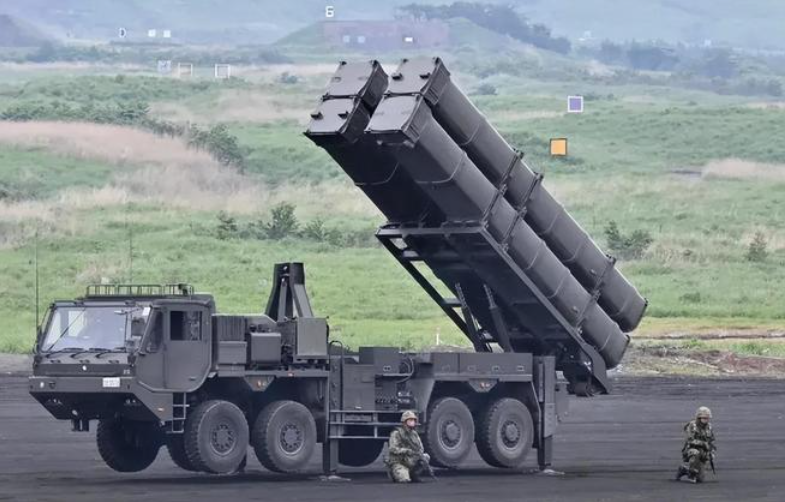
Japan Deploys 25-Type Missiles in 'Kirishima' Drill, Marking Shift in Defense Strategy
Japan's first large-scale deployment of the 25-Type land-based anti-ship missile during the US-Japan 'Kirishima' drill signals a strategic pivot away from 'strictly defensive' policies. Explore the implications of this military expansion.

American Airlines 2026 Forecast: Slower Growth Amid Fuel Costs
American Airlines predicts deeper losses and slower capacity growth in 2026 due to a jet fuel spike following the Iran war. Read the full analysis.

Former Japanese PM Fukuda Yasuo Dies at 90: Legacy of Diplomacy and China's Call for Responsibility
Former Japanese Prime Minister Fukuda Yasuo passed away on October 22, 2026, at the age of 90. His death prompts China to reflect on the importance of historical responsibility in Sino-Japanese relations.
Latest Articles
- Chinese Woman Escapes Kidnapping in Thailand After Jumping from Moving Vehicle
- Lula Wins Brazilian Presidential Election with 51.79% Vote
- Xi Jinping, King Philippe Celebrate 55 Years of China-Belgium Relations
- Luxury Cruise Suites: The $25,000 Night Revolution in High-End Travel
- Wonder's Bold Vision: Texas Expansion, Automation, and User-Built Restaurants Ahead of Potential IPO
- Pepsi Extends Taco Bell Partnership Despite KFC's Switch to Coke