Record High Child Casualties in Conflict: UN Warns of New Era of Crisis
UN reveals 24,174 children severely harmed in conflicts in 2025, marking a historical peak. Explore the devastating impact of explosive weapons and AI in warfare on child safety.
Source: thepaper.cn
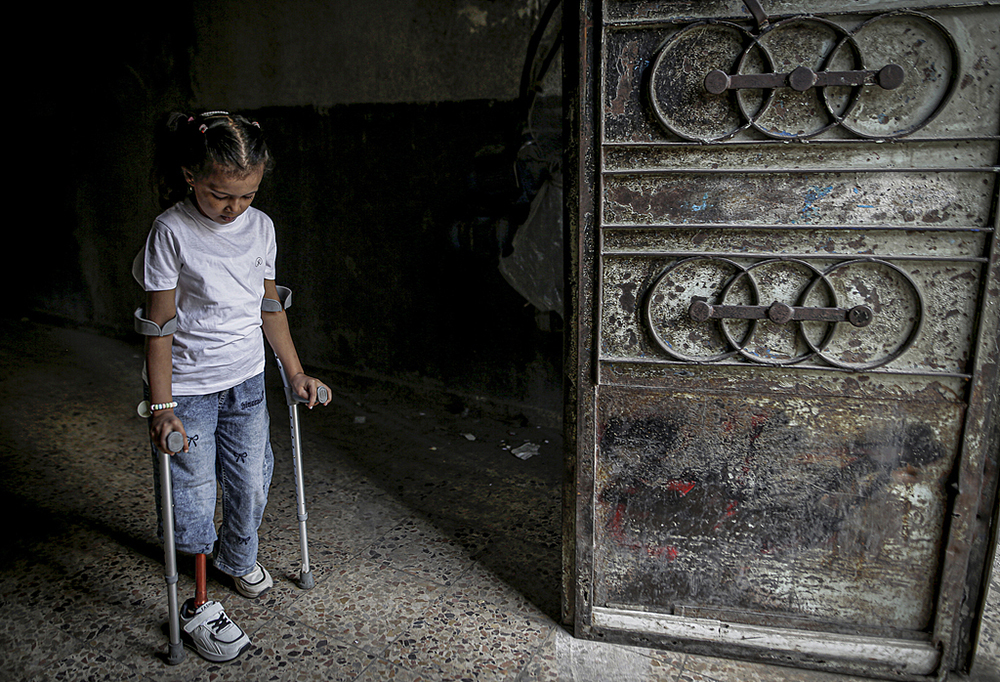
In the heart of Gaza, a six-year-old girl named Sila Abu Aklein navigates the world on crutches, her childhood irrevocably altered by a single airstrike. This heartbreaking image is not an isolated tragedy but a grim statistic in a year that has shattered historical records. The United Nations has issued a stark warning: in 2025, over 24,000 children were victims of severe violations during armed conflicts. This figure represents the highest number since the UN's Special Representative for Children and Armed Conflict was established 30 years ago. The data reveals a disturbing trend where the primary perpetrators are no longer just non-state armed groups, but also state military forces, challenging the very foundations of international humanitarian law.
Key Findings
- Historical Peak in Violations: The UN verified 38,558 separate incidents of severe violations against children in 2025, directly impacting 24,174 young lives. This marks the highest number ever recorded since the mandate's inception in 1995.
- State Forces as Major Perpetrators: For the first time in the mandate's history, verified violations were found to be carried out primarily by government military forces, rather than just non-state armed groups.
- Explosive Weapons Cause 70% of Casualties: Over 70% of the children killed or injured in these conflicts were victims of explosive weapons, which devastate civilian infrastructure like schools and hospitals.
- Rise of AI and Drone Warfare: The increasing use of artificial intelligence in targeting systems and armed drones presents a new, complex threat to child safety and protection efforts.
- Highest Incidents in Specific Regions: The most severe violations were concentrated in the State of Palestine, the Democratic Republic of the Congo, and Nigeria, signaling deepening humanitarian crises in these areas.
- Underreporting of Abuse: The UN emphasizes that the verified numbers are likely a significant underestimation, as many cases go unreported or are impossible to verify in active conflict zones.
- Cumulative Trauma: Children often suffer multiple forms of abuse simultaneously, leading to compounded physical and psychological wounds that persist long after the violence ends.
In-Depth Analysis
The surge in child casualties and violations in 2025 signals a dangerous shift in the nature of modern warfare. The revelation that government forces are now the leading perpetrators of these acts is particularly alarming, as it suggests a potential erosion of accountability mechanisms that were designed to protect civilians. This trend forces a critical re-evaluation of how international law is enforced and whether current sanctions and diplomatic pressures are sufficient to deter state actors from violating the rights of the most vulnerable.
Furthermore, the reliance on explosive weapons in populated areas has proven devastatingly effective at targeting civilians. The destruction of essential infrastructure—such as water systems, medical facilities, and schools—creates a long-term humanitarian crisis that disproportionately affects children, hindering their development and safety long after the fighting stops. The report’s warning regarding artificial intelligence in weaponry adds another layer of urgency. As autonomous systems and AI-driven targeting become more common, the margin for human error shrinks, potentially leading to more indiscriminate and fatal strikes against children.
Finally, the data underscores the failure of preventive measures. Despite years of advocacy and international agreements, the recruitment of children into armed groups and their direct participation in hostilities remain persistent and deadly issues. The international community’s response must move beyond mere condemnation and focus on robust, actionable strategies that prioritize the immediate protection of children and the reconstruction of their lives in war-torn regions.
Frequently Asked Questions
What constitutes a "severe violation" against a child?
These are grave acts that include killing or maiming children, recruiting or using them as child soldiers, sexual violence, and attacks on schools or hospitals. The UN verifies these incidents to hold perpetrators accountable.
Why are explosive weapons so dangerous for children?
Explosive weapons often cause indiscriminate damage. When used in populated areas, they directly kill and injure children but also destroy the critical infrastructure—like schools, hospitals, and water systems—necessary for their survival and development.
How is AI technology impacting child safety in conflicts?
AI is increasingly used in target identification and decision-making for strikes. This poses new risks, as it can lead to errors or a lack of human judgment, potentially increasing the likelihood of civilian casualties, including children, in complex conflict zones.
Source: https://www.thepaper.cn/newsDetail_forward_34340781
Related posts

AI Risk and Global Governance: The 20% Probability Dilemma
Navigating the existential risks of Artificial Intelligence requires international cooperation. Experts warn that without binding rules, the potential for catastrophic consequences is too high to ignore.

FTC Sues Dollar General: Overcharging Shoppers Billions
The FTC and 20 states accuse Dollar General of unlawful price hikes. Discover the details of the lawsuit, the impact on low-income consumers, and what this means for the retail landscape.

JetBlue 3Q 2026 Loss: Fuel Costs Rise 61% Despite Strong Travel Demand
JetBlue Airways reported a wider third-quarter loss driven by soaring fuel costs, but CEO Joanna Geraghty points to resilient demand and improving margins as key indicators of a successful turnaround.

Anthropic IPO: The $1.5 Trillion AI Giant's Historic Stock Market Debut
Anthropic files for an IPO valuing the company between $1.5T and $2T. Will the AI giant's record-breaking valuation withstand market volatility?

China to Send Giant Panda Ranran to Belgium for Diplomatic Relations
To celebrate 55 years of diplomatic ties, China is sending giant panda Ranran to Belgium. This move aims to deepen bilateral cooperation in wildlife conservation.
Japan Deploys 25-Type Missiles in 'Kirishima' Drill, Marking Shift in Defense Strategy
Japan's first large-scale deployment of the 25-Type land-based anti-ship missile during the US-Japan 'Kirishima' drill signals a strategic pivot away from 'strictly defensive' policies. Explore the implications of this military expansion.

American Airlines 2026 Forecast: Slower Growth Amid Fuel Costs
American Airlines predicts deeper losses and slower capacity growth in 2026 due to a jet fuel spike following the Iran war. Read the full analysis.

Former Japanese PM Fukuda Yasuo Dies at 90: Legacy of Diplomacy and China's Call for Responsibility
Former Japanese Prime Minister Fukuda Yasuo passed away on October 22, 2026, at the age of 90. His death prompts China to reflect on the importance of historical responsibility in Sino-Japanese relations.
Latest Articles
- Chinese Woman Escapes Kidnapping in Thailand After Jumping from Moving Vehicle
- Lula Wins Brazilian Presidential Election with 51.79% Vote
- Xi Jinping, King Philippe Celebrate 55 Years of China-Belgium Relations
- Luxury Cruise Suites: The $25,000 Night Revolution in High-End Travel
- Wonder's Bold Vision: Texas Expansion, Automation, and User-Built Restaurants Ahead of Potential IPO
- Pepsi Extends Taco Bell Partnership Despite KFC's Switch to Coke