JetBlue 3Q 2026 Loss: Fuel Costs Rise 61% Despite Strong Travel Demand
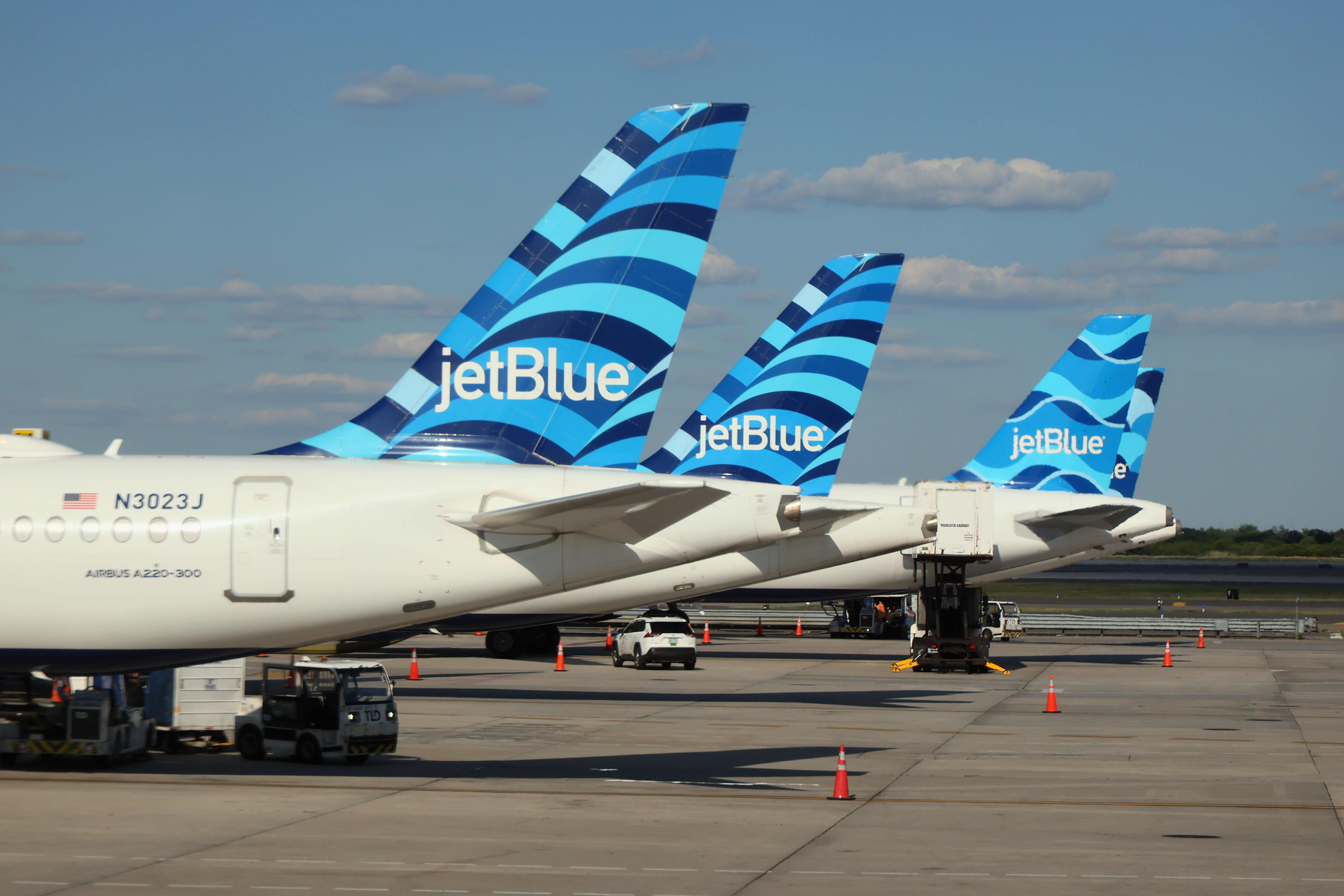
JetBlue Airways reported a wider third-quarter loss driven by soaring fuel costs, but CEO Joanna Geraghty points to resilient demand and improving margins as key indicators of a successful turnaround.
Source: CNBC
While JetBlue Airways officially posted a wider net loss for the third quarter of 2026, the financial report offers a more nuanced story than the headline numbers suggest. The New York-based carrier is currently navigating a complex landscape of rising operational expenses and intense competitive pressure, yet it remains cautiously optimistic about its long-term trajectory. The airline's ability to maintain revenue growth despite a significant increase in fuel prices demonstrates a surprising level of demand resilience in the current market environment.
Key Takeaways
- Fuel Costs Surge: JetBlue's fuel expenditure jumped by 61% to $868 million, significantly impacting the bottom line and squeezing profit margins across the industry.
- Revenue Outperformance: Despite the cost headwinds, the airline reported revenue well ahead of initial expectations, driven by strong travel demand and higher ticket prices.
- Positive Momentum: CEO Joanna Geraghty highlighted that the momentum from the third quarter has carried into the fourth quarter, with Fort Lauderdale delivering exceptional results even as capacity grows.
- Liquidity Strength: JetBlue ended the quarter with a robust $2.2 billion in liquidity and a substantial unencumbered asset base of $7 billion, providing a solid financial buffer.
- Turnaround Progress: The carrier is actively executing a multiyear turnaround plan, focusing on premium seat investments and capacity cuts to stabilize operations.
- Regulatory Hurdles: The failed acquisition of Spirit Airlines and the blocked partnership with American Airlines have forced JetBlue to adapt its strategy, shifting focus toward its partnership with United Airlines.
- Creditors Monitoring: Senior creditors are reportedly working with restructuring advisers, signaling that while the airline is on track, it remains under close scrutiny from the financial community.
In-Depth Analysis
The disparity between JetBlue's reported loss and its operational performance highlights a critical trend in the airline industry: the decoupling of revenue growth from net profitability. While JetBlue successfully recaptured a portion of the fuel cost increase through higher yields, the sheer magnitude of the 61% rise in fuel bills—reaching $868 million—suggests that the industry is still grappling with structural inflation. This scenario is particularly challenging for legacy carriers that operate older fleets, as fuel efficiency is often a differentiator between profitable and unprofitable operations.
Furthermore, the context of JetBlue's financials is deeply intertwined with its strategic missteps in the merger market. The aborted deal with Spirit Airlines and the subsequent regulatory block on its partnership with American Airlines have left the carrier in a precarious position in the Northeast market. These events have effectively forced JetBlue to compete on a more level playing field, which may have contributed to the pressure on margins. However, the pivot to a partnership with United Airlines represents a calculated move to create a more robust network, potentially offsetting the loss of the American Airlines alliance.
The airline's focus on Fort Lauderdale as a key operational hub is also a strategic bet on leisure travel. By investing in premium seats and domestic first-class sections, JetBlue is attempting to reposition itself not just as a budget carrier, but as a value-oriented premium airline. This strategy aims to capture higher-margin customers who are willing to pay for comfort without the premium price tag of legacy carriers like Delta or American. As the company enters the fourth quarter, the success of this strategy will be crucial in determining whether it can finally return to annual profitability, a milestone it last achieved in 2019.
Frequently Asked Questions
Q: Why did JetBlue report a loss despite strong revenue? A: The primary driver of the net loss was a massive 61% increase in fuel costs, which outpaced the airline's ability to fully offset the expense through higher ticket prices and operational efficiencies.
Q: What is JetBlue doing to improve its financial health? A: JetBlue is executing a multiyear turnaround plan that includes cutting capacity, boosting revenue through premium seat investments, and optimizing its network through partnerships like the one with United Airlines.
Q: How did the failed Spirit Airlines deal affect JetBlue? A: The blocked acquisition and subsequent regulatory issues with American Airlines forced JetBlue to alter its competitive strategy, leading it to focus more on its existing partnerships and operational adjustments rather than rapid expansion through mergers.
Source: https://www.cnbc.com/2026/10/26/jetblue-jblu-3q-2026-earnings.html
Related posts

FTC Sues Dollar General: Overcharging Shoppers Billions
The FTC and 20 states accuse Dollar General of unlawful price hikes. Discover the details of the lawsuit, the impact on low-income consumers, and what this means for the retail landscape.

Anthropic IPO: The $1.5 Trillion AI Giant's Historic Stock Market Debut
Anthropic files for an IPO valuing the company between $1.5T and $2T. Will the AI giant's record-breaking valuation withstand market volatility?

China to Send Giant Panda Ranran to Belgium for Diplomatic Relations
To celebrate 55 years of diplomatic ties, China is sending giant panda Ranran to Belgium. This move aims to deepen bilateral cooperation in wildlife conservation.

Japan Deploys 25-Type Missiles in 'Kirishima' Drill, Marking Shift in Defense Strategy
Japan's first large-scale deployment of the 25-Type land-based anti-ship missile during the US-Japan 'Kirishima' drill signals a strategic pivot away from 'strictly defensive' policies. Explore the implications of this military expansion.
American Airlines 2026 Forecast: Slower Growth Amid Fuel Costs
American Airlines predicts deeper losses and slower capacity growth in 2026 due to a jet fuel spike following the Iran war. Read the full analysis.

Former Japanese PM Fukuda Yasuo Dies at 90: Legacy of Diplomacy and China's Call for Responsibility
Former Japanese Prime Minister Fukuda Yasuo passed away on October 22, 2026, at the age of 90. His death prompts China to reflect on the importance of historical responsibility in Sino-Japanese relations.

Chinese Woman Escapes Kidnapping in Thailand After Jumping from Moving Vehicle
A 24-year-old Chinese tourist survives abduction in Thailand, jumping from a moving car to escape captors targeting tourists with romance scams.

Lula Wins Brazilian Presidential Election with 51.79% Vote
Luiz Inácio Lula da Silva secures narrow victory in Brazil's presidential runoff, securing his fourth term as president with 51.79% of the vote.
Latest Articles
- Xi Jinping, King Philippe Celebrate 55 Years of China-Belgium Relations
- Luxury Cruise Suites: The $25,000 Night Revolution in High-End Travel
- Wonder's Bold Vision: Texas Expansion, Automation, and User-Built Restaurants Ahead of Potential IPO
- Pepsi Extends Taco Bell Partnership Despite KFC's Switch to Coke
- Brazil Presidential Election Runoff: Bolsonaro vs. Lula
- China's Middle East Envoy Holds Key Talks with Saudi Diplomatic Advisor