Japan Deploys 25-Type Missiles in 'Kirishima' Drill, Marking Shift in Defense Strategy
Japan's first large-scale deployment of the 25-Type land-based anti-ship missile during the US-Japan 'Kirishima' drill signals a strategic pivot away from 'strictly defensive' policies. Explore the implications of this military expansion.
Source: thepaper.cn
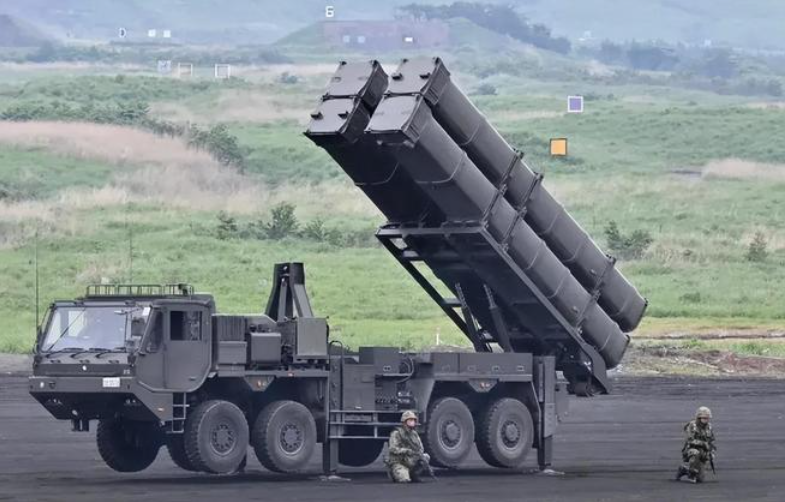
For decades, Japan’s defense posture has been anchored by the principle of 'strictly defensive' policy, a stance designed to maintain regional stability and adhere to the constraints of its pacifist constitution. However, recent developments suggest a fundamental shift in this long-standing doctrine. During the massive 'Kirishima 27' joint military exercise, the Japanese Self-Defense Forces (JSDF) made a striking move by deploying the advanced 25-Type land-based anti-ship missile. This marks the first time this specific weapon system has been utilized in a large-scale drill, signaling a potential turning point in regional security dynamics and raising questions about the future of East Asian geopolitics.
Key Takeaways
- Historic First: The 25-Type missile was deployed for the first time in a large-scale joint exercise, moving beyond mere testing to active operational readiness.
- Strategic Range: The missile boasts a range of approximately 1,000 kilometers, enabling it to strike targets deep within the region, far beyond traditional defensive perimeters.
- Stealth Technology: The weapon features a stealth design and composite guidance systems, making it a highly sophisticated threat to surface and ground targets.
- Joint Exercise Context: The deployment occurred during 'Kirishima 27,' involving 12,000 U.S. and 45,000 Japanese personnel, highlighting the deep integration of their military capabilities.
- Policy Shift: The move is seen as a direct challenge to the 'strictly defensive' policy, as Japan accelerates the deployment of offensive capabilities.
- Regional Tensions: Neighboring nations, particularly China, have condemned the deployment as an escalation that violates the spirit of defense and threatens regional peace.
- Future Deployment: The Japanese Ministry of Defense plans to distribute these systems nationwide, aiming to demonstrate their operational utility across various terrains.
In-Depth Analysis
The deployment of the 25-Type missile during the 'Kirishima' drill is more than just a technical demonstration; it is a geopolitical signal. By integrating this long-range, stealth-capable weapon into a live exercise involving the United States, Japan is effectively expanding the scope of its defense umbrella. The missile’s range of 1,000 kilometers is particularly significant because it allows JSDF forces to project power deep into the East China Sea and the Western Pacific, areas traditionally considered the domain of the U.S. Navy. This capability challenges the status quo, where Japan's defensive role was largely reactive and limited to its immediate airspace and waters.
Furthermore, the move reflects a broader trend of military modernization in the region. The integration of stealth technology and composite guidance systems into the 25-Type missile places Japan at the forefront of land-based missile technology. However, this technological advancement comes at a cost. The Japanese government’s decision to accelerate the deployment of these systems is viewed by critics, particularly in China, as a departure from the 'strictly defensive' policy. The use of the term 'offensive weapons' by the Chinese Foreign Ministry underscores the sensitivity of this issue. As Japan continues to bolster its military capabilities, the risk of miscalculation and escalation in the region increases, necessitating a delicate balance between security enhancement and diplomatic restraint.
Frequently Asked Questions
What is the 25-Type land-based anti-ship missile?
The 25-Type missile is a cutting-edge weapon system developed by Japan. It features a stealth design to evade detection and a composite guidance system for high precision. It can be launched from mobile launch vehicles and is capable of striking both surface ships and ground targets, with an operational range of about 1,000 kilometers.
Why is the 'Kirishima' drill significant?
The 'Kirishima' drill is a massive annual joint exercise involving the U.S. and Japanese military forces. The inclusion of the 25-Type missile in this exercise is significant because it represents the first time the missile has been deployed in a large-scale, real-world operational scenario, demonstrating its readiness for actual combat use.
How does this affect Japan's defense policy?
The deployment of long-range missiles like the 25-Type challenges the traditional interpretation of Japan's 'strictly defensive' policy. By acquiring and deploying weapons capable of striking targets far from its borders, Japan is signaling a shift towards a more proactive defense posture, which has drawn criticism and concern from neighboring countries.
Source: https://www.thepaper.cn/newsDetail_forward_34333621
Related posts
American Airlines 2026 Forecast: Slower Growth Amid Fuel Costs
American Airlines predicts deeper losses and slower capacity growth in 2026 due to a jet fuel spike following the Iran war. Read the full analysis.

Former Japanese PM Fukuda Yasuo Dies at 90: Legacy of Diplomacy and China's Call for Responsibility
Former Japanese Prime Minister Fukuda Yasuo passed away on October 22, 2026, at the age of 90. His death prompts China to reflect on the importance of historical responsibility in Sino-Japanese relations.

Chinese Woman Escapes Kidnapping in Thailand After Jumping from Moving Vehicle
A 24-year-old Chinese tourist survives abduction in Thailand, jumping from a moving car to escape captors targeting tourists with romance scams.

China to Send Giant Panda Ranran to Belgium for Diplomatic Relations
To celebrate 55 years of diplomatic ties, China is sending giant panda Ranran to Belgium. This move aims to deepen bilateral cooperation in wildlife conservation.

Lula Wins Brazilian Presidential Election with 51.79% Vote
Luiz Inácio Lula da Silva secures narrow victory in Brazil's presidential runoff, securing his fourth term as president with 51.79% of the vote.

Xi Jinping, King Philippe Celebrate 55 Years of China-Belgium Relations
President Xi Jinping and King Philippe exchanged congratulatory messages, highlighting 55 years of strategic partnership and mutual respect.
Luxury Cruise Suites: The $25,000 Night Revolution in High-End Travel
Explore the booming luxury cruise market with suites costing up to $25,000 a night. Learn how elite travel is reshaping the industry and why space and privacy are the new currency.

Wonder's Bold Vision: Texas Expansion, Automation, and User-Built Restaurants Ahead of Potential IPO
Marc Lore's food tech giant Wonder plans aggressive Texas expansion, automation push, and user restaurant platform as it considers going public with $9B valuation.
Latest Articles
- Pepsi Extends Taco Bell Partnership Despite KFC's Switch to Coke
- Brazil Presidential Election Runoff: Bolsonaro vs. Lula
- China's Middle East Envoy Holds Key Talks with Saudi Diplomatic Advisor
- Israel Election 2026: Netanyahu Faces Historic Protests and Tight Polls
- US Travel Alert: Middle East Security Risks Rise Amid Iran and Houthi Threats
- AI Safety Risks: Global Experts Share Solutions at 2026 Governance Forum