Trump Backs Irish Unification: Why His Northern Ireland Remark Rattles London
Trump again says he supports a united Ireland, drawing sharp pushback from UK leaders. Here's what he said, why it matters, and what may come next.
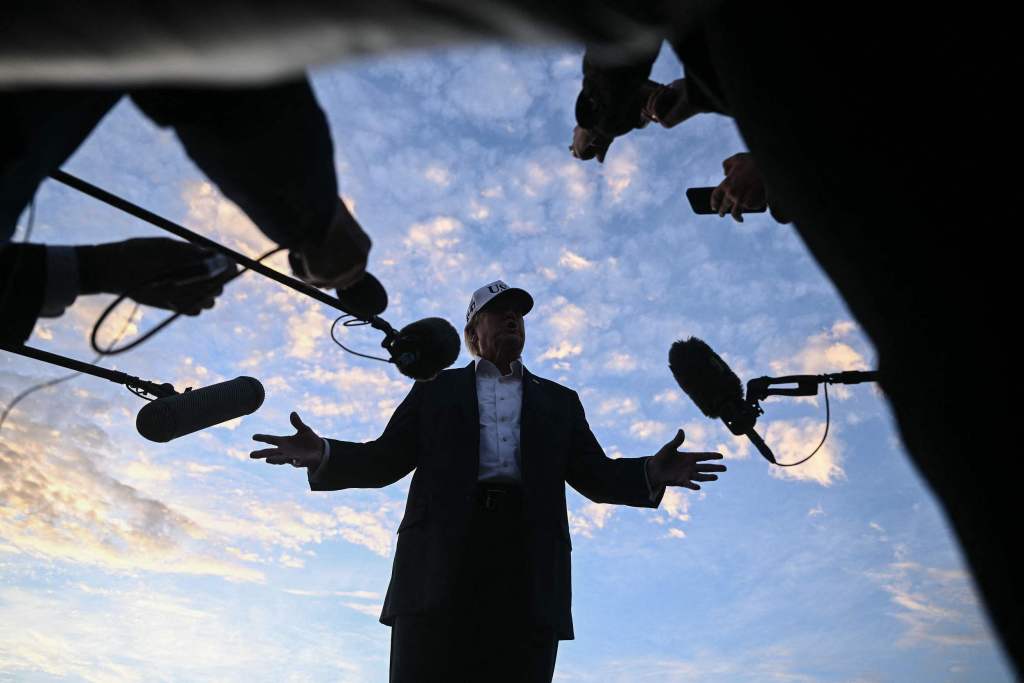
Donald Trump has once again waded into one of Europe's most sensitive political disputes, telling reporters in Ireland that merging Northern Ireland with the Republic of Ireland seems "the most natural thing." The remark, delivered during a two-day visit, drew immediate and unusually blunt pushback from senior British politicians — and revived questions about how casually the US president is willing to redraw other countries' borders.
Key Facts
- Trump repeated his position twice. Speaking to media in Ireland, he said there is "Northern Ireland, and there is Ireland," adding that combining them "seems the most natural thing." He had made a similar comment the day before, which is what triggered the political backlash.
- He sidestepped Scotland. When asked about Scottish independence, Trump declined to engage, saying the issue would be "left for later." That selective silence is telling: he was willing to comment on one part of the UK's constitutional map but not another.
- UK Conservative leader Kemi Badenoch hit back hard. She accused Trump of "shooting from the hip as always," comparing the remark to his past talk of buying Greenland and making Canada the 51st US state. She stated flatly that "Northern Ireland is part of the United Kingdom."
- Reform UK leader Nigel Farage also objected. Farage, long seen as one of the most Trump-friendly figures in British politics, said he disagreed with the president and described Northern Ireland as a proud, indivisible part of the UK.
- The timing amplifies the friction. The comments landed during an official visit to Ireland, a country with a direct constitutional stake in Northern Ireland's status — making the remark feel less like an offhand aside and more like a diplomatic grenade.
- The backdrop is the Good Friday Agreement. Northern Ireland's position inside the UK rests on the 1998 peace deal, which also created cross-border institutions and gave people in Northern Ireland the right to identify as British, Irish, or both.
- Trump has a history of territorial commentary. Greenland, Canada, and now Northern Ireland form a pattern: the president treats sovereignty questions as open topics of personal opinion rather than settled international law.
Deeper Analysis
The most striking thing about this episode is not that Trump holds an opinion — many people around the world do — but that he voiced it while standing on Irish soil, as a guest, about the internal affairs of a close ally. In diplomatic terms, that is close to a worst-case scenario for London: it forces British leaders to publicly correct the US president, which they would almost certainly prefer to avoid.
What makes the reaction notable is its breadth. Badenoch and Farage sit on opposite ends of British politics and disagree on almost everything, yet both rushed to defend Northern Ireland's status. That unity signals how sensitive the issue remains, more than two decades after the Good Friday Agreement. Northern Ireland's constitutional position is not a debating point in UK politics; it is the fragile settlement that ended decades of violence.
There is also a deeper strategic irony. Trump's comment was framed as a gesture of goodwill toward Ireland, but it lands awkwardly in a region where identity is layered and contested. People in Northern Ireland can hold British and Irish citizenship simultaneously, and the peace framework was deliberately built to avoid forcing a single answer. A blunt "merge them" formulation flattens that complexity, which is precisely why it provokes such strong reactions.
Looking ahead, the practical impact is likely limited. Trump's remarks do not change any law, treaty, or border. But they do two things: they inject uncertainty into US-UK relations at a moment when both governments need predictability, and they hand ammunition to critics who argue that Trump's foreign policy is driven by impulse rather than strategy. Expect British officials to seek quiet reassurances, and expect the episode to be remembered as another example of the president treating allies' borders as conversational material.
For global audiences, the takeaway is broader than Ireland. When a US president casually endorses changing a friendly nation's territory, markets and diplomats read it as a signal about how far Washington might go elsewhere — from Greenland to Canada to Taiwan. That is why a few sentences in Ireland resonated far beyond Dublin, Belfast, and London.
FAQ
Did Trump actually propose a policy change? No. He expressed a personal view that Irish unification seems natural. Nothing in US law or policy changed, and the US has no formal role in deciding Northern Ireland's constitutional status.
Why is Northern Ireland's status so sensitive? It is the core of the 1998 Good Friday Agreement, which ended decades of sectarian conflict. The settlement balances British and Irish identities, so any suggestion of forced change touches deep historical wounds.
How unusual is it for UK politicians to criticize a US president so directly? It is uncommon, especially from figures like Farage who are usually aligned with Trump. The fact that critics across the spectrum responded within hours shows how seriously London treats the issue.
Source: https://www.thepaper.cn/newsDetail_forward_34063880
Related posts
BRICS Summit 2026: Xi Jinping in India and the Global South Push
Xi Jinping's 24-hour New Delhi trip, the BRICS 'four pioneers' agenda, AI cooperation pledges, and a third China-hosted summit set for 2027.
Okinawa Governor Election: Pro-Base Candidate Wins, Shifting 12-Year Stance
Okinawa's governor election hands victory to a candidate backed by Japan's ruling bloc, signaling a pro-base shift after 12 years of opposition to the Henoko relocation plan.

Lingyuan, China's Lily Capital: How One County Built a $140M Flower Economy
Lingyuan, a county of 513,000 people in western Liaoning, supplies 3 of every 10 Chinese cut lilies. Inside the land, labor and risk math behind its 1 billion yuan flower economy.