DR Congo Ebola Outbreak Tops 7,000 Cases as New Province Reports Death
DR Congo's Ebola outbreak has passed 7,000 confirmed cases and 3,398 deaths, with South Ubangi province recording its first fatal case in a traveler.
Source: thepaper.cn
The Democratic Republic of the Congo's latest Ebola outbreak has crossed a grim threshold: more than 7,000 confirmed cases, making it the second-largest outbreak ever recorded. What makes the newest data especially troubling is geography — the virus has now reached South Ubangi, a northwestern province that borders none of the six provinces where cases were previously reported.
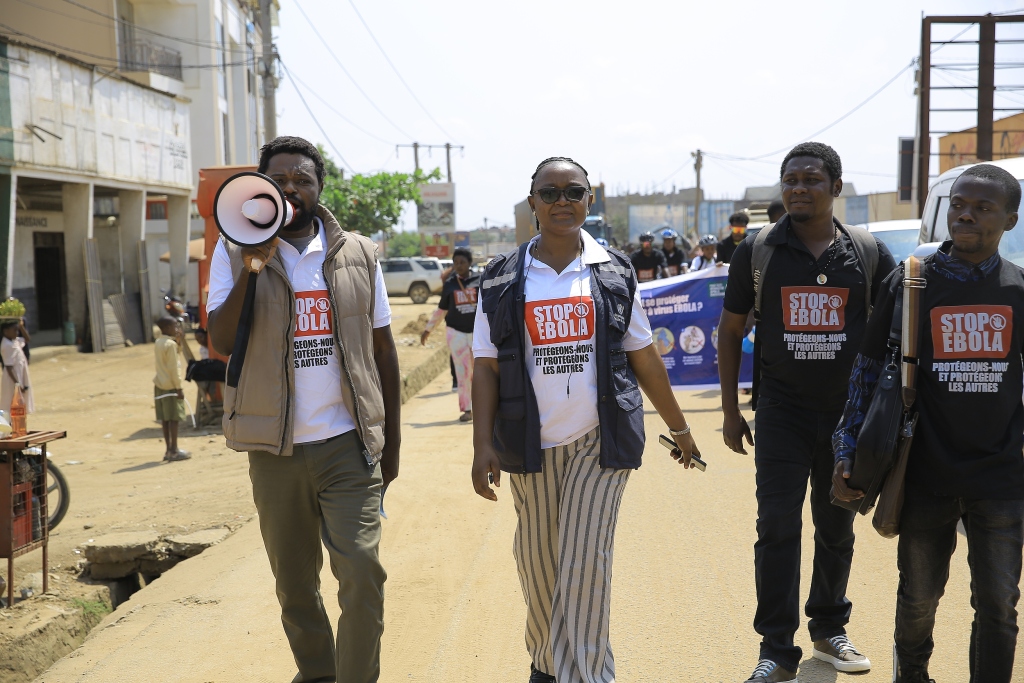
Key Facts
- Case count passes 7,000. According to the DRC Ministry of Health's report released on September 11, the cumulative total stands at 7,022 confirmed cases, including 3,398 deaths. Roughly 1,671 patients have recovered, a reminder that early treatment still saves lives even in a large-scale outbreak.
- Seven provinces now affected. The outbreak has spread across seven of the country's provinces, a sign that containment efforts are struggling to keep pace with transmission across a vast and logistically difficult territory.
- First fatal case in South Ubangi. A 23-year-old man became the first confirmed patient — and the first death — in South Ubangi province. He had a documented travel history linked to outbreak-affected areas, and the province shares no border with the six provinces that had previously reported cases.
- A long, multi-country journey. Former health minister M'bungani said on social media that the patient traveled over roughly three weeks from South Kivu to Rwanda, Uganda, and Ituri province before passing through Tshopo and Mongala to reach South Ubangi. That itinerary crossed multiple regions and involved water transport, leaving an unusually large number of potential contacts.
- Outbreak declared in May. The DRC declared the outbreak on May 15, and by August 12 it had already become the second-largest Ebola outbreak on record, surpassed only by the 2014–2016 West Africa epidemic.
- Contact tracing is the bottleneck. Because the index patient moved through crowded ports, markets, and river routes, health teams face the difficult task of identifying and monitoring contacts scattered across several provinces and neighboring countries.
- Cross-border risk is rising. The patient's route through Rwanda and Uganda underscores how porous regional borders complicate containment, and why the World Health Organization and neighboring health ministries are watching the situation closely.
Deep Analysis
The trajectory of this outbreak reveals a structural problem that has defined Congo's Ebola experience for a decade: the virus moves faster than the systems built to stop it. South Ubangi's first case is not simply a new data point — it is evidence that transmission chains are traveling along the same highways, rivers, and trade corridors that connect communities across Central and East Africa. When a single patient can cross four provinces and two countries in three weeks, the window for containment closes long before symptoms are recognized.
There is also a deeper epidemiological concern. South Ubangi's distance from the outbreak's eastern epicenter suggests either undetected transmission in intermediate provinces or gaps in surveillance along transport routes. Both possibilities point to the same weakness: weak early-warning capacity in remote health zones. The 1,671 recoveries show that treatment centers and therapeutics are working where patients can reach them, but access remains uneven.
Looking ahead, the decisive factors will be the speed of contact tracing, the security situation in eastern provinces where armed groups limit access, and whether regional coordination with Rwanda and Uganda can prevent the outbreak from becoming a genuinely multinational crisis. Vaccine stockpiles and ring vaccination strategies remain the strongest tools available, but they depend on knowing where the virus is — and right now, that map is expanding faster than health teams can redraw it.
Frequently Asked Questions
How does this outbreak compare with past Ebola epidemics? With 7,022 confirmed cases, it is already the second-largest Ebola outbreak ever recorded, behind only the 2014–2016 West Africa outbreak that infected more than 28,000 people. It has surpassed the 2018–2020 eastern DRC outbreak in confirmed case count, though that outbreak's death toll was higher.
Why is the South Ubangi case significant? It is the first confirmed case in a province that does not border any of the six provinces with prior cases. That means the virus has broken out of its known geographic cluster, likely carried by a traveler, which makes containment far more complex and raises the risk of wider regional spread.
Is there a risk of international spread? Yes. The patient's route through Rwanda and Uganda, combined with river and road travel, means potential contacts may live outside the DRC. Regional health authorities are monitoring the situation, and cross-border cooperation will be critical in the coming weeks.
Source: https://www.thepaper.cn/newsDetail_forward_34057609
Related posts

Former Japanese PM Fukuda Yasuo Dies at 90: Legacy of Diplomacy and China's Call for Responsibility
Former Japanese Prime Minister Fukuda Yasuo passed away on October 22, 2026, at the age of 90. His death prompts China to reflect on the importance of historical responsibility in Sino-Japanese relations.

Chinese Woman Escapes Kidnapping in Thailand After Jumping from Moving Vehicle
A 24-year-old Chinese tourist survives abduction in Thailand, jumping from a moving car to escape captors targeting tourists with romance scams.

China to Send Giant Panda Ranran to Belgium for Diplomatic Relations
To celebrate 55 years of diplomatic ties, China is sending giant panda Ranran to Belgium. This move aims to deepen bilateral cooperation in wildlife conservation.

Lula Wins Brazilian Presidential Election with 51.79% Vote
Luiz Inácio Lula da Silva secures narrow victory in Brazil's presidential runoff, securing his fourth term as president with 51.79% of the vote.

Xi Jinping, King Philippe Celebrate 55 Years of China-Belgium Relations
President Xi Jinping and King Philippe exchanged congratulatory messages, highlighting 55 years of strategic partnership and mutual respect.

Luxury Cruise Suites: The $25,000 Night Revolution in High-End Travel
Explore the booming luxury cruise market with suites costing up to $25,000 a night. Learn how elite travel is reshaping the industry and why space and privacy are the new currency.

Wonder's Bold Vision: Texas Expansion, Automation, and User-Built Restaurants Ahead of Potential IPO
Marc Lore's food tech giant Wonder plans aggressive Texas expansion, automation push, and user restaurant platform as it considers going public with $9B valuation.
Pepsi Extends Taco Bell Partnership Despite KFC's Switch to Coke
PepsiCo renews beverage deal with Taco Bell through 2036, days after sister chain KFC switches to Coca-Cola in strategic industry shift.
Latest Articles
- Brazil Presidential Election Runoff: Bolsonaro vs. Lula
- China's Middle East Envoy Holds Key Talks with Saudi Diplomatic Advisor
- Israel Election 2026: Netanyahu Faces Historic Protests and Tight Polls
- US Travel Alert: Middle East Security Risks Rise Amid Iran and Houthi Threats
- AI Safety Risks: Global Experts Share Solutions at 2026 Governance Forum
- UN Reform: China's 55-Year Commitment to Multilateralism