Taiwan, Italy, and the One-China Principle: Inside Beijing's Latest Protest
China's Foreign Ministry rebukes Taiwan's Hsiao Bi-khim over her Italy visit, reaffirming the one-China principle as the political bedrock of China-Italy and China-EU ties.
Source: thepaper.cn
When a Taiwanese politician lands in Europe, Beijing rarely stays quiet. On September 11, 2026, China's Foreign Ministry used its daily press briefing to deliver a pointed rebuke over Taiwan's Hsiao Bi-khim visiting Italy, framing the trip as a publicity stunt dressed up in democratic rhetoric. The episode matters far beyond one itinerary: it tests how firmly European capitals hold the line on the one-China principle at a moment when cross-strait diplomacy and China-EU relations are already under strain.
Key Developments
- Beijing's formal protest went to two capitals at once. Foreign Ministry spokesperson Mao Ning said China had lodged solemn representations with both Italian and European Union authorities over the visit by a politician she described as advocating Taiwan independence. The dual démarche signals that Beijing treats such trips as a European-level issue, not merely a bilateral irritant with Rome.
- The official language was unusually blunt. Mao accused the Democratic Progressive Party authorities and individual politicians of "scheming to grab attention" and of using the banner of democracy and freedom to "rely on foreign forces to seek independence," calling the behavior shameful and ultimately futile. The phrasing reflects Beijing's long-standing view that external engagement by Taiwanese officials is a tool of separatist messaging rather than routine diplomacy.
- The one-China principle was restated as a treaty-level foundation. Mao reiterated that there is only one China, that Taiwan is an inalienable part of Chinese territory, and that Beijing opposes any form of official exchange between countries that have diplomatic ties with China and the Taiwan region. Crucially, she described the one-China principle as the political foundation of both China-Italy and China-EU relations.
- A second question on the same stage. A Reuters correspondent also asked whether Chinese President Xi Jinping and Russian President Vladimir Putin might hold a meeting. Mao declined to confirm, saying information about Xi's attendance at the BRICS summit would be released in due course, and urged reporters to keep watching.
- The timing amplifies the signal. The briefing came as European governments weigh their own China strategies, making any high-profile Taiwan visit a test case for how far EU members are willing to go without triggering retaliation.
Deeper Analysis
The real story here is not a single trip but the widening gap between how Beijing and European capitals interpret "unofficial" contact with Taiwan. From Beijing's perspective, the distinction between official and people-to-people exchanges collapses when a sitting senior politician travels abroad to attend a conference: the venue may be non-governmental, but the participant's status carries political weight. That is why the response escalates quickly from comment to formal representations, and why Mao tied the issue directly to the political foundation of China-Italy and China-EU relations rather than treating it as an isolated complaint.
For Rome, the dilemma is structural. Italy needs Chinese investment, trade, and cooperation on global issues, yet it also operates inside an EU framework where some member states have grown more assertive about Taiwan. Beijing's framing effectively warns that any perceived slippage on the one-China principle could ripple into the broader EU relationship, not just bilateral ties. That is a deliberate linkage strategy: make the cost of a single visit feel multilateral.
Looking ahead, expect three patterns. First, Beijing will likely keep naming and shaming individual Taiwanese politicians rather than the island as a whole, preserving room for engagement with other actors. Second, European hosts of Taiwan-linked events may face quieter, behind-the-scenes pressure, including delayed meetings or cooled cooperation in unrelated sectors. Third, the rhetorical emphasis on "futile" gestures suggests Beijing believes time and economic gravity work in its favor, so it will prioritize deterrence over escalation. The open question is whether European capitals treat these protests as routine diplomatic noise or as a genuine constraint on their Taiwan policy. How they answer will shape China-EU relations well beyond this one visit.
Frequently Asked Questions
Why did China protest to both Italy and the European Union? Beijing views the one-China principle as the political foundation of its ties with individual European states and with the EU as a whole. By raising the issue with both, it signals that it considers Taiwan-related engagement a systemic problem rather than a one-off bilateral dispute.
What does "official exchanges" mean in practice? It refers to any contact that carries state representation, including visits by senior officials, participation in government-hosted events, and meetings that imply recognition of Taiwan's governing authorities. Beijing opposes these regardless of whether the setting is formally governmental.
Did the briefing address anything else? Yes. A reporter also asked about a possible meeting between Xi Jinping and Vladimir Putin. The spokesperson did not confirm it, saying details about Xi's BRICS summit attendance would be announced at an appropriate time.
Source: https://www.thepaper.cn/newsDetail_forward_34029269
Related posts
Former Japanese PM Fukuda Yasuo Dies at 90: Legacy of Diplomacy and China's Call for Responsibility
Former Japanese Prime Minister Fukuda Yasuo passed away on October 22, 2026, at the age of 90. His death prompts China to reflect on the importance of historical responsibility in Sino-Japanese relations.

Chinese Woman Escapes Kidnapping in Thailand After Jumping from Moving Vehicle
A 24-year-old Chinese tourist survives abduction in Thailand, jumping from a moving car to escape captors targeting tourists with romance scams.
China to Send Giant Panda Ranran to Belgium for Diplomatic Relations
To celebrate 55 years of diplomatic ties, China is sending giant panda Ranran to Belgium. This move aims to deepen bilateral cooperation in wildlife conservation.
Lula Wins Brazilian Presidential Election with 51.79% Vote
Luiz Inácio Lula da Silva secures narrow victory in Brazil's presidential runoff, securing his fourth term as president with 51.79% of the vote.

Xi Jinping, King Philippe Celebrate 55 Years of China-Belgium Relations
President Xi Jinping and King Philippe exchanged congratulatory messages, highlighting 55 years of strategic partnership and mutual respect.
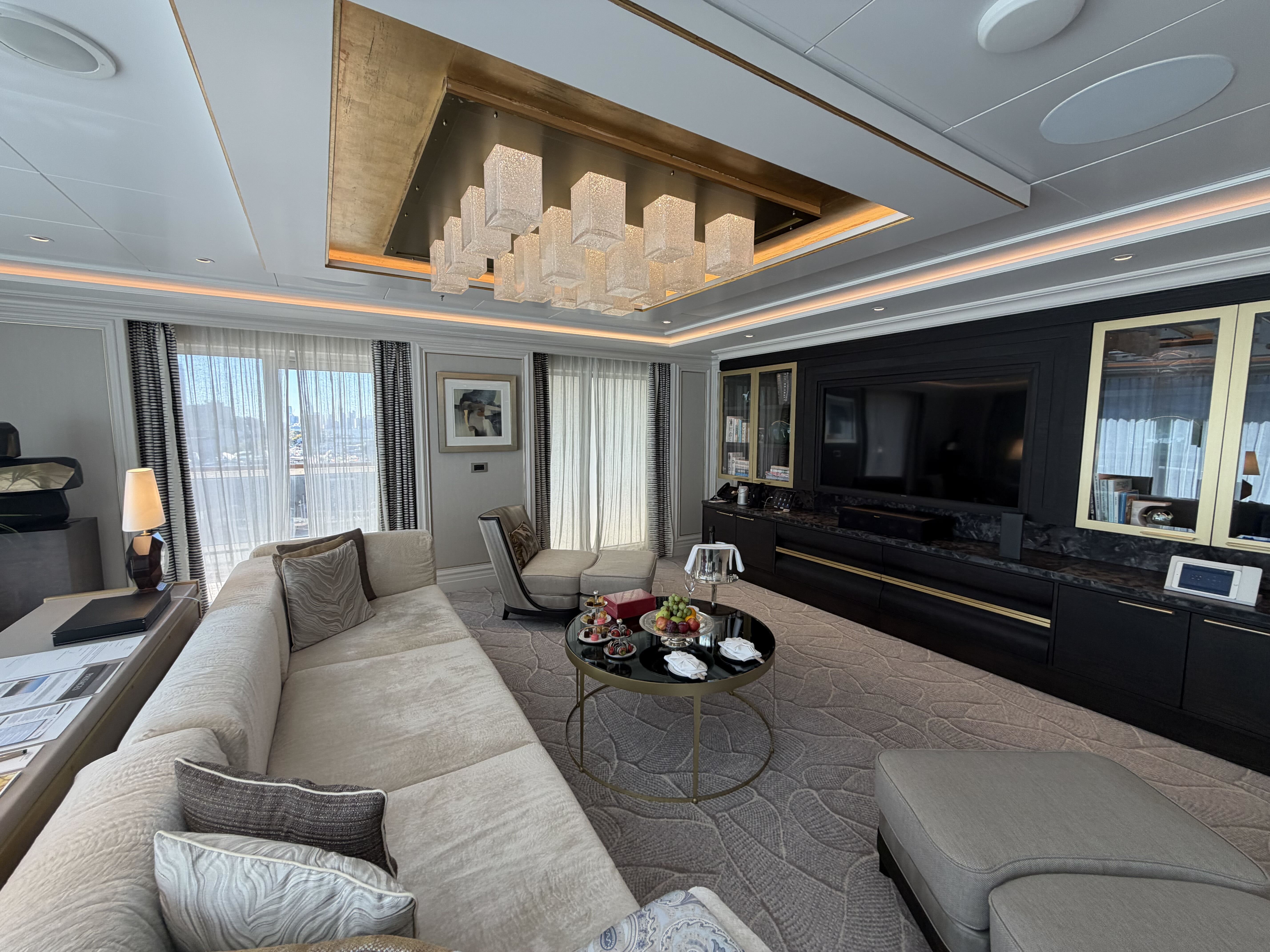
Luxury Cruise Suites: The $25,000 Night Revolution in High-End Travel
Explore the booming luxury cruise market with suites costing up to $25,000 a night. Learn how elite travel is reshaping the industry and why space and privacy are the new currency.
Wonder's Bold Vision: Texas Expansion, Automation, and User-Built Restaurants Ahead of Potential IPO
Marc Lore's food tech giant Wonder plans aggressive Texas expansion, automation push, and user restaurant platform as it considers going public with $9B valuation.
Pepsi Extends Taco Bell Partnership Despite KFC's Switch to Coke
PepsiCo renews beverage deal with Taco Bell through 2036, days after sister chain KFC switches to Coca-Cola in strategic industry shift.
Latest Articles
- Brazil Presidential Election Runoff: Bolsonaro vs. Lula
- China's Middle East Envoy Holds Key Talks with Saudi Diplomatic Advisor
- Israel Election 2026: Netanyahu Faces Historic Protests and Tight Polls
- US Travel Alert: Middle East Security Risks Rise Amid Iran and Houthi Threats
- AI Safety Risks: Global Experts Share Solutions at 2026 Governance Forum
- UN Reform: China's 55-Year Commitment to Multilateralism