Greece-Israel $3B Defense Deal: Reshaping Eastern Mediterranean Security
Greece signs its largest-ever arms deal with Israel, a €3 billion multi-layer air defense system, amid regional tensions and Turkish military growth. Analysis inside.
Source: thepaper.cn
In a significant geopolitical move, Greece and Israel have signed their largest-ever defense agreement, a €3 billion ($3.5 billion) deal to build a comprehensive, multi-layered air and missile defense system for Greece. The agreement, signed in Tel Aviv on August 31, comes against a backdrop of heightened regional tensions, including the ongoing Israel-Iran conflict and Turkey's expanding military capabilities. This landmark deal not only underscores Greece's commitment to modernizing its armed forces but also signals a deeper strategic alignment between Athens and Jerusalem, with implications for the broader Eastern Mediterranean security landscape.
Key Details of the Deal
-
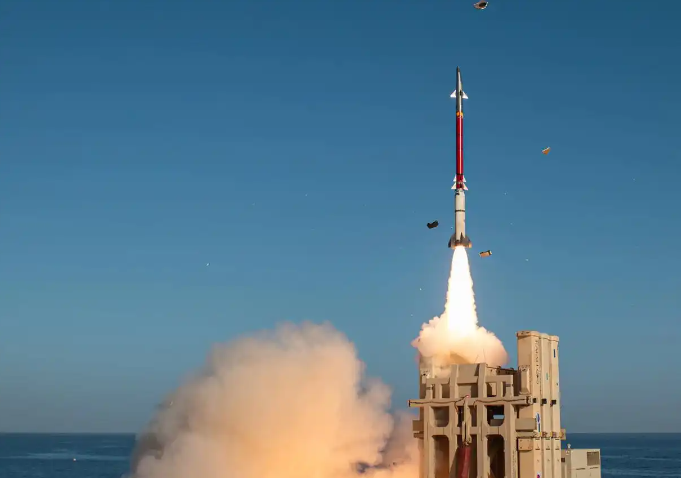
The 'Achilles' Shield' Project: The centerpiece of the deal is the "Achilles' Shield," a national air and missile defense system that will integrate multiple layers of protection. This project is a critical component of Greece's military reform agenda, as stated by Greek Defense Minister Nikos Dendias, who called it an "inevitable response" to contemporary geopolitical and technological challenges.
-
Components of the System: The package includes Israel's David's Sling, Barak, and SPYDER missile defense systems. David's Sling is designed to intercept tactical ballistic missiles, cruise missiles, and medium-to-long-range rockets through direct kinetic impact. The Barak system targets a wide array of threats, including cruise and ballistic missiles, as well as fighter jets, helicopters, and drones. SPYDER focuses on low-altitude threats like aircraft, helicopters, and guided munitions.
-
Largest Bilateral Arms Deal: This agreement marks the highest-value defense procurement between Israel and Greece to date, reflecting the growing defense cooperation between the two nations. The deal was finalized in Tel Aviv, with Israeli officials highlighting its historic nature.
-
Strategic Rationale: Analysts suggest that Greece's move is driven by security concerns amid escalating regional instability. The presence of U.S. military bases in Greece makes them potential targets in any future conflict involving Iran, according to security analyst Gustav Puchsteiner, a former Austrian defense attaché. Additionally, Greece's long-standing maritime disputes with Turkey in the Aegean Sea, coupled with Turkey's increasing military strength, are key drivers behind Athens' urgent need to bolster its defenses.
-
Aegean Sea Disputes: The Greece-Turkey rivalry over Aegean Sea boundaries and resource rights has persisted for decades. Recently, Turkey established two marine parks in contested waters, a move Greece condemned as "illegal." Greek Prime Minister Kyriakos Mitsotakis reiterated Greece's readiness to defend its territorial claims, adding urgency to the arms deal.
Turkey's Own Defense Buildup: Turkey is not standing still. In June, Turkish defense firm Aselsan signed a $900 million contract with the government to develop the "Steel Dome" air defense system, similar to Israel's multi-layered approach. This system will integrate detection, tracking, and interception capabilities against drones, cruise missiles, and ballistic missiles, signaling an arms race in the region.
In-Depth Analysis
This deal is more than just a military procurement; it is a strategic statement. Greece is diversifying its defense partnerships beyond traditional NATO allies, turning to Israel, a regional powerhouse in defense technology. This move reflects a broader trend in the Eastern Mediterranean, where nations are forging new alliances in response to shifting power dynamics. The inclusion of the David's Sling system, which has been battle-tested in recent conflicts, provides Greece with a credible deterrent against a range of threats, from state actors to non-state groups.
The timing is crucial. With the Israel-Iran conflict simmering and Turkey's assertive posture, Greece is seeking to close its capability gaps. The "Achilles' Shield" project will not only protect Greek airspace but also enhance its strategic autonomy. However, this deal could further strain Greece-Turkey relations, potentially escalating tensions in the Aegean. Turkey may view this as a provocation, leading to a new arms race in the region.
Looking ahead, this agreement could pave the way for deeper defense-industrial cooperation between Greece and Israel, including technology transfers and joint development. It also sends a signal to other European nations about the value of partnering with Israel on advanced defense systems. As the security environment in the Eastern Mediterranean becomes increasingly complex, such partnerships will likely become more common, reshaping the region's strategic landscape.
Frequently Asked Questions
Why is this deal significant for Greece? This is Greece's largest-ever arms deal, providing it with a state-of-the-art, multi-layered air defense system that enhances its ability to protect its sovereignty against a range of threats, including from Turkey and potential spillover from the Israel-Iran conflict.
How does this affect Turkey-Greece relations? The deal is likely to exacerbate existing tensions between Greece and Turkey, as it strengthens Greece's military capabilities in the Aegean. Turkey may respond with further military buildup, potentially leading to an arms race in the region.
What does this mean for the Eastern Mediterranean security? The deal signifies a deepening strategic alignment between Greece and Israel, which could alter the balance of power in the region. It also highlights the growing importance of advanced air defense systems in regional security planning.
Source: https://www.thepaper.cn/newsDetail_forward_33982860
Related posts
JetBlue BlueFirst: New Domestic First Class for Under $300
JetBlue launches BlueFirst, a new domestic first-class cabin with lie-flat seats and premium amenities, starting at $299. Here is what you need to know.

The Billionaire Space Race: Musk vs. Bezos
Elon Musk and Jeff Bezos are locked in a fierce rivalry for the future of space exploration, utilizing their immense wealth to dominate the aerospace industry.

Southwest Airlines Overhauls Loyalty Program with New Tiers and Benefits
Southwest Airlines is replacing its two-tier frequent flyer program with silver, gold, and platinum levels, offering enhanced benefits and changing its approach to the Companion Pass.

Strait of Hormuz Attacks Surge as Iran Seeks to Influence US Midterm Elections
Recent spike in vessel attacks in the Strait of Hormuz reveals Iran's strategy to impact global oil markets and US politics amid escalating tensions.
US Restrictions on Chinese Drones Backfire as Performance Gap Widens
American bans on Chinese drones are causing significant problems across multiple industries, with police departments and construction firms struggling to find affordable alternatives that match Chinese technology.
Bank of America Spends Billions to Patch AI-Exposed Flaws
Discover how Bank of America deployed 1,000 contractors to fix software vulnerabilities exposed by Anthropic's Mythos AI, marking a costly defensive shift in enterprise security.
Zelensky Announces Resumption of Strikes on Russian Oil Refineries
Ukraine to restart attacks on Russian energy infrastructure after temporary pause requested by US, citing lack of missile warnings and Starlink limitations.
SpaceX Starshield Cuts Ukraine's Starlink Speed: US-Government Pressure or Political Stunt?
Ukraine claims SpaceX Starlink speed limits are hindering military operations. We analyze the US government's alleged role in restricting Starshield services and its impact on the Ukraine war.
Latest Articles
- China Upgrades Asia-Africa Pavilion at CIIE to Boost Zero-Tariff Benefits
- Bank of America Q3 2026: Revenue Miss, Regulatory Penalty, and Stock Drop Analysis
- Morgan Stanley Q3 2026: AI Boom Fuels Record Equity Trading Revenue
- AI-Powered Counterterrorism: New Frontiers in the Fight Against Modern Terrorist Threats
- Korea's Yoon Suk Yeol Prepares for Trump Golf Meeting
- Climate Journalism at the Tipping Point: Finding Action in Environmental Crisis