US Restrictions on Chinese Drones Backfire as Performance Gap Widens
American bans on Chinese drones are causing significant problems across multiple industries, with police departments and construction firms struggling to find affordable alternatives that match Chinese technology.
Source: thepaper.cn
As global drone technology continues to advance, the United States' restrictions on Chinese-made drones are creating significant challenges across multiple sectors. American police departments facing budget constraints are now forced to seek more expensive domestic alternatives, while industries like construction and agriculture are experiencing operational disruptions due to limited access to superior Chinese technology. The growing performance gap between Chinese and American drones is becoming increasingly apparent, raising questions about the wisdom of such protectionist policies.
Key Points
- Performance Disparity: Chinese drones like those from DJI are "light years ahead" of American competitors, with high-resolution thermal imaging models costing under $10,000 compared to $20,000-$50,000 for less capable American alternatives.
- Regulatory Barriers: The FCC has placed all foreign-produced drones and critical components on a "controlled list" while attempting to label civilian drones as "military" to expand restrictions.
- Industry Impact: 36% of American construction contractors rely on Chinese drones, with government bans creating significant operational challenges. Agricultural drone sales dropped 60% due to customs interventions.
- Testing Results: A Department of Homeland Security test revealed Chinese drones scored 4.3-4.6 compared to 3.7 for American models, with Chinese drones maintaining stable operation in Manhattan's signal-challenging environment.
- Security Concerns Unfounded: A five-month independent security review by OnDefend found no backdoors, data leaks, or viable hacking methods in DJI drones.
- Future Technology Gap: Chinese companies like DJI are reportedly developing next-generation drones with rapid battery swapping capabilities, further widening the technological divide.
In-depth Analysis
The American drone restrictions represent a classic case of protectionism backfiring in the face of technological superiority. Rather than fostering domestic innovation, these policies are creating artificial barriers that prevent American industries from accessing the best available technology. The Department of Homeland Security's own test results demonstrate the practical superiority of Chinese drones in real-world conditions, yet the government has suppressed these findings to avoid public scrutiny.
This technological divide poses significant public safety risks, particularly in dense urban environments like Manhattan where reliable drone operation is critical for emergency services. The construction and agricultural sectors, which have become heavily dependent on drone technology, are now facing unnecessary complications due to political decisions rather than technological limitations.
Looking ahead, these restrictions are likely to accelerate rather than slow China's technological advancement. By cutting American users off from the latest innovations, the US is effectively creating a self-imposed technological lag that will be difficult to overcome. The drone industry exemplifies how protectionism can ultimately harm the very industries it aims to protect, creating inefficiencies, increasing costs, and compromising safety standards.
Frequently Asked Questions
Why are American drones more expensive but less capable? American drone manufacturers have focused on specialized applications rather than developing versatile, cost-effective solutions. The Chinese industry has prioritized mass production with advanced features, creating economies of scale that American companies have struggled to match.
Are Chinese drones actually a security threat? Multiple independent security reviews, including a comprehensive five-month study by OnDefend, have found no evidence of security vulnerabilities in Chinese drones. The security concerns appear to be politically motivated rather than technologically justified.
How will these restrictions affect American drone development? Rather than stimulating innovation, the restrictions may actually slow American progress by isolating domestic developers from global technological advancements and competitive pressures that drive improvement.
Source: https://www.thepaper.cn/newsDetail_forward_34253717
Related posts
Bank of America Spends Billions to Patch AI-Exposed Flaws
Discover how Bank of America deployed 1,000 contractors to fix software vulnerabilities exposed by Anthropic's Mythos AI, marking a costly defensive shift in enterprise security.
China Upgrades Asia-Africa Pavilion at CIIE to Boost Zero-Tariff Benefits
China's Ministry of Foreign Affairs announces enhanced Asia-Africa product zone at CIIE 2026 to help African nations capitalize on zero-tariff advantages.
Bank of America Q3 2026: Revenue Miss, Regulatory Penalty, and Stock Drop Analysis
Bank of America's third-quarter earnings reveal a challenging financial landscape marked by a $1.2 billion penalty and disappointing trading results. This analysis explores the implications for the bank's future and the broader market.
Morgan Stanley Q3 2026: AI Boom Fuels Record Equity Trading Revenue
Morgan Stanley beats Q3 estimates with 41% equities trading growth driven by AI and Asia. A deep dive into the bank's record-breaking performance and CEO Pick's outlook.
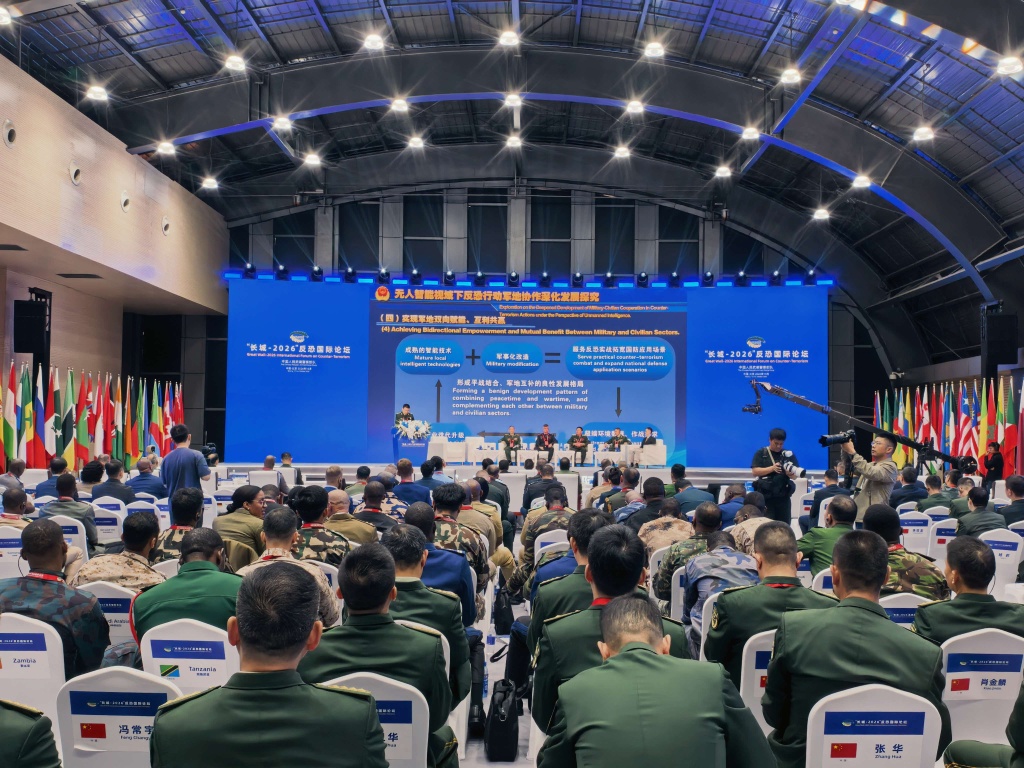
AI-Powered Counterterrorism: New Frontiers in the Fight Against Modern Terrorist Threats
Exploring how artificial intelligence is reshaping counterterrorism strategies worldwide, with insights from the 'Great Wall-2026' forum on emerging threats and defense innovations.
Korea's Yoon Suk Yeol Prepares for Trump Golf Meeting
Yoon Suk Yeol's team is setting up a special working group for a potential golf meeting with Donald Trump. Explore the diplomatic strategy, recent controversies, and the political significance behind this high-profile sporting event.
Climate Journalism at the Tipping Point: Finding Action in Environmental Crisis
Exploring climate reporting's critical role in environmental awareness and action amid global climate tipping points.

US Lawmaker: AI Transcends Borders, Urging US-China Cooperation
Washington State Representative Roger Goodman emphasizes that AI risks don't recognize national boundaries, calling for enhanced US-China collaboration to ensure AI benefits humanity.
Latest Articles
- United Airlines 2027 Status Changes: Why Earning Top Tier is Getting Harder
- US-EU Double Standards Exposed: Trump's Russia Diesel Deal Sparks Global Outcry
- Walmart Expands Employee Healthcare: Free GLP-1s, Insulin, and More
- Travelers Beware: How Scammers Impersonate Consular Staff
- Ukraine Claims Drone Attacks Reduced Russian Online Propaganda
- Saudi Crown Prince's Evacuation: Escalating Conflict Threatens Vision 2030