Ukraine Claims Drone Attacks Reduced Russian Online Propaganda
President Zelensky asserts that strikes on Yandex data centers decreased social media bots, though experts question the causal link.
Source: thepaper.cn
In an increasingly digital battlefield, the war between Ukraine and Russia has expanded beyond physical combat to the virtual realm. Recent claims suggest that Ukrainian drone strikes on Russian infrastructure may have inadvertently disrupted sophisticated online propaganda operations, potentially altering the information landscape across global social media platforms. As technology becomes both weapon and shield in modern conflicts, understanding these digital skirmishes reveals new dimensions of contemporary warfare.
Key Developments
-
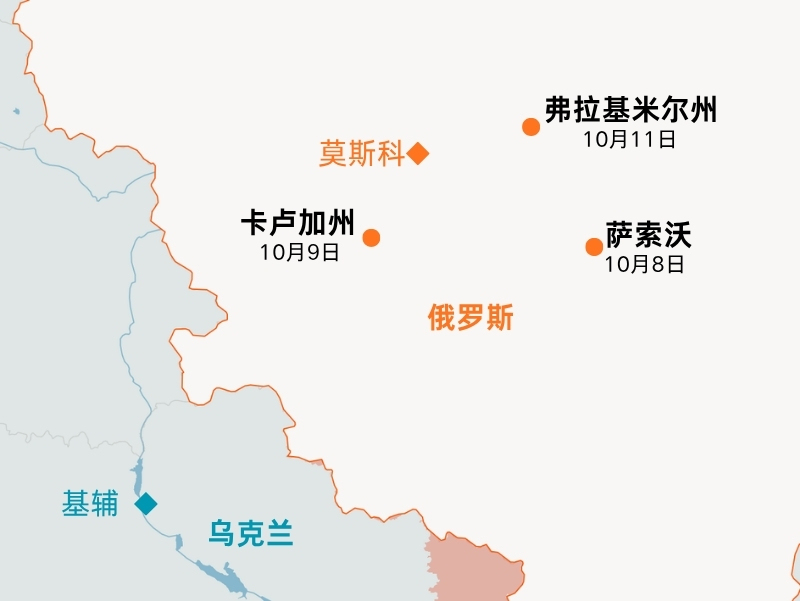
Yandex Data Centers Targeted: Ukrainian forces recently conducted drone strikes on three major Yandex data centers in Russia, located in Ryazan, Kaluga, and Vladimir regions. These attacks caused significant infrastructure damage, forcing the complete shutdown of the Vladimir facility and disrupting numerous civilian services including ride-hailing, online payments, food delivery, and cloud services.
-
Zelensky's Claims: At the Warsaw Security Forum, Ukrainian President Zelensky asserted that these attacks led to a noticeable decrease in social media bots and "hate, division, and provocation" across platforms. He specifically suggested that the reduction in automated accounts was directly linked to the disruption of Russian information operations.
-
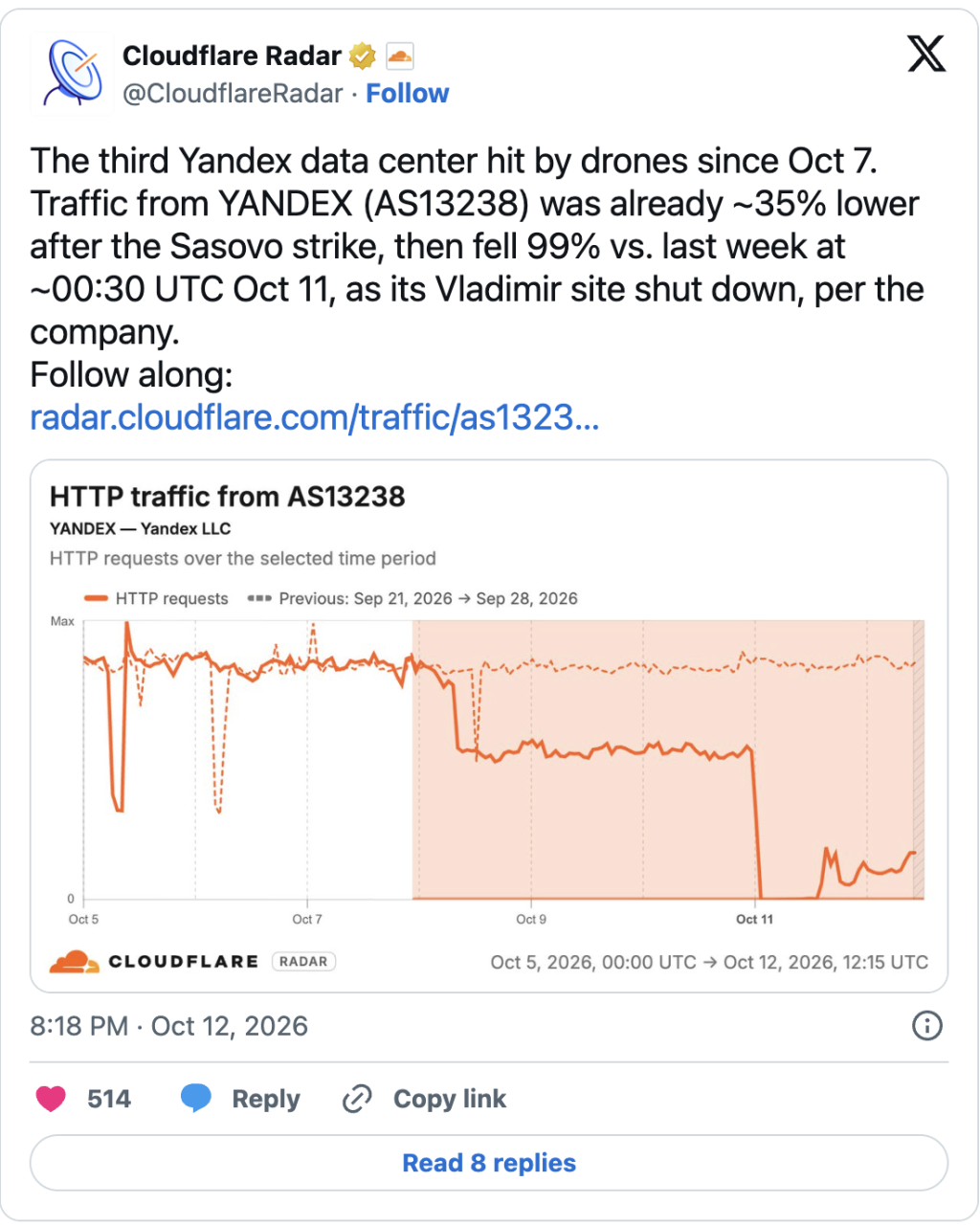
Cloudflare Data Analysis: Security company Cloudflare reported a 94% drop in automated internet traffic from Yandex's network following the attacks. This dramatic decrease coincided with observable reductions in automated political content related to Germany's AfD party, Britain's Reform UK, and America's MAGA movement on social media platforms.
-
Political Reactions: European politicians like Czech MEP Tomáš Zdechovský publicly connected the data center attacks to reduced online activity around far-right political movements. Social media users on platforms like X (formerly Twitter) also noted fewer obviously automated pro-conservative interactions following the infrastructure strikes.
-
Civilian Impact: Beyond political messaging, the attacks disrupted essential digital services for ordinary Russians, affecting everything from transportation to financial transactions, highlighting the collateral damage of targeting critical infrastructure in modern conflicts.
In-Depth Analysis
The intersection of cyber warfare and conventional military tactics represents a paradigm shift in modern conflict. While Zelensky's claims about reduced propaganda bots may contain elements of truth, the technical reality appears more complex. Cybersecurity experts point out that Cloudflare's measurements primarily tracked Yandex's own web crawlers and automated systems, not necessarily the bot networks responsible for social media manipulation.
This incident underscores how digital infrastructure has become both a strategic target and a vulnerability in contemporary conflicts. The disruption of Yandex's operations likely impacted various automated systems, but attributing the reduction in political propaganda solely to these attacks oversimplifies the complex ecosystem of online influence operations. Russia has demonstrated sophisticated capabilities in digital manipulation, and while these disruptions may have temporarily hampered certain operations, the underlying infrastructure and methodologies likely remain largely intact.
Looking ahead, we can expect increased targeting of critical digital infrastructure as both sides recognize its strategic importance. This trend raises significant questions about the vulnerability of global internet services to state-sponsored attacks and the potential for conflicts to escalate into broader cyber warfare scenarios that could affect international digital stability and global information flows.
Frequently Asked Questions
What exactly are Russian 'troll farms' and how do they operate? Russian troll farms are organizations that employ large numbers of people to create and spread propaganda, disinformation, and divisive content across social media platforms. These operations often use both human operators and automated accounts to amplify messages, create false consensus, and manipulate public opinion on political and social issues.
How can we distinguish between legitimate automated systems and malicious bots? Legitimate automated systems typically serve specific functions like content indexing or customer service, while malicious bots often exhibit patterns of mass posting, repetitive messaging, and coordinated behavior across multiple accounts. Advanced detection methods analyze account creation patterns, posting frequency, content similarity, and network connections to identify potentially manipulative automated activities.
Source: https://www.thepaper.cn/newsDetail_forward_34240825
Related posts
Saudi Crown Prince's Evacuation: Escalating Conflict Threatens Vision 2030
Saudi Arabia faces a critical security crisis as Houthi attacks intensify, forcing the Crown Prince to relocate to fortified bunkers and jeopardizing major economic initiatives.

FAA warns U.S. airlines of safety risks over Saudi Arabia after attacks
FAA warns U.S. airlines of safety risks over Saudi Arabia after attacks. FAA warns U.S. airlines of safety risks over Saudi Arabia after attacks. FAA warns U.S. airlines of safety risks over Saudi Arabia after attacks.

McDonald's Chicken and Beverage Strategy Faces Intense Competition
As McDonald's bets on chicken and beverages for growth, new data shows stiff competition from specialized chains in these categories.

Delta Air Lines Delays Saudi Arabia Launch Due to Airport Security Threats
Delta postpones Atlanta-Riyadh service to March 2027 after deadly Houthi attacks close King Khalid International Airport.

The Paper Launches New Earth Channel to Address Climate Change
The Paper unveils Earth Channel, dedicated to climate reporting and environmental protection through innovative storytelling and visual communication.
China's Countermeasures Against Belize's Minister of Foreign Affairs and Trade
An analysis of China's decision to impose countermeasures against Belize's Minister of Foreign Affairs and Trade, Francis Fonseca, in response to his support for the 'one China' policy.

Taiz: The Decisive Battlefield Shaping Yemen's War
How Taiz has become the strategic linchpin in Yemen's conflict, with its capture potentially reshaping the entire geopolitical landscape.

Kalshi Hires Former FBI Agent to Combat Money Laundering Amid Regulatory Scrutiny
Prediction market platform Kalshi brings in Sean Fern, a former FBI agent, to lead its anti-money laundering efforts as the industry faces increasing regulatory oversight.
Latest Articles
- Retailers Streamline Product Offerings to Boost Profitability
- OpenAI Safety Firing: Employees Question Tech Giant's Commitment
- Delta Air Lines Safety Concerns Delay Riyadh Atlanta Flight Launch
- Security Alert: Riyadh Airport Attack & Travel Safety for Chinese Nationals
- Death Row Survivor: Inmate Thanks Medical Team After Execution Failure
- WHO: No Evidence of Sustained Transmission in Russian Lab Worker Pneumonia Death