China's August PMI Rises to 49.8%: Signs of Stabilization Amid Global Headwinds
China's manufacturing PMI edged up to 49.8% in August 2026, signaling a modest recovery. We analyze the key drivers, sector trends, and what it means for the global economy.
Source: 163.com
China's latest purchasing managers' index (PMI) data for August 2026 offers a glimmer of cautious optimism. The manufacturing PMI rose to 49.8%, up 0.6 percentage points from July, marking the second consecutive month of improvement. While still below the 50-point threshold that separates expansion from contraction, the uptick suggests that targeted policy support and resilient export demand are beginning to offset persistent domestic weaknesses. For global investors and supply chain managers, this reading is a critical signal: the world's second-largest economy may be stabilizing, but the recovery remains uneven and fragile.
Key Highlights
-
Manufacturing PMI rebounds to 49.8%: The headline index rose 0.6 points from July, with 16 of 21 surveyed industries reporting month-on-month improvements. This broad-based uptick indicates that the manufacturing sector is gaining momentum, albeit from a low base.
-
Production and new orders both expand: The production index climbed to 50.4% (up 0.5 points), while the new orders index jumped 2.1 points to 50.6%. Both now sit above the 50-point boom-bust line, signaling that demand is picking up. Notably, electrical machinery and computer/electronics industries saw both indices above 53%, reflecting robust output and order books.
-
Large enterprises lead the recovery: Large firms' PMI rose 1.1 points to 50.6%, returning to expansion territory for the first time in months. Medium and small enterprises remained in contraction, with PMIs of 49.4% and 47.9%, respectively, though small firms did improve by 0.5 points.
-
Price pressures intensify: The input price index surged 3.4 points to 56.6%, and the factory gate price index rose 2.6 points to 50.4%, crossing back into expansion. This reflects higher global commodity prices, particularly for oil and non-ferrous metals, which are feeding through to producer costs.
-
Non-manufacturing sector stays flat: The services business activity index held at 49.3%, unchanged from July. While postal, telecom, and internet software services remained in high-growth territory (above 55%), wholesale, retail, and capital market services stayed below 50, indicating weak consumer sentiment and financial market activity.
-
Construction sector slows due to weather: The construction PMI dipped slightly to 46.9%, dragged down by heavy rains and typhoons in some regions. However, the new orders sub-index for construction jumped 2.3 points to 42.4%, hinting at a potential rebound in infrastructure investment.
-
Employment remains subdued: The manufacturing employment index fell 0.3 points to 48.7%, and the non-manufacturing employment index was flat at 45.4%. This suggests that firms are still hesitant to hire, reflecting cautious outlooks and ongoing cost pressures.

In-Depth Analysis
The August PMI data paints a picture of a Chinese economy that is stabilizing but not yet thriving. The manufacturing uptick is encouraging, particularly the strong performance of new orders, which suggests that domestic and export demand are improving. The rise in the input price index, however, is a double-edged sword: it signals stronger demand for raw materials, but also raises concerns about margin compression for manufacturers, especially small and medium enterprises that have less pricing power.
One notable trend is the divergence between large and small firms. Large enterprises, often state-backed or with better access to credit, are clearly benefiting from policy support and infrastructure spending. Small firms, which are more exposed to consumer demand and private sector credit conditions, remain mired in contraction. This bifurcation highlights the uneven nature of the recovery and suggests that the government's stimulus measures have not yet fully trickled down.
The services sector's stagnation is another red flag. While high-tech and digital services are booming, traditional services like wholesale and retail are struggling, reflecting weak household consumption. The employment indices, both below 50, underscore the labor market's fragility, which could further dampen consumer spending. The construction sector's weather-related dip is likely temporary, but the overall non-manufacturing PMI at 49.0% indicates that the broader economy is still in contraction territory.
Looking ahead, the key question is whether this momentum can be sustained. The government has already rolled out a series of measures, including interest rate cuts and infrastructure investment, but their impact has been gradual. The upcoming months will be crucial: if the PMI can break above 50, it would signal a genuine turnaround; if it stalls, the risk of a prolonged slowdown increases. For global markets, China's stabilization is a positive sign, but the persistent weaknesses in employment and services mean that the recovery will likely be bumpy.
Frequently Asked Questions
Q: What does a PMI below 50 mean for China's economy? A: A PMI below 50 indicates that the manufacturing sector is contracting compared to the previous month. While the August reading of 49.8% is still in contraction, the upward trend suggests that the pace of decline is slowing, and a return to expansion is possible in the coming months.
Q: How does China's PMI affect global markets? A: China is a major driver of global demand for commodities, electronics, and consumer goods. A rising PMI can boost investor sentiment and commodity prices, while a falling PMI can trigger concerns about global growth. The August uptick is likely to be seen as a mild positive for global markets.
Q: What are the main risks to China's recovery? A: Key risks include persistent weakness in the property sector, subdued consumer confidence, and external headwinds such as trade tensions and global monetary tightening. Additionally, rising input costs could squeeze corporate profits and hinder investment.
Source: https://www.163.com/money/article/L5LCQ79V00258105.html
Related posts
SpaceX Starshield Cuts Ukraine's Starlink Speed: US-Government Pressure or Political Stunt?
Ukraine claims SpaceX Starlink speed limits are hindering military operations. We analyze the US government's alleged role in restricting Starshield services and its impact on the Ukraine war.
Bank of America Spends Billions to Patch AI-Exposed Flaws
Discover how Bank of America deployed 1,000 contractors to fix software vulnerabilities exposed by Anthropic's Mythos AI, marking a costly defensive shift in enterprise security.
US Restrictions on Chinese Drones Backfire as Performance Gap Widens
American bans on Chinese drones are causing significant problems across multiple industries, with police departments and construction firms struggling to find affordable alternatives that match Chinese technology.
China Upgrades Asia-Africa Pavilion at CIIE to Boost Zero-Tariff Benefits
China's Ministry of Foreign Affairs announces enhanced Asia-Africa product zone at CIIE 2026 to help African nations capitalize on zero-tariff advantages.
Bank of America Q3 2026: Revenue Miss, Regulatory Penalty, and Stock Drop Analysis
Bank of America's third-quarter earnings reveal a challenging financial landscape marked by a $1.2 billion penalty and disappointing trading results. This analysis explores the implications for the bank's future and the broader market.

Morgan Stanley Q3 2026: AI Boom Fuels Record Equity Trading Revenue
Morgan Stanley beats Q3 estimates with 41% equities trading growth driven by AI and Asia. A deep dive into the bank's record-breaking performance and CEO Pick's outlook.
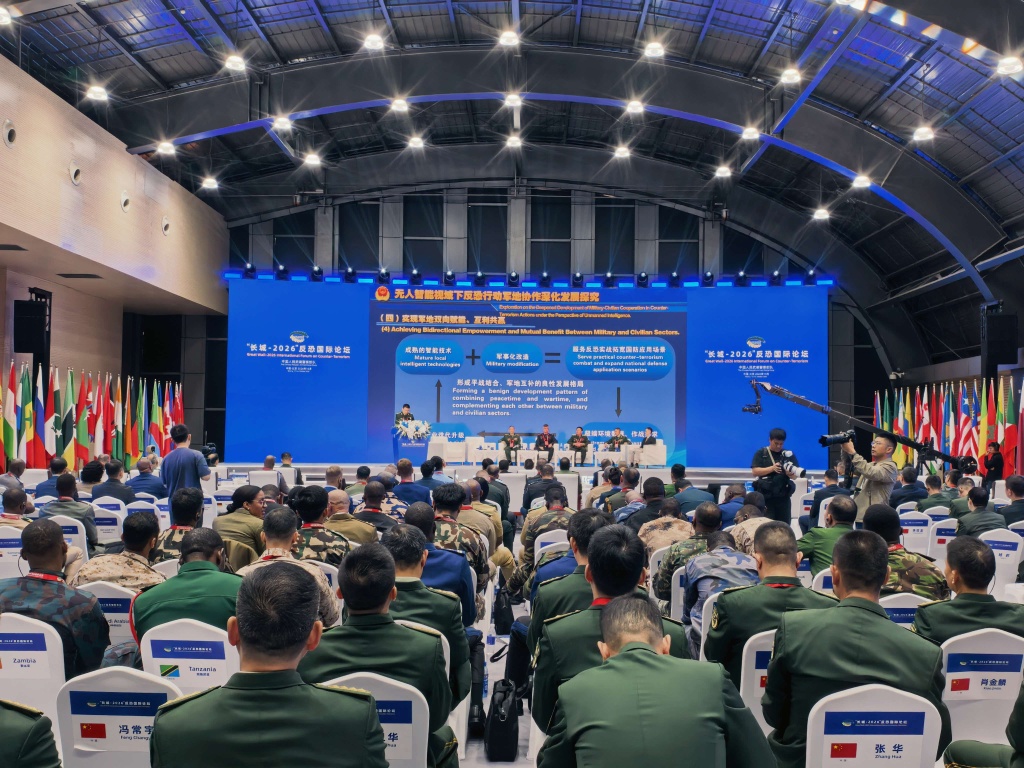
AI-Powered Counterterrorism: New Frontiers in the Fight Against Modern Terrorist Threats
Exploring how artificial intelligence is reshaping counterterrorism strategies worldwide, with insights from the 'Great Wall-2026' forum on emerging threats and defense innovations.
Korea's Yoon Suk Yeol Prepares for Trump Golf Meeting
Yoon Suk Yeol's team is setting up a special working group for a potential golf meeting with Donald Trump. Explore the diplomatic strategy, recent controversies, and the political significance behind this high-profile sporting event.
Latest Articles
- Climate Journalism at the Tipping Point: Finding Action in Environmental Crisis
- US Lawmaker: AI Transcends Borders, Urging US-China Cooperation
- United Airlines 2027 Status Changes: Why Earning Top Tier is Getting Harder
- US-EU Double Standards Exposed: Trump's Russia Diesel Deal Sparks Global Outcry
- Walmart Expands Employee Healthcare: Free GLP-1s, Insulin, and More
- Travelers Beware: How Scammers Impersonate Consular Staff