Sweden Election 2026: One Seat, Deep Anxiety
Sweden's 2026 election hung on a single seat, 175 to 174. We unpack the Sweden Democrats' slide, gang violence, NATO, and why voters turned back to healthcare and inflation.
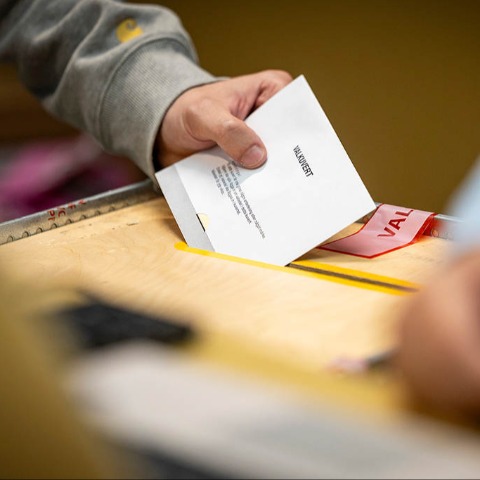
Sweden's 2026 parliamentary election ended in a dead heat that few pollsters dared predict: 175 seats for the left-leaning opposition bloc, 174 for the governing right-wing coalition, with overseas and postal ballots still being counted. In a country long marketed as Europe's moral superpower — high welfare, low crime, quiet neutrality — a single seat now separates two radically different visions of the future. That razor-thin margin is not a statistical quirk. It is a symptom of a society whose anxieties have been reshuffled faster than its institutions can adapt.
Key Takeaways
- The race is effectively tied. Preliminary results put the left opposition at 175 seats and the incumbent right bloc at 174, leaving the outcome dependent on late-counted overseas and mail ballots. Such a narrow gap raises the prospect of recounts, fragile coalitions, and a government that governs with almost no margin for defection.
- The far-right Sweden Democrats cooled off. Once the disruptive force of Swedish politics, the party slipped back to third place in parliament. Its loss of momentum suggests that anti-immigration anger alone no longer sets the agenda the way it did in 2018 and 2022.
- Voters pivoted to "wallets and hospital beds." Healthcare access, inflation, and household costs displaced gang violence and law-and-order panic as the top concerns. This is a classic mid-crisis shift: security fears fade when the grocery bill and the waiting list for a doctor become unbearable.
- The security backdrop is genuinely grim. Police have designated 59 "vulnerable areas" and 17 "especially vulnerable areas" where open drug dealing and visual intimidation are routine. Sweden's homicide-by-firearm rate remains among the highest in Western Europe, driven largely by conflicts between criminal networks.
- Minors are being recruited as cheap killers. Transnational gangs increasingly use teenagers as shooters because juvenile sentences are lighter and recruitment is easy in segregated suburbs. This has turned a welfare-state failure into a cross-border security problem.
- The old "cordon sanitaire" has collapsed. Mainstream parties that once refused to cooperate with the far right have normalized it as a governing partner, mirroring a pattern seen across Europe. The result is a new political center of gravity that is markedly more restrictive on migration.
- NATO membership reshaped daily life. Sweden abandoned two centuries of non-alignment and joined NATO, a historic pivot that brought new defense spending, debates over Gotland's strategic role, and a psychological break with the country's self-image as a neutral moral voice.
- The Palme murder still haunts the national story. The 1986 assassination of Prime Minister Olof Palme is the symbolic dividing line between an era of innocence and today's more hardened, uncertain Sweden. Nearly four decades on, it remains shorthand for the end of a certain kind of confidence.
In-Depth Analysis
The most revealing thing about this election is not the near-tie but what stopped dominating it. For years, Swedish politics was organized around immigration and gang violence, with the Sweden Democrats setting the tone from the opposition benches. In 2026, that spell weakened. Voters returned to healthcare queues and inflation — the unglamorous, material concerns of a welfare state whose delivery capacity has quietly eroded. When a country known for cradle-to-grave security starts worrying about whether a doctor is available, the political conversation moves from identity to competence.
That shift is bad news for insurgent parties and good news for incumbents who can claim managerial credibility, but it also creates a vacuum. If the far right no longer owns the security narrative, and the mainstream cannot fix the waiting lists, voters may swing toward whichever bloc promises the fastest, most tangible relief. Expect the next government — whatever its color — to be judged on hospital capacity and household purchasing power rather than on migration rhetoric.
The deeper structural problem is spatial and generational. Sweden's vulnerable areas are not simply poor neighborhoods; they are places where the state's monopoly on violence has been contested by criminal networks that operate across borders. Recruiting teenagers as contract killers is a rational business decision for gangs and a catastrophic policy failure for the state. Fixing it requires policing, yes, but also schools, housing, and labor-market integration — investments that take a decade to show results and one election cycle to be punished for.
Geopolitically, NATO membership has added a layer of cost and complexity that Swedish voters did not fully price in. Defense spending, host-nation obligations, and the militarization of Gotland have redefined what neutrality once meant. The trade-off — security guarantees in exchange for entanglement — is broadly accepted, but it has narrowed the space for the kind of independent moral diplomacy Sweden once practiced.
Zoom out, and Sweden looks less like an outlier and more like a laboratory. Across Europe, the pattern repeats: fragmented parliaments, razor-thin majorities, mainstream parties absorbing far-right positions, and electorates that oscillate between security anxiety and cost-of-living rage. Sweden's one-seat margin is not a Swedish peculiarity. It is what European politics looks like when no coalition can claim a mandate and no narrative can hold a majority.
Frequently Asked Questions
Why does a single seat matter so much in Sweden's parliament? The Riksdag has 349 seats, and a bloc needs 175 for a majority. At 175 to 174, neither side can pass budgets or survive defections comfortably, so a single lawmaker or a handful of late mail ballots can decide who governs. That makes coalition-building unusually fragile.
Did the far-right Sweden Democrats lose support, or just momentum? They remain a major force but fell back to third place, suggesting their peak influence may have passed. Their core issue — immigration — has been partly absorbed by mainstream parties, which blunts their unique selling point even as their ideas shape policy.
Source: https://www.thepaper.cn/newsDetail_forward_34066883
Related posts
Iran and the West: Empire, Revolution, and the Roots of the 2026 War
From the Persian Empire to the 2026 US-Israel-Iran war, a global-history reading of how revolution, oil, and hegemony locked Iran and the West into conflict.
China's Diplomatic Envoys Local Tours: What Beijing's New Outreach Means
China's foreign ministry has upgraded its 'Local Tour for Diplomatic Envoys' program, pairing development and governance themes to shape how foreign diplomats read the country.
Indonesia Ferry Disaster: Why Java Sea Capsizing Keeps Repeating
An overloaded 1987-built ferry capsized in the Java Sea, leaving 130 missing. We break down Indonesia's systemic ferry safety crisis and what reform would require.