China's Reduced Presence at ASEAN Defense Ministers' Meeting: A Sign of Deteriorating Sino-Philippine Relations
An analysis of China's decision to downgrade its participation in the ASEAN Defense Ministers' Meeting, highlighting the escalating tensions between China and the Philippines.
Source: thepaper.cn
China's Reduced Presence at ASEAN Defense Ministers' Meeting: A Sign of Deteriorating Sino-Philippine Relations
Introduction
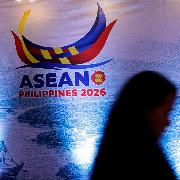
The recent decision by China to downgrade its participation in the ASEAN Defense Ministers' Meeting has sparked discussions about the state of Sino-Philippine relations and the broader implications for regional security. This article delves into the reasons behind China's decision and analyzes the potential impact on the region.
Key Points
- China's Reduced Participation: China's decision to send its defense attaché to the meeting, rather than a senior official, marks a significant shift in its approach to the region.
- Responsibility Laid at Philippines' Door: Experts attribute the current state of affairs to the Philippines' actions, including its handling of the South China Sea disputes.
- Escalating Tensions: The recent increase in maritime incidents and inflammatory statements from both sides have contributed to the tense atmosphere.
- Philippine Role as Host: As the current ASEAN chair, the Philippines is under scrutiny for its role in organizing the meeting and managing the agenda.
- Impact on Regional Security: The reduced participation of China could have implications for the region's security dynamics and cooperation.
In-Depth Analysis
China's decision to downgrade its participation in the ASEAN Defense Ministers' Meeting is a clear signal of the deteriorating relations between China and the Philippines. The responsibility for this situation lies primarily with the Philippines, which has been accused of using the multilateral platform to promote its own interests and escalate the South China Sea disputes.
The recent increase in maritime incidents and inflammatory statements from both sides has further complicated the situation. The Philippines, as the current ASEAN chair, has been criticized for not effectively managing the agenda and creating a conducive environment for dialogue and cooperation.
The reduced participation of China could have significant implications for the region's security dynamics. It may lead to a lack of cooperation on key security issues and could potentially undermine the stability of the region.
Frequently Asked Questions
Q: Why is China downgrading its participation in the ASEAN Defense Ministers' Meeting?
A: China is downgrading its participation due to the deteriorating relations between China and the Philippines, particularly over the South China Sea disputes.
Q: Who is responsible for the current state of affairs?
A: The responsibility primarily lies with the Philippines, which has been accused of using the multilateral platform to promote its own interests and escalate the disputes.
Q: What are the potential implications for regional security?
A: The reduced participation of China could lead to a lack of cooperation on key security issues and potentially undermine the stability of the region.
Conclusion
China's decision to downgrade its participation in the ASEAN Defense Ministers' Meeting is a significant development that highlights the escalating tensions between China and the Philippines. The situation underscores the importance of effective multilateral engagement and the need for all parties to work towards a peaceful resolution of the South China Sea disputes.
Source: https://www.thepaper.cn/newsDetail_forward_34348378
Related posts

US Military Costs Against Iran Top $4.7 Billion, Damages Unaccounted For
US spending on operations against Iran exceeds $4.7B, excluding critical base repair costs. Analysis of the escalating military expenses and regional impact.
Boeing 737 Max Production Delayed Until Late 2027
Boeing targets 52 planes per month by late 2027 as it stabilizes wing production and focuses on safety over speed.
Honda warns 50% Canada auto tariffs would be catastrophic for industry
Honda warns 50% Canada auto tariffs would be catastrophic for industry
AI Risk and Global Governance: The 20% Probability Dilemma
Navigating the existential risks of Artificial Intelligence requires international cooperation. Experts warn that without binding rules, the potential for catastrophic consequences is too high to ignore.

Democratic Republic of Congo Ebola Cases Surpass 10,000 Amid Largest Outbreak in History
The Democratic Republic of Congo faces its worst Ebola outbreak on record with over 10,000 confirmed cases and nearly 5,000 deaths, raising global health concerns.

Coca-Cola Raises Full-Year Outlook Despite North America Demand Weakness
Coca-Cola beats Wall Street expectations with strong Q3 2026 results, raising its full-year earnings outlook for the third consecutive quarter despite flat volume in its home market.

Serbia Election 2026: Student-led Coalition Wins Majority with 52.7% Vote Share
Serbia's parliamentary election results show a historic shift. The 'Student List' secures 52.71% of the vote, winning 140 seats and forming a majority government.

Record High Child Casualties in Conflict: UN Warns of New Era of Crisis
UN reveals 24,174 children severely harmed in conflicts in 2025, marking a historical peak. Explore the devastating impact of explosive weapons and AI in warfare on child safety.
Latest Articles
- FTC Sues Dollar General: Overcharging Shoppers Billions
- JetBlue 3Q 2026 Loss: Fuel Costs Rise 61% Despite Strong Travel Demand
- Anthropic IPO: The $1.5 Trillion AI Giant's Historic Stock Market Debut
- China to Send Giant Panda Ranran to Belgium for Diplomatic Relations
- Japan Deploys 25-Type Missiles in 'Kirishima' Drill, Marking Shift in Defense Strategy
- American Airlines 2026 Forecast: Slower Growth Amid Fuel Costs