Iran and the West: Empire, Revolution, and the Roots of the 2026 War
From the Persian Empire to the 2026 US-Israel-Iran war, a global-history reading of how revolution, oil, and hegemony locked Iran and the West into conflict.
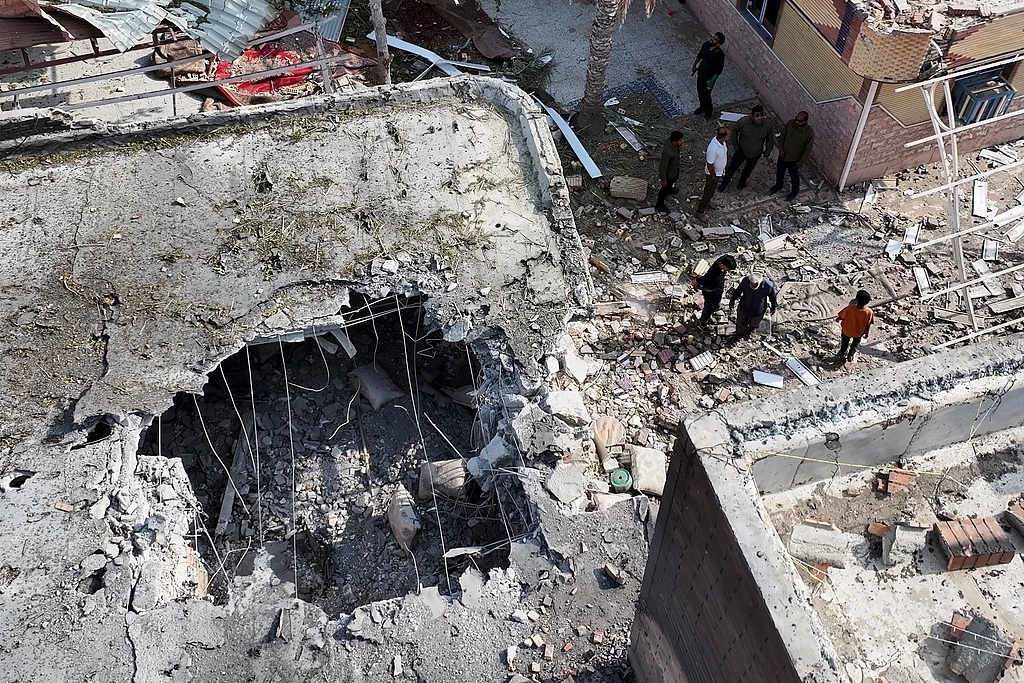
When the United States and Israel launched strikes on Iran in 2025 and again in 2026, the headlines framed it as a sudden eruption. It was not. The confrontation rests on 2,500 years of imperial rivalry, a 1953 coup the CIA never really apologized for, and a revolutionary ideology that deliberately set itself against both Cold War superpowers. Understanding that long arc is the only way to read what comes next in the Gulf.
Key Points
- Ancient glory, modern humiliation. Iranians carry a double historical memory: pride in the Achaemenid and Sasanian empires, and a deep sense of humiliation from the 19th- and 20th-century domination by Western colonial powers. That emotional gap between past greatness and recent subordination has shaped Iranian nationalism more than any single leader.
- The 1953 coup as founding trauma. When the CIA and British intelligence helped topple Prime Minister Mohammad Mossadegh after he nationalized oil, Iran was folded into the Western camp. Washington became the largest beneficiary of the 1954 oil consortium, and the episode remains a living grievance invoked by Iranians today.
- The Shah's dependence bred the revolution. Between the 1950s and 1970s, the US poured in economic and military aid, turning Iran into a bulwark against Soviet expansion. By 1981 an estimated 34,000 American citizens lived in the country, and the Shah's reliance on Washington fatally undermined his legitimacy.
- The "White Revolution" backfired. Ironically, the secularization drive that most destabilized the monarchy was pushed by the Kennedy administration. Land reform destroyed traditional Shiite community structures, displaced rural families into urban slums, and split society into pro-Western secular elites and an anti-Western religious class — a fracture that has never fully healed.
- 1979 as a break with the bipolar order. Ayatollah Khomeini's slogan — "Neither East nor West, only Islam" — rejected both superpowers. Iran became the first state to punch through the Cold War framework, but its export-of-revolution diplomacy and support for Hamas, Hezbollah, and the Assad government left it isolated and boxed in.
- An unresolved structural paradox. Iran is simultaneously a Westphalian nation-state defending its interests inside the existing order and an "Islamic state" seeking to replace that order. Exporting revolution effectively denies the sovereignty of other states — which is precisely why its "resistance front" strategy draws regional and international pushback.
- From ally to enemy with Israel. Iran and Israel cooperated closely as US-aligned partners before 1979. Khomeini branded Israel a Western "cancer" in the Middle East, and Iran's embrace of the Palestinian cause bound the two conflicts together, setting the stage for today's direct confrontation.
- Two fault lines merging. The US-Iran rivalry and the Israel-Iran rivalry evolved separately for decades before converging. The October 2023 Hamas attack and Israel's subsequent campaign fused the Palestinian, Israeli-Iranian, and American-Iranian conflicts into what analysts call the "sixth Middle East war."
In-Depth Analysis
The deeper story here is structural, not personal. Washington's core objection was never simply Iran's nuclear program or its missile arsenal; it is that a revisionist, anti-Western Iran could become the region's organizing power. That is a hegemonic contradiction, and no sanctions regime or limited strike package resolves it. Trump's "maximum pressure" was always caught between two bad options — a full invasion that would accelerate American decline, or calibrated strikes that Iran can absorb without capitulating.
The Israeli dimension adds a second, more combustible layer. As Arab-Israeli tensions softened through the 1990s peace process and later the Abraham Accords, Iran gradually replaced the Arab world as the leading force opposing Israel. That substitution bound the Palestinian question to the Iranian question, giving Israel both the motive and the leverage to pull Washington into its own war. When the two fault lines merged after October 2023, the result was not a contained conflict but a regional system-wide shock.
The consequences now ripple far beyond the battlefield. Because the war touches the Strait of Hormuz, global energy markets, shipping lanes, and supply chains, it converts a Middle Eastern crisis into a world economic one. For Asian importers — South Korea, Japan, India, and China among them — the exposure is direct: oil price spikes, freight insurance costs, and the risk of a prolonged Gulf disruption. That is why the 2026 war should be read not as a bilateral dispute but as a stress test of a global order already strained by power transition.
Looking ahead, three scenarios deserve attention. A negotiated freeze is possible but requires Washington to accept Iran as a legitimate regional actor, which neither party's domestic politics currently permits. A grinding, low-intensity campaign of strikes and counter-strikes seems most likely, eroding both sides without resolution. The most dangerous path is a miscalculation that draws in Hezbollah, the Houthis, and possibly Gulf states directly — turning a contained war into a systemic one. Iran's revolutionary ideology, born as a rejection of both superpowers, has now outlived the Cold War that produced it and become the central fault line of a new era.
Frequently Asked Questions
Why does the 1953 coup still matter in 2026? It is the emotional anchor of Iranian anti-Americanism. The overthrow of Mossadegh for nationalizing oil is taught as the moment Iran lost its sovereignty, and it is routinely cited by Iranians to justify distrust of any US offer, including nuclear deals.
Is the 2026 war really about Iran's nuclear program? Only partly. The nuclear file is the most visible symptom of a broader structural rivalry over regional dominance. Even a perfect nuclear agreement would leave the underlying contest over the Gulf's balance of power unresolved.
How does this affect Asia and global markets? Any sustained disruption near the Strait of Hormuz raises oil and shipping costs worldwide. Energy-importing economies in East and South Asia face the sharpest exposure, which is why the conflict is best understood as a global economic risk, not just a regional one.
Source: https://www.thepaper.cn/newsDetail_forward_34065539
Related posts

Sweden Election 2026: One Seat, Deep Anxiety
Sweden's 2026 election hung on a single seat, 175 to 174. We unpack the Sweden Democrats' slide, gang violence, NATO, and why voters turned back to healthcare and inflation.
China's Diplomatic Envoys Local Tours: What Beijing's New Outreach Means
China's foreign ministry has upgraded its 'Local Tour for Diplomatic Envoys' program, pairing development and governance themes to shape how foreign diplomats read the country.
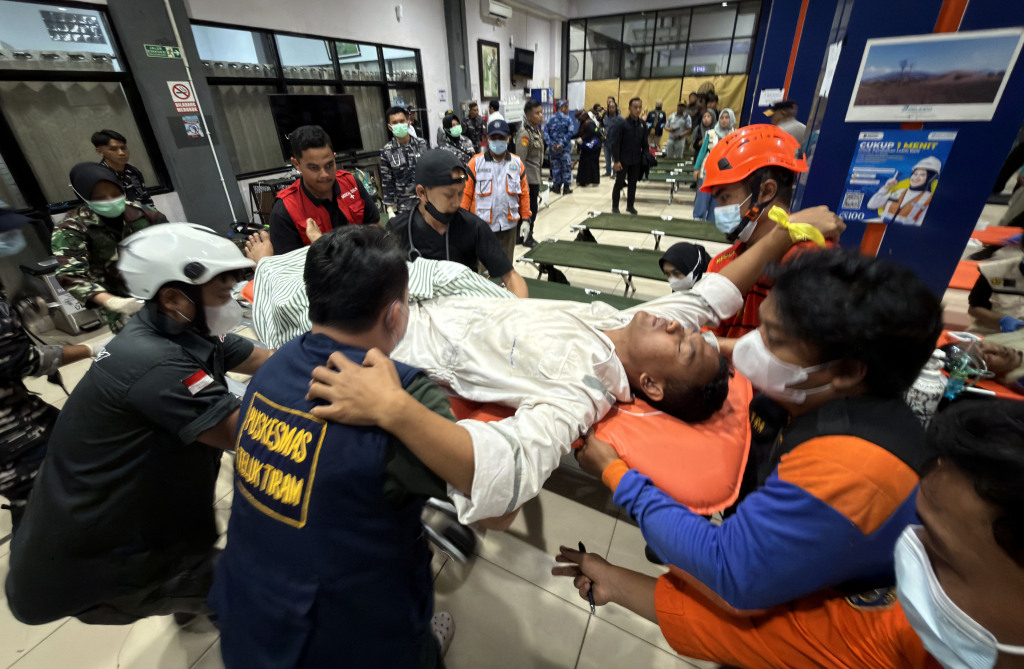
Indonesia Ferry Disaster: Why Java Sea Capsizing Keeps Repeating
An overloaded 1987-built ferry capsized in the Java Sea, leaving 130 missing. We break down Indonesia's systemic ferry safety crisis and what reform would require.