Indonesia Ferry Disaster: Why Java Sea Capsizing Keeps Repeating
An overloaded 1987-built ferry capsized in the Java Sea, leaving 130 missing. We break down Indonesia's systemic ferry safety crisis and what reform would require.
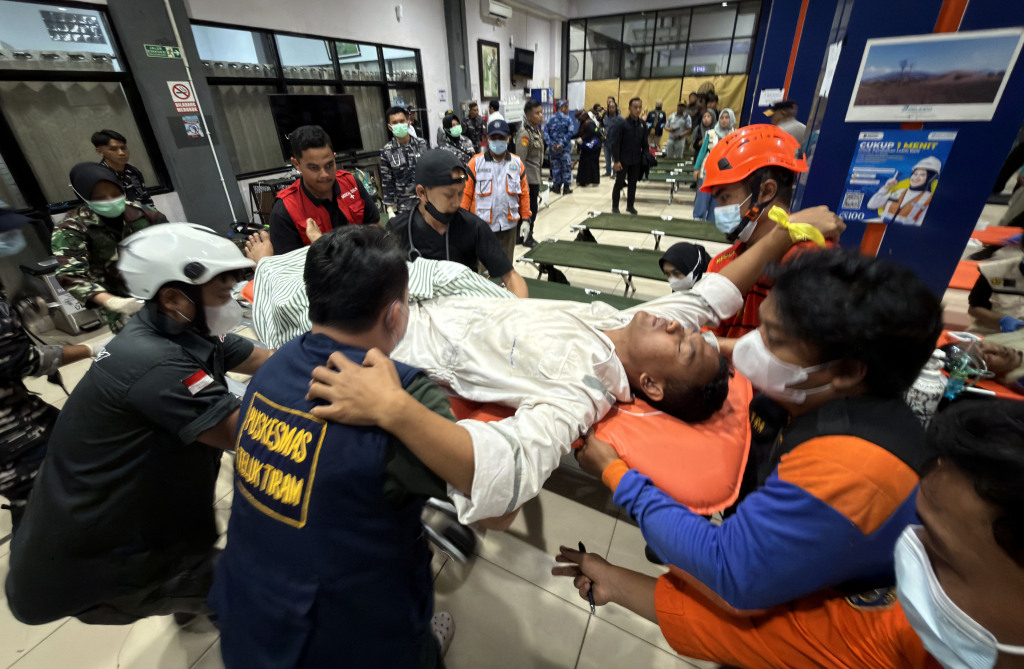
When the Virgo Transport 8 sent its distress call from the Java Sea in the early hours of September 13, the captain reported three-meter swells and a vessel listing dangerously. Within hours, the 119-meter ferry — built in Japan in 1987 and resold to an Indonesian operator only last year — had capsized with 243 people aboard. Six bodies were recovered, 107 survivors pulled from the water, and roughly 130 passengers remained unaccounted for as search teams battled wind and rough seas. The tragedy is not an outlier. It is the latest entry in a pattern that Indonesian maritime experts have warned about for two decades.
Key Facts
- The vessel and its manifest. The Virgo Transport 8 was carrying 213 passengers and 30 crew, plus 89 vehicles, according to the passenger list. Transport Minister Dudy Purwagandhi said the ship's rated capacity was around 500 people, so officials do not classify the voyage as overloaded — a claim that sits awkwardly beside Indonesia's long history of manifest discrepancies.
- The rescue effort. At least 622 personnel, 17 vessels, and five aircraft were deployed. Divers could not enter the hull because of conditions, and the national search agency chief, Mohammad Syafii, said high waves on September 14 hampered operations. The ferry capsized but did not fully sink, according to helicopter crews.
- A grim statistical record. Indonesia's National Transportation Safety Committee (KNKT) has logged more than 190 major maritime accidents and over 787 deaths between 2015 and 2025. That includes the 2015 sinking of the KM New Marina, which killed 65, and the 2018 Lake Toba disaster, which claimed 164 lives.
- Warnings issued days earlier. On September 9, KNKT published a series of ferry safety warnings. Its records show 46 ro-ro ferry accidents in Indonesian waters between 2003 and August 2026, including 19 fires since 2014.
- Regulatory gaps named by investigators. KNKT cited undeclared dangerous cargo, vehicle overloading, and weak manifests — shippers often fail to declare hazardous goods, cargo records lack detail, and operators do not physically inspect loads after loading.
- A fleet that is simply too old. Hafida Fahmiasari, who chairs the maritime transport forum at the Indonesian Transportation Society, notes that many ferries are 20 years old or more, against an international safety benchmark of five to ten years.
- Budget priorities. Transport expert Sony Sulaksono Wibowo of Bandung Institute of Technology points out that the public works ministry receives roughly 70 trillion rupiah while the transport ministry, responsible for land, air, and sea travel, gets only about 26.24 trillion rupiah.
- Rising accident counts. Transport ministry data show 87 accidents in 2020 rising to 128 in 2024 — a figure that excludes traditional fishing vessel incidents and is therefore likely an undercount.
Deep Analysis
The Java Sea capsizing matters less as a single event than as a stress test of Indonesia's entire maritime governance model. The country is an archipelago of more than 17,000 islands, and ferries are not a leisure option but basic infrastructure — the equivalent of intercity buses in a continental economy. When that infrastructure fails repeatedly, the cost is measured not only in lives but in economic mobility and international confidence.
The core problem is structural, not accidental. Ferry tickets are heavily subsidized for political reasons, which caps operator revenue and leaves almost nothing for maintenance or crew training. As the Jakarta Post argued in an editorial, the industry is treated as a low-margin business where cutting corners is the only way to stay afloat. Add a fragmented operator landscape — from small boat owners to large cruise companies — and strict enforcement becomes politically explosive, because tough rules would push small operators out of business entirely.
Accountability is equally diffuse. Hafida describes the situation as systemic failure: no one is clearly responsible, and in practice, operators that carry more passengers than their manifests declare rarely face penalties. That is a classic enforcement gap — rules exist on paper, but the cost of violating them is lower than the cost of complying.
Climate change adds a compounding variable. Aside from 2023, when drought calmed the seas, maritime accidents have trended upward. Experts such as Malaysian maritime specialist Nazeri Khalid argue that Southeast Asia needs to invest in radar, buoys, sensors, and higher-resolution satellite coverage so crews can route around extreme weather rather than sail into it. That is a capital-intensive answer to a problem currently starved of capital.
What would real reform look like? Three things would move the needle: independent, unannounced pre-departure inspections with meaningful fines; a mandatory fleet retirement age aligned with the five-to-ten-year benchmark; and digitized, verifiable passenger manifests tied to ticket sales. None of these are technologically difficult. All of them are politically expensive, which is precisely why they keep being deferred until the next headline.
Frequently Asked Questions
Was the Virgo Transport 8 overloaded? Officials say no. The ferry carried 243 people against a rated capacity of roughly 500. However, experts caution that Indonesian passenger manifests frequently understate the true number aboard, so official counts should be treated with caution until verified.
Why do ferry accidents happen so often in Indonesia? Analysts point to a combination of aging vessels, thin profit margins driven by subsidized fares, weak enforcement of loading and cargo rules, and a regulatory system where responsibility is split across multiple agencies. Extreme weather in recent years has made already-risky voyages more dangerous.
Is it safe to travel by ferry in Indonesia? Ferries remain the primary transport link for many islands, and most journeys are completed without incident. Travelers can reduce risk by choosing larger operators, avoiding night crossings during monsoon season, and checking weather advisories before departure.
Source: https://www.thepaper.cn/newsDetail_forward_34066515
Related posts
China's Diplomatic Envoys Local Tours: What Beijing's New Outreach Means
China's foreign ministry has upgraded its 'Local Tour for Diplomatic Envoys' program, pairing development and governance themes to shape how foreign diplomats read the country.
China Warns Citizens: Avoid Tajikistan-Afghanistan Border
China's foreign ministry and embassy urge citizens to leave the Tajik-Afghan border after stray bullets and illegal crossings caused casualties. What it means.
BRICS Summit 2026: Xi Jinping in India and the Global South Push
Xi Jinping's 24-hour New Delhi trip, the BRICS 'four pioneers' agenda, AI cooperation pledges, and a third China-hosted summit set for 2027.