Putin's G20 Attendance Undecided, Kremlin Says Amid Zelensky Meeting Talk
The Kremlin says Putin's G20 attendance is still undecided and repeats its Moscow invitation to Zelensky, while accusing Europe of offering no real negotiation plan on Ukraine.
Diplomatic signals from Moscow rarely arrive as clean yes-or-no answers, and this week's exchange was no exception. Asked about Volodymyr Zelensky's stated hope of meeting Vladimir Putin on the sidelines of an upcoming G20 summit, the Kremlin's press secretary declined to confirm whether the Russian president would even attend. The response matters because it keeps a possible high-level encounter alive in public discussion while committing Moscow to nothing — a familiar pattern in Russian wartime diplomacy.
Key Facts
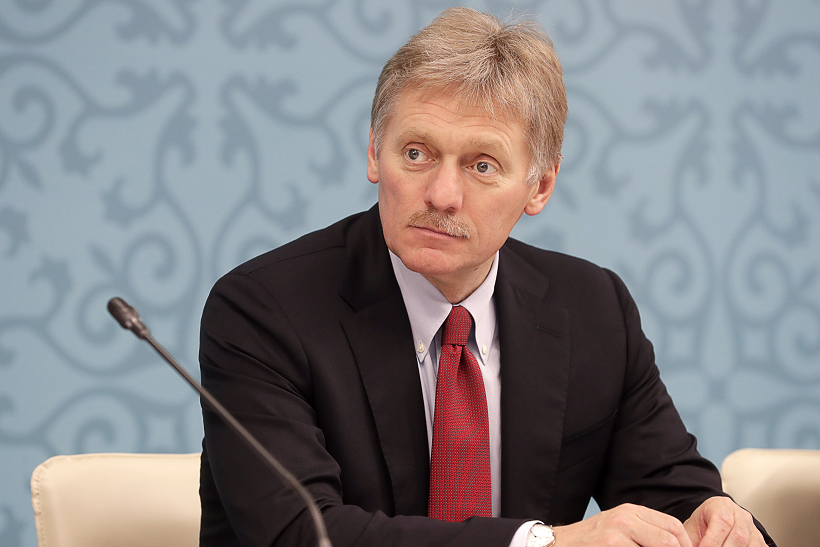
- No confirmed G20 participation. Kremlin press secretary Dmitry Peskov said it has not yet been decided whether President Vladimir Putin will take part in the G20 summit, according to remarks reported by Chinese state broadcaster CCTV on September 12. The ambiguity leaves room for Moscow to adjust its position as the summit approaches.
- A standing invitation to Moscow. Peskov indicated that if Zelensky wants to meet Putin, he is welcome to come to Moscow, noting that the invitation remains valid. Framing the venue this way shifts the burden of travel and political risk onto Kyiv.
- Kyiv's preferred setting. Zelensky had expressed hope for a meeting with Putin during the G20 gathering, a format that would place any encounter inside a multilateral event rather than on Russian soil. For Ukraine, that setting offers legitimacy and international witnesses.
- Europe accused of inaction. Speaking to the Russian newspaper Izvestia, Peskov said Europe has not proactively put forward any proposal to advance negotiations on the Ukraine issue. He argued that those who want talks will actively seek them out, and that Europe has not done so.
- The negotiation framing. By describing the process as a matter of political will rather than missing formats, Moscow positions itself as open to dialogue while pointing at European capitals as the obstacle. This rhetorical move is aimed at audiences in the Global South as much as in Europe.
- Timing and context. The statements come as the war grinds on with no visible diplomatic track, and as G20 hosts weigh the diplomatic costs of a possible Putin appearance. Attendance decisions at such summits are typically finalized late, after security and protocol assessments.
- The messenger matters. Peskov's comments were delivered in separate settings — a press response and a newspaper interview — which lets the Kremlin address different audiences with slightly different emphases without issuing a formal policy statement.
Deeper Analysis
The core of this episode is not the G20 itself but the choreography of who meets whom, where, and on whose terms. By leaving Putin's attendance undecided, the Kremlin preserves maximum flexibility: it can send a senior delegation, appear by video link, or have Putin show up in person, depending on how the diplomatic weather looks closer to the date. Each option carries different signals, and refusing to choose early is itself a form of leverage.
The Moscow invitation is equally calculated. A meeting in the Russian capital would allow the Kremlin to cast any encounter as a foreign leader coming to Russia rather than as Putin submitting to a multilateral framework. Kyiv has consistently rejected that framing, which is precisely why Moscow keeps repeating it — the offer is designed to be difficult to accept and useful to cite.
The accusation that Europe has produced no negotiating proposals deserves scrutiny. European governments have publicly backed Ukraine's own peace formula and various ceasefire concepts, but they have largely avoided presenting independent plans that could be read as pressuring Kyiv. From Moscow's perspective, that caution looks like absence; from European capitals, it reflects a deliberate refusal to legitimize talks on Russian terms. Both readings can coexist, and the gap between them is where the diplomatic stalemate lives.
Looking ahead, watch three indicators: whether the G20 host confirms Putin's presence, whether any third country offers to mediate a leader-level meeting, and whether European officials respond directly to Peskov's charge. Any movement on those fronts would signal a real shift rather than another round of positioning. Until then, expect more statements that sound like openings but function as holding patterns.
FAQ
Will Putin actually attend the G20 summit? Unclear. The Kremlin has explicitly said the decision is not yet made, which is typical for high-stakes summits where security, protocol, and political calculations are finalized late. A delegation-led or virtual format remains possible.
Why does the Kremlin keep inviting Zelensky to Moscow? Because the venue itself carries political meaning. A meeting in Moscow would let Russia frame the encounter as Kyiv coming to Russia, undercutting Ukraine's preference for a neutral or multilateral setting.
What does Peskov's criticism of Europe mean in practice? It signals that Moscow wants European capitals to table concrete proposals, which would implicitly recognize Russia as a negotiating partner. European governments have so far avoided doing so, fearing it would legitimize Russia's position.
Source: https://www.thepaper.cn/newsDetail_forward_34058594
Related posts
Indonesia Ferry Virgo Transport 8 Lost in Java Sea: 243 Aboard, 54 Rescued
An Indonesian ferry carrying 243 people vanished in the Java Sea en route to Banjarmasin. Rescuers have recovered 54 people, 53 alive and one dead, as the search continues.
Iran and Oman to Brief Gulf States on Hormuz Shipping Deal
Iran and Oman will report the results of their talks on safe passage through the Strait of Hormuz at a regional meeting on September 14, signaling a new push for local security control.
Ukraine Signals New Trilateral Talks With US and Russia in October
Ukraine's presidential office says a fresh US-Ukraine-Russia round is being prepared for October, days after the Kremlin echoed expectations of renewed dialogue.