China Paternity Case: Grandparents Fight for Visitation After DNA Reveals Grandson Not Related
A Guangxi retrial hearing reopens a wrenching paternity dispute: DNA shows a late delivery driver was not his son's biological father, and the grandparents want answers.
Source: thepaper.cn
When a family tragedy collides with a DNA test, the result can be a legal maze with no clean exit. In southern China, an elderly couple who raised a boy for eight years is now fighting a paternity dispute that courts have twice rejected — and a high court hearing on September 16 could decide whether they ever see the child again. The case has become a flashpoint for how Chinese law balances biological truth, the presumption of legitimacy in marriage, and the best interests of a child.

Key Facts
- The tragedy that started it. A man identified in reports as A Dong, a railway driver in Guangxi, died in May 2024 after a motorcycle crash while delivering food on a rainy night. He had been moonlighting as a delivery rider to help cover his seriously ill father's medical costs, according to his sister, Ms. Lu.
- Suspicions at the funeral. Family members grew suspicious when the widow, Ms. Huang, reportedly refused to let the boy carry his father's ashes at the funeral unless she was paid, and did not fully attend the service. Those doubts led the grandparents to order a grandparent-grandchild DNA test.
- Two tests, one conclusion. A first test indicated the boy was not the grandparents' biological grandchild. A second test commissioned through a Tianjin forensic center compared A Dong's stored blood sample with both his mother and the child; it confirmed the mother-son relationship but excluded A Dong as the boy's biological father.
- The lawsuit and its demands. The grandparents sued in Bobai County People's Court, seeking to strip the boy of inheritance rights to A Dong's estate, demand a public apology, and recover roughly 190,000 yuan in child-rearing costs, 50,000 yuan in emotional damages, and 120,000 yuan in funeral funds already paid — about 360,000 yuan in total.
- Two losses in lower courts. Both the first-instance and appellate courts rejected the claims. Judges found the child was born during the marriage, is legally registered as A Dong's son, and was raised by the whole family without objection while A Dong was alive.
- Procedural problems with the DNA evidence. The courts refused to accept the family's test results, citing missing identity verification recordings and failure to preserve guardian identity information. Because Ms. Huang declined to consent to a court-ordered paternity test, the case reached an impasse.
- The legal gatekeeping rule. Under Article 1073 of China's Civil Code, only a parent may sue to confirm or deny a parent-child relationship. Grandparents are not considered proper plaintiffs, and courts must prioritize the child's best interests when ordering genetic testing.
- What happens next. The Guangxi High People's Court accepted a retrial request in July and scheduled a hearing for September 16. The family's lawyer, Zang Fanqing of Beijing Fanqing Law Firm, says his immediate strategy is to seek visitation rights for the grandparents rather than overturn the paternity finding.
Deeper Analysis
The case exposes a structural tension in Chinese family law that no single ruling can easily resolve. Legally, a child born during a marriage is presumed to be the husband's, and that presumption stands unless a parent — not a grandparent — successfully challenges it with admissible evidence. The grandparents here are caught outside the gate: they have strong circumstantial evidence of deception, but the law does not recognize them as parties who can force the question. Their own privately commissioned tests, meanwhile, were undermined by procedural flaws, leaving them without a legally usable proof even as their moral certainty hardened.
The lawyer's five-point breakdown reads like a chain of locked doors. The grandparents lack standing; their evidence is procedurally defective; a fraudulent-child-rearing claim requires proving non-paternity, which they cannot do through legal channels; the child's best interests outweigh the grandparents' right to know their own bloodline; and the marital presumption holds absent lawful rebuttal. Break one link and the others still hold. This is why the family has pivoted to visitation — a narrower, more achievable claim that sidesteps the paternity question entirely.
For global readers, the case echoes debates seen in many jurisdictions: should a legal parent's deception void a child's inheritance rights? Should grandparents have standing to challenge paternity? Chinese courts have increasingly emphasized the "best interests of the minor" principle, and that doctrine cuts against the elderly couple here. The child, now about ten, has lived his entire life believing A Dong was his father. A ruling that formally erases that bond could inflict its own harm.
Yet the human cost on the other side is real. The grandparents lost a son, then learned the boy they helped raise may not be their blood. They are aging, and the child cannot independently seek the truth until he turns 18 — roughly seven more years. That timeline, as the family's lawyer acknowledges, may outlast them. The September hearing is unlikely to deliver a dramatic reversal; more plausibly, it will test whether the high court sees a procedural path to visitation or a narrow reopening of evidence. Either way, the case is becoming a reference point for how Chinese courts handle genetic truth when the law's gatekeepers stand in the way.
Frequently Asked Questions
Why can't the grandparents sue to deny paternity? Under Article 1073 of China's Civil Code, only a mother or father can bring an action to confirm or deny a parent-child relationship. Grandparents are not recognized as proper plaintiffs, so their claim was dismissed on standing grounds before the evidence could be fully weighed.
Why did the court reject the family's DNA test results? The court found the privately commissioned tests lacked proper identity verification recordings and did not preserve guardian identity information, calling the procedure unlawful. Because the mother refused a court-ordered test, no legally valid alternative evidence existed.
Source: https://www.thepaper.cn/newsDetail_forward_34045845
Related posts

Luxury Cruise Suites: The $25,000 Night Revolution in High-End Travel
Explore the booming luxury cruise market with suites costing up to $25,000 a night. Learn how elite travel is reshaping the industry and why space and privacy are the new currency.

Wonder's Bold Vision: Texas Expansion, Automation, and User-Built Restaurants Ahead of Potential IPO
Marc Lore's food tech giant Wonder plans aggressive Texas expansion, automation push, and user restaurant platform as it considers going public with $9B valuation.

Pepsi Extends Taco Bell Partnership Despite KFC's Switch to Coke
PepsiCo renews beverage deal with Taco Bell through 2036, days after sister chain KFC switches to Coca-Cola in strategic industry shift.
Brazil Presidential Election Runoff: Bolsonaro vs. Lula
The second round of the Brazilian presidential election begins. Two major political forces clash in a tight race.

Xi Jinping, King Philippe Celebrate 55 Years of China-Belgium Relations
President Xi Jinping and King Philippe exchanged congratulatory messages, highlighting 55 years of strategic partnership and mutual respect.
China's Middle East Envoy Holds Key Talks with Saudi Diplomatic Advisor
China's special envoy for Middle East affairs meets with Saudi diplomatic advisor to discuss bilateral relations and regional stability amid ongoing geopolitical tensions.
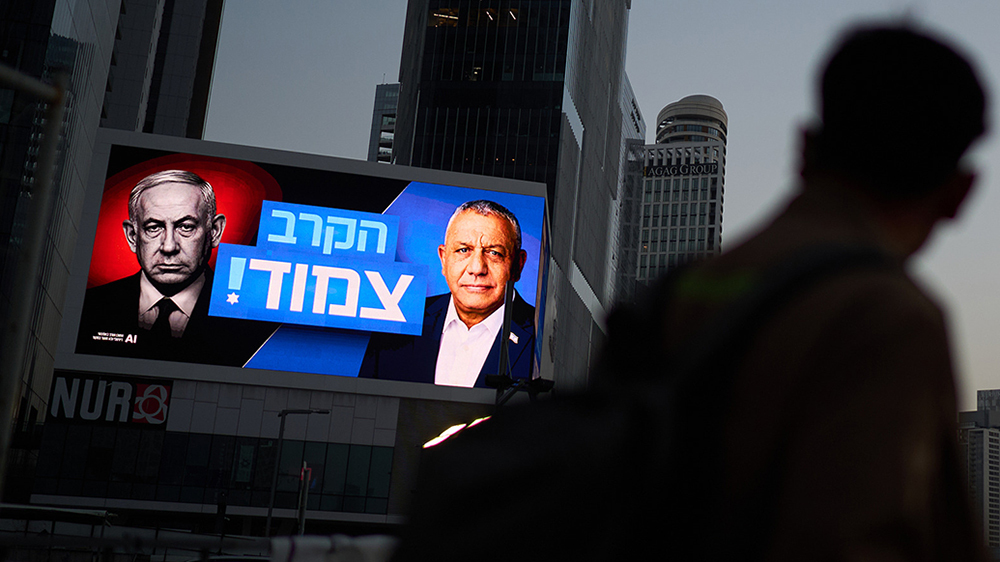
Israel Election 2026: Netanyahu Faces Historic Protests and Tight Polls
Israel's upcoming parliamentary election is a referendum on PM Netanyahu. Massive protests and tight polls signal a historic shift in Israeli politics.

US Travel Alert: Middle East Security Risks Rise Amid Iran and Houthi Threats
US State Department updates travel warnings for 13 Middle East nations. Learn about new security risks involving Houthi attacks and Iranian threats.
Latest Articles
- AI Safety Risks: Global Experts Share Solutions at 2026 Governance Forum
- UN Reform: China's 55-Year Commitment to Multilateralism
- Why Airlines Are Scrapping Brand-New Aircraft Amid Engine Shortage Crisis
- Comcast Exceeds Q3 Earnings Expectations as Media Strength Outweighs Connectivity Challenges
- David's Bridal Spins Off AI Platform Pearl for Public Listing
- Elon Musk's Billion-Dollar Bet: New Investment in Skydance Media