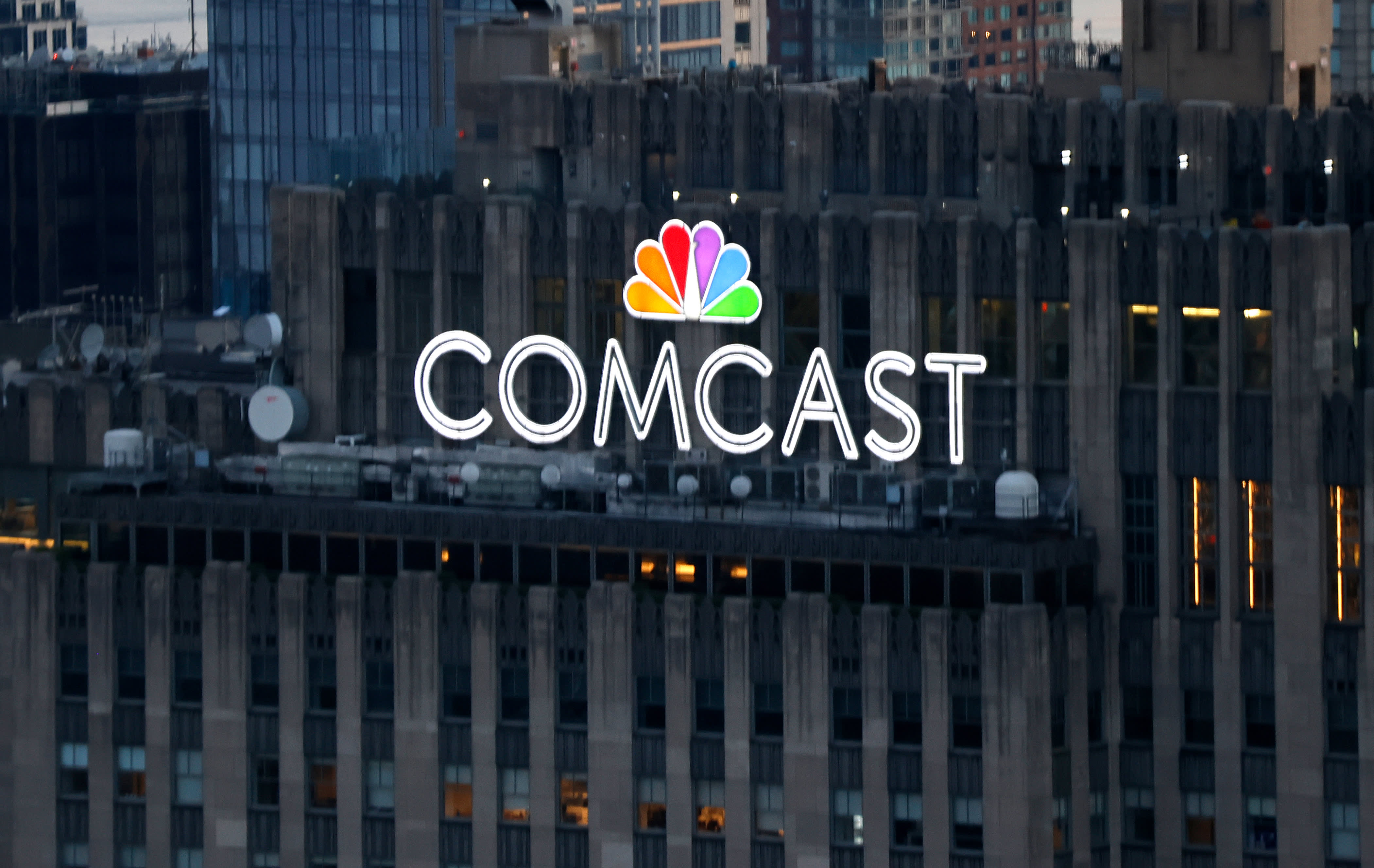
Comcast Exceeds Q3 Earnings Expectations as Media Strength Outweighs Connectivity Challenges
Comcast beats Wall Street expectations with strong media performance, while Peacock streaming service turns profitable for second time. The company faces challenges in connectivity but sees growth opportunities in mobile.
Source: CNBC
In an increasingly competitive media landscape, Comcast has demonstrated remarkable resilience by surpassing third-quarter earnings expectations, largely driven by the robust performance of its media division. This achievement comes despite headwinds in its theme parks business and ongoing challenges in the connectivity sector, highlighting the company's strategic pivot toward digital content and mobile services as key growth drivers.
Key Takeaways
- Peacock's Profitability Milestone: The streaming service achieved profitability for the second time since its 2020 launch, reporting $261 million in adjusted EBITDA on $1.8 billion in revenue. This significant financial milestone demonstrates the platform's growing commercial viability and operational efficiency.
- Subscriber Retention Success: Despite raising subscription prices in August, Peacock maintained its 48 million paid subscribers, showing flat quarter-over-quarter growth but a 17% increase year-over-year. This indicates strong customer loyalty and the platform's ability to sustain pricing power.
- Media Division Growth: Comcast's media division, which includes Peacock, saw a 13% revenue increase compared to the same quarter last year, reaching $5.4 billion. This growth was significantly boosted by record-high viewership for the FIFA World Cup, which aired on NBCUniversal's Telemundo and Peacock.
- Connectivity Challenges: The connectivity and platforms sector faced continued pressure with a 2.7% revenue decline year-over-year. The company reported net losses in domestic broadband residential customers (144,000) and cable customers (274,000), though its mobile business added 368,000 customers during the period.
- Strategic Restructuring: Comcast announced plans to spin off NBCUniversal and European media business Sky from its core cable, wireless, and business services units, creating two separate publicly traded companies by mid-2027. This follows the January 2025 spin-off of cable networks and digital businesses into Versant.
- Theme Park Performance: The theme parks division saw revenue fall 4.4% to $2.6 billion, with adjusted EBITDA declining 17%. The company attributed this to "cyclical headwinds" and lower admission revenue from promotional activities, despite continued investments like the new coaster at Universal Studios Hollywood.
- Studio Division Resilience: Despite a 1.1% revenue decline to $2.97 billion, the studios division reported an 18.6% increase in adjusted EBITDA to $402 million, driven by lower operating expenses and the success of "The Odyssey," Universal's highest-grossing film of all time.
- Mobile Business Focus: After years of stagnating broadband growth, Comcast is refocusing on its mobile business with more competitive pricing plans, leveraging its existing customer broadband base as a "capital light" growth opportunity.
In-Depth Analysis
Comcast's Q3 performance underscores a significant strategic transformation as the company navigates fundamental shifts in the media and telecommunications landscape. The media division's strength, particularly Peacock's profitability, represents a crucial pivot from traditional cable models toward digital-first content distribution. This transition is not merely reactive but positions Comcast for long-term growth in an increasingly fragmented media ecosystem.
The theme parks' challenges reveal the competitive intensity of the experiences market, where even Universal's substantial investments face headwinds from superior marketing and operational complexities. Disney's record theme park performance in August highlights this competitive pressure, suggesting that Universal may need to reassess its marketing strategies and technological infrastructure to regain market share.
Comcast's decision to split into two separate companies—focusing on media and connectivity—demonstr a clear recognition of the divergent growth trajectories and capital requirements of these businesses. This separation will allow each entity to pursue more targeted strategies and potentially unlock shareholder value through specialized market positioning.
Looking ahead, Comcast's mobile business represents a critical growth opportunity as the company seeks to offset traditional broadband stagnation. The "capital light" model leverages existing infrastructure and customer relationships, potentially offering higher margins than traditional connectivity services. However, the company will need to navigate intense competition from established wireless providers while differentiating its offerings.
The spin-off of NBCUniversal and Sky, following the Versant separation, signals Comcast's commitment to creating more focused, agile business units. This strategic restructuring could position both companies for more effective capital allocation and strategic decision-making in their respective markets.
Frequently Asked Questions
What factors contributed to Peacock's profitability? Peacock's profitability was driven by strong subscriber retention despite price increases, record viewership from the FIFA World Cup, and improved operational efficiency. The platform demonstrated that premium streaming services can achieve sustainable profitability with the right content strategy and pricing model.
How is Comcast addressing its connectivity challenges? Comcast is refocusing on its mobile business as a growth opportunity, pursuing more competitive pricing plans that leverage its existing broadband customer base. The company views mobile as a "capital light" model that can offset traditional broadband stagnation and provide higher growth potential.
What is the timeline for Comcast's corporate restructuring? Comcast is "on track" to complete the spin-off of NBCUniversal and Sky by mid-2027, creating two separate publicly traded companies. This follows the January 2025 separation of cable networks and digital businesses into Versant, representing a comprehensive restructuring of the company's portfolio.
Source: https://www.cnbc.com/2026/10/22/comcast-cmcsa-earnings-q3-2026.html
Related posts
Elon Musk's Billion-Dollar Bet: New Investment in Skydance Media
Elon Musk invests $1 billion in Skydance, a major media merger involving Paramount and Warner Bros. Discovery. This strategic move aims to cut costs and secure the future of the combined entertainment giant.

Why Airlines Are Scrapping Brand-New Aircraft Amid Engine Shortage Crisis
Airlines are dismantling planes years ahead of schedule due to unprecedented engine shortages, creating a booming market for aircraft parts while raising concerns about sustainability and operational costs.

NHK Documentary Exposes Secret 1978 Yasukuni Shrine Ritual
Newly released archival footage reveals the 1978 secret ritual that enshrined Class-A war criminals, exposing Japan's persistent historical revisionism.
Philippines Air Force Training Crash: 4 Pilots Killed in SF-260 Collision
A tragic air collision during a routine training mission in the Philippines has resulted in the deaths of four Air Force pilots. The incident highlights critical safety concerns within the country's military aviation infrastructure.

North Korea Holds Third Company Commanders Meeting Amid Military Reinforcement
Analysis of North Korea's recent military leadership gathering focused on strengthening company-level units and enhancing combat readiness.

Gen Z Candidates Tackle Housing Crisis in Midterms 2026
Young lawmakers from both parties are campaigning on solving the record-high cost of living. Explore how Gen Z is reshaping the housing debate.
Tibetan Plateau Earthquake: Analysis of the 7.0 Magnitude Quake and Post-Disaster Response
Expert analysis of the 7.0 magnitude earthquake in Baingoin, Tibet, examining its geological significance and the unique challenges of disaster response at high altitudes.
Meta's New Link Policy: Why Social Media Sites Want You to Stay
Meta is introducing paid plans to limit free hyperlink posting, a strategic move driven by the business model of keeping users engaged on platforms.
Latest Articles
- Darden vs. Chipotle: How Portfolio Diversification Impacts Restaurant Stock Performance in 2026
- High Fares And Fewer Passengers: Why Airlines Are Profitable Despite Lower Demand
- American Express Cuts 5% of Workforce to Accelerate AI Transformation
- Israel Imposes Total West Bank Blockade After Hebron Attack
- Russia Starts Diesel Exports to US: Geopolitical Shifts Ahead
- Peru Allocates $1.8 Billion to Combat El Niño and Economic Headwinds