Student Housing Investment: Why Specialization Matters in 2026
Explore how Harrison Street, a top student housing investor, navigates market divergence, pre-leasing trends, and why specialized strategies are key in 2026.
Source: CNBC
As the 2026-2027 academic year kicks off, student housing is once again in the spotlight for real estate investors. With pre-leasing numbers ticking upward nationally, the sector appears resilient. Yet, beneath the surface, a more complex story is unfolding—one where market fundamentals are diverging sharply between universities and regions. For investors, this means that a blanket approach to student housing is no longer viable. Instead, success hinges on understanding which campuses are thriving and which are struggling, a nuance that industry leaders like Harrison Street are navigating with precision.
Key Takeaways
-
National pre-leasing is up, but unevenly: According to Yardi's 200-market index, pre-leasing reached 89.1% in July 2026, up from 88.1% a year earlier. However, this aggregate figure masks significant variation—only 117 of the 200 markets matched or exceeded their previous year's levels. This suggests that while the sector is healthy overall, specific markets are underperforming, often due to an influx of new supply in larger university towns.
-
New supply is a double-edged sword: Yardi's research director, Tyson Huebner, notes that new construction is concentrated in large markets, which drags down performance at schools with the most beds and skews national metrics. This oversupply in certain areas creates pricing pressure, while other markets with limited construction see occupancy rates soar above 95%.
-
Harrison Street's scale and strategy: With over $24 billion invested across 432 properties and 238,000 beds, Harrison Street is a dominant player. Their global CIO, Mike Gordon, emphasizes that while conviction in student housing overall is high, it's not uniform across all markets. This selective approach is crucial in an environment where enrollment, applications, and research funding are increasingly concentrated in top-tier institutions.
-
Top universities are outperforming: Schools like Michigan, UVA, UNC, and other Power Four universities are seeing strong demand, driven by strong graduation incomes, alumni earnings, and research capabilities. These institutions often operate at or above 95% occupancy, making them attractive for investors. Gordon likens these university towns to "factory towns" where the university is the factory producing intellectual capital, attracting students, faculty, and businesses that all need housing.
-
Supply lag in specific markets: In contrast to the oversupply in large markets, some universities like Virginia Tech, Auburn, and Penn State are experiencing housing supply that lags behind enrollment growth. This creates opportunities for developers and investors who can fill the gap, but it requires deep local knowledge.
Active asset management: Harrison Street isn't just buying and holding; they're also selling. Earlier this year, they sold a 12-property portfolio for $910 million, one of the largest dispositions in recent years. This demonstrates a dynamic strategy that capitalizes on market peaks and reallocates capital to higher-growth opportunities.

Deep Dive: The Widening Gap in Student Housing Markets
The student housing sector is undergoing a structural shift. For years, the asset class was seen as a stable, recession-resistant investment. However, the 2026 data reveals a bifurcation: elite universities with strong brand equity and research output are thriving, while smaller or less prestigious institutions are struggling with enrollment declines and funding cuts. This divergence is not just a short-term blip; it's a long-term trend driven by demographic shifts, the rising cost of education, and a growing emphasis on return-on-investment for degrees.
Investors who treat all student housing the same are likely to be disappointed. The days of easy gains across the board are over. Instead, success requires a granular analysis of each university's financial health, enrollment trends, and local supply-demand dynamics. Harrison Street's strategy of focusing on "Power Four" universities and public-private partnerships with state schools is a testament to this approach. They're betting on institutions that have the resources to weather economic downturns and maintain high occupancy.
Looking ahead, the student housing market will likely see increased consolidation, with specialized managers like Harrison Street gaining market share. New entrants may find it difficult to compete without deep expertise and established relationships. For investors, this means that partnering with experienced operators is more critical than ever. The sector's future is bright, but only for those who can navigate its complexities.
Frequently Asked Questions
Is student housing still a safe investment in 2026?
Student housing remains a relatively safe investment, but it's no longer a one-size-fits-all asset class. The key is to focus on universities with strong fundamentals—high enrollment, research funding, and graduate employment outcomes. Markets with oversupply or weak institutions carry higher risk.
What makes a university town attractive to investors?
Attractive university towns are those with a dominant university that acts as an economic engine, similar to a factory town. These towns have high occupancy rates, limited supply, and a diverse tenant base including students, faculty, and researchers. The university's stability provides a steady demand for housing.
How can individual investors get exposure to student housing?
Individual investors can gain exposure through publicly traded REITs that specialize in student housing, such as American Campus Communities or through private funds. However, due to the increasing complexity of the market, it's advisable to invest with managers who have a proven track record and deep market knowledge.
Source: https://www.cnbc.com/2026/09/01/university-student-housing-investor.html
Related posts

Nike's India Campus Strategy Amid China Sales Decline
Nike invests in Bengaluru campus as growth strategy while facing 26% revenue drop in China market.
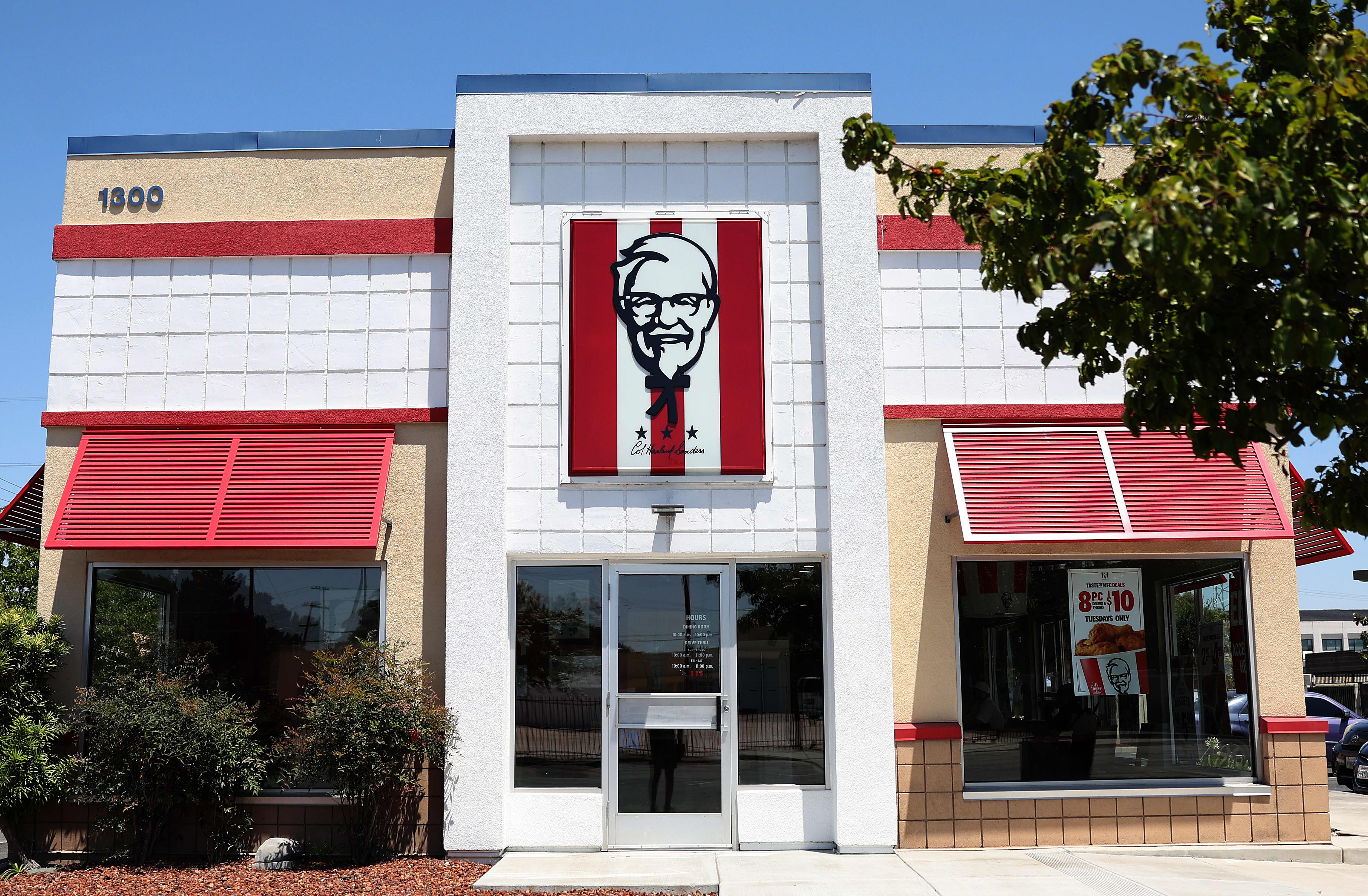
KFC Switches to Coca-Cola After Decades-Long Partnership with Pepsi
Breaking: KFC will replace PepsiCo with Coca-Cola beverages across all U.S. locations by Q1 2027, marking a major shift in the fast-food industry's beverage alliances.
China's Diplomatic Stance on Philippines: Navigating Tensions and Seeking Stability
China urges the Philippines to accurately understand its stance on improving bilateral relations amidst rising tensions and military rhetoric.
US Restrictions on Chinese Drones Backfire as Performance Gap Widens
American bans on Chinese drones are causing significant problems across multiple industries, with police departments and construction firms struggling to find affordable alternatives that match Chinese technology.

Strait of Hormuz Attacks Surge as Iran Seeks to Influence US Midterm Elections
Recent spike in vessel attacks in the Strait of Hormuz reveals Iran's strategy to impact global oil markets and US politics amid escalating tensions.

Southwest Airlines Overhauls Loyalty Program with New Tiers and Benefits
Southwest Airlines is replacing its two-tier frequent flyer program with silver, gold, and platinum levels, offering enhanced benefits and changing its approach to the Companion Pass.
Oregon School Shooting: Tragedy Sparks Debate on Gun Control
A deadly shooting at an Oregon elementary school leaves at least 5 dead, reigniting national conversation about school safety and gun legislation.

The Billionaire Space Race: Musk vs. Bezos
Elon Musk and Jeff Bezos are locked in a fierce rivalry for the future of space exploration, utilizing their immense wealth to dominate the aerospace industry.
Latest Articles
- JetBlue BlueFirst: New Domestic First Class for Under $300
- Bank of America Spends Billions to Patch AI-Exposed Flaws
- Zelensky Announces Resumption of Strikes on Russian Oil Refineries
- SpaceX Starshield Cuts Ukraine's Starlink Speed: US-Government Pressure or Political Stunt?
- China Upgrades Asia-Africa Pavilion at CIIE to Boost Zero-Tariff Benefits
- Bank of America Q3 2026: Revenue Miss, Regulatory Penalty, and Stock Drop Analysis