Measles Outbreaks Cost US Millions Amid Rising Cases
As measles resurges in the US, outbreaks are imposing significant economic burdens through public health responses, lost productivity, and medical expenses.
Source: CNBC
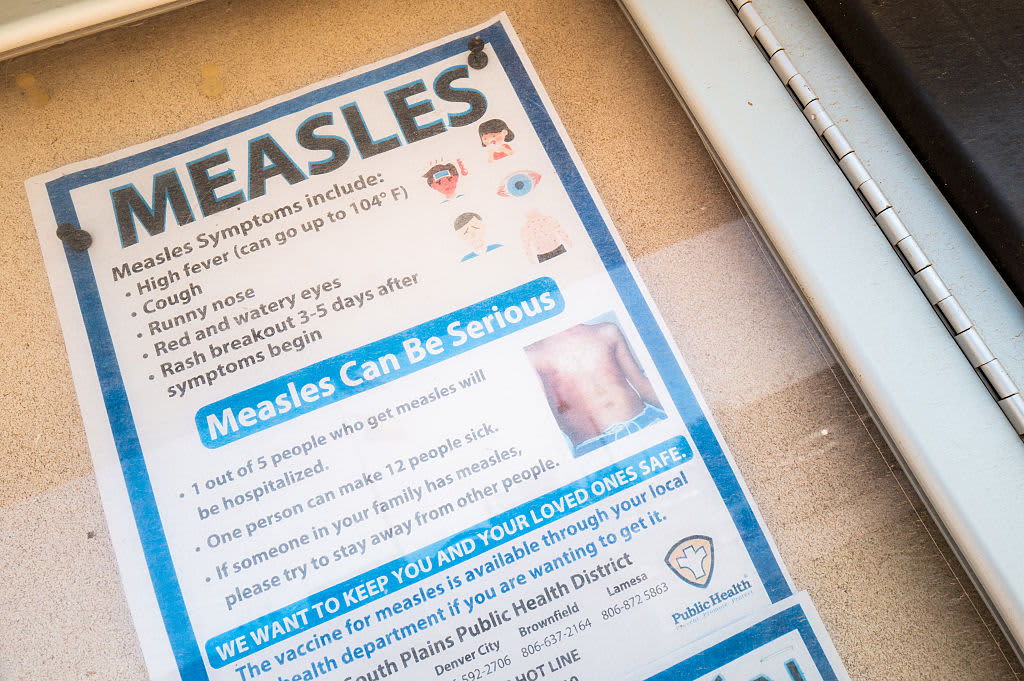
The resurgence of measles in the United States represents not just a public health crisis but an increasingly significant economic burden. With cases reaching levels not seen in over three decades, the financial implications of these outbreaks are becoming impossible to ignore. The nation is expected to lose its official measles elimination status following a review by the Pan American Health Organization, marking a troubling reversal of decades of progress in disease control. This development comes as more than 5,100 measles cases have been reported nationwide in 2026 as of early November, with eight confirmed deaths across Pennsylvania, New York, and Wisconsin.
Key Findings
- Economic Impact: Researchers at Johns Hopkins University estimate that 2026 measles outbreaks will cost the US nearly $83 million, including $56 million in public health response costs, $25 million in lost productivity, and $1.8 million in direct medical expenses.
- Rising Trend: This represents a significant increase from 2025, when 2,289 cases carried an economic cost of more than $37 million, indicating that the financial burden is growing alongside case numbers.
- State Variations: Costs differ dramatically by state, with New York's 48 cases in 2025 estimated at $1.1 million, while Texas's 803 cases (the largest outbreak that year) cost nearly $13 million.
- Hidden Costs: The financial burden extends beyond treating infected patients to include quarantine expenses, lost wages for parents caring for sick children, and productivity losses among exposed but uninfected individuals.
- Preventable Nature: These substantial costs are particularly striking given that measles is almost entirely preventable through vaccination, highlighting the economic consequences of declining immunization rates.
In-Depth Analysis
The economic impact of measles outbreaks reveals critical vulnerabilities in the US public health infrastructure. The Johns Hopkins research demonstrates that the costs are not merely a byproduct of treating illness but encompass complex public health responses that divert resources from other essential services. When a measles case is identified, health officials must conduct investigations, identify and notify potentially exposed individuals, coordinate with healthcare facilities and educational institutions, and sometimes organize emergency vaccination campaigns.
These responses are largely labor-driven, requiring significant human resources for contact tracing and outbreak management. The researchers estimate approximately $298,000 in fixed costs plus about $16,300 for each additional case, with expenses scaling rapidly as outbreaks grow. This creates a multiplier effect where a single case can expose dozens of others, each requiring follow-up and potentially quarantine, even if they never develop symptoms.
The financial burden falls unevenly across communities, often straining local health departments that must redirect resources from other priorities. As Bryan Patenaude of Johns Hopkins Bloomberg School of Public Health notes, these departments are typically engaged in numerous ongoing initiatives when an outbreak requires them to pivot focus. The economic consequences become particularly concerning when considering that measles is highly contagious—with a single infected person potentially exposing 40-50 others, each quarantine potentially costing around $300 in lost productivity alone.
Looking forward, the trajectory suggests that without increased vaccination rates and strengthened public health preparedness, the US could face even greater economic losses. The potential loss of measles elimination status represents not just a public health setback but an economic warning sign, indicating that the nation may be underinvesting in preventive healthcare that could ultimately prove far more costly than the vaccination programs themselves.
Frequently Asked Questions
Why are measles outbreaks so expensive even when most people don't get sick? Measles requires extensive public health responses including contact tracing, quarantines, and community coordination. These efforts involve significant labor costs and divert resources from other health priorities, creating substantial expenses even when many exposed individuals never develop symptoms.
How do vaccination rates affect these economic costs? As vaccination rates decline, herd immunity weakens, allowing measles to spread more easily. This leads to larger outbreaks requiring more extensive public health responses, dramatically increasing costs. The economic burden demonstrates that vaccination is not just a personal health decision but has significant financial implications for communities and healthcare systems.
Source: https://www.cnbc.com/2026/11/11/measles-outbreak-us-economic-cost.html
Related posts

Hamlet vs. CEO: How a Literature Professor Defends Short Dramas
Why do people love short dramas despite their clichés? An expert's analysis on the psychology of modern entertainment and the search for emotional catharsis.

Scout Motors' 212,000 Reservations: A New Era for American EVs?
As Scout Motors completes its $2 billion South Carolina plant, the startup reveals 212,000 vehicle reservations. Here is an analysis of their strategy and market potential.
US Home Sales Plummet to 16-Year Low Amid Rising Mortgage Rates
Existing home sales drop to 3.75 million in October, marking the lowest level since 2010 as high mortgage rates continue to dampen the housing market.

The Truth About Vision Patches: Can They Really Reverse Myopia?
Investigation reveals how 'vision patches' on social media promise to reverse myopia but often use clinics without proper medical licenses. Learn the risks of these unverified treatments.
Building a Constructive Strategic Relationship Between US and China
Analysis of Liu Haixing's call for establishing a stable foundation for US-China relations through mutual respect, cooperation, and shared responsibility.

Immersive Star Wars Experience: Disney's New Dome Partnership
Experience the galaxy far, far away in 12K resolution. Disney's new deal with Cosm brings Star Wars to massive domes for a 50th anniversary celebration.

Indonesian Vice President Resigns Amid Political Turmoil and Power Shift
Indonesia's Vice President Gibran Rakabuming Raka steps down following legal challenges, signaling potential realignment in the nation's political landscape.
Vance Seeks Direct Iran Talks as Tehran Dismisses Proposal as 'Fantasy'
US Vice President Vance considers direct dialogue with Iranian hardliners amid escalating tensions, while Iranian officials reject the approach and threaten European bases.
Latest Articles
- CANARX Executive Arrested in Major Drug Importation Scheme
- Gasoline Prices Drop Below $4: Why Gas Is Suddenly Cheaper
- American Airlines Restores Fresh First Class Food: NY-Chicago Routes Revitalized
- JetBlue's CEO Betting on Premium Travel to Bounce Back
- Iran Unveils Underground Missile City, Boosting Regional Defense Capabilities
- AI Image Detection: How Reliable Are Current Verification Tools?