AI Image Detection: How Reliable Are Current Verification Tools?
As AI-generated images proliferate, we examine the limitations of current detection technologies and why human verification remains essential.
Source: thepaper.cn
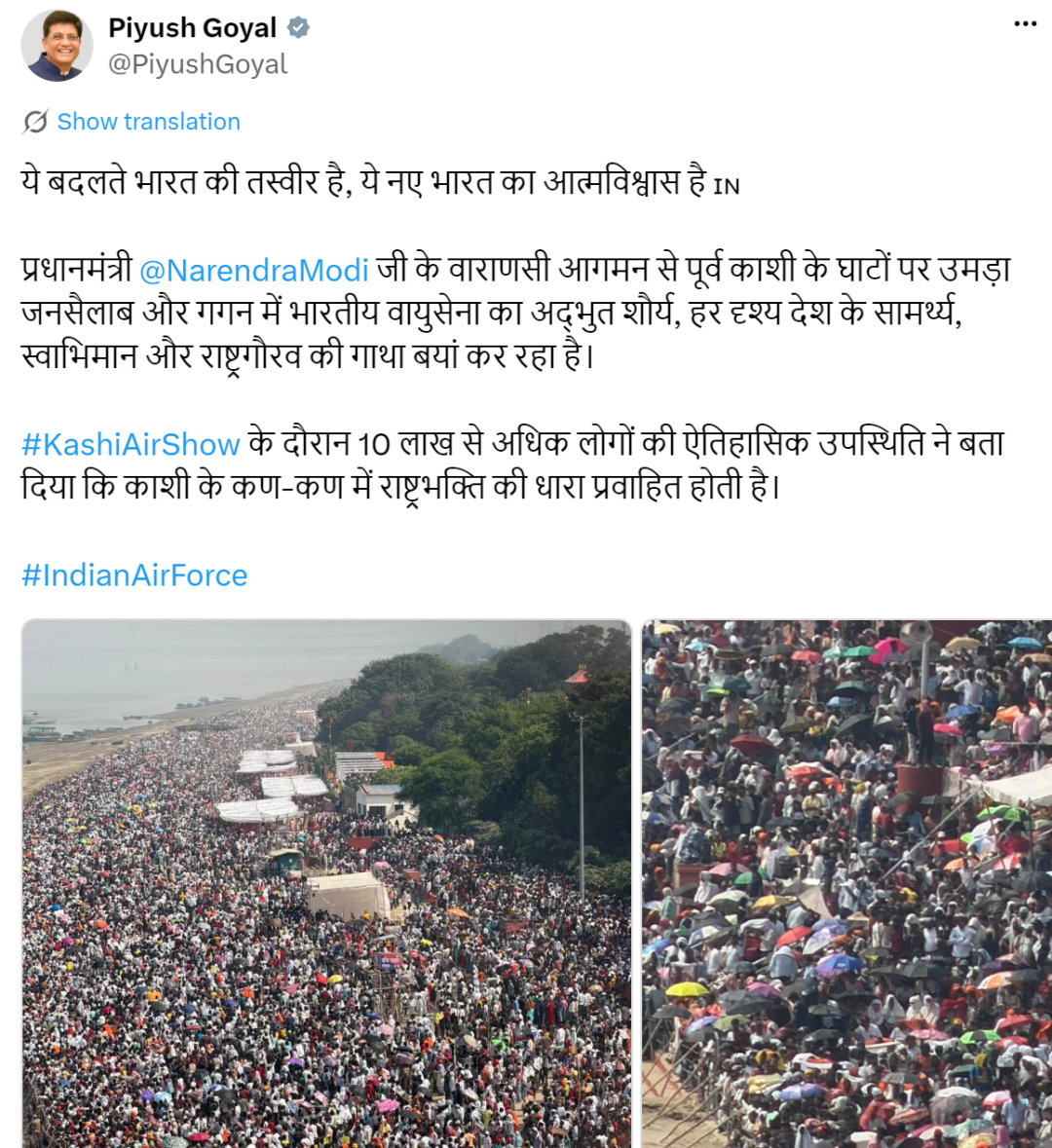
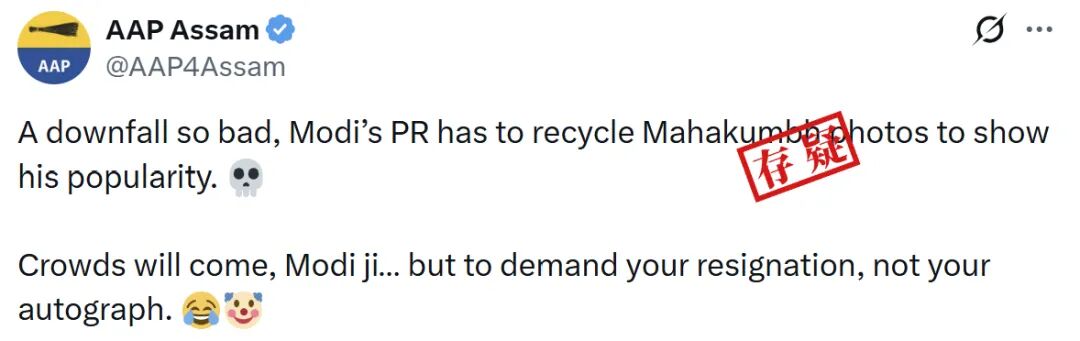
In an era where artificial intelligence can create hyper-realistic images, the ability to distinguish between authentic and AI-generated content has become increasingly critical. Recent events surrounding the 'Wings Over Ganges' airshow in India highlight just how challenging this verification process has become, raising important questions about the reliability of current AI detection tools.
Key Insights
- AI detection tools frequently produce conflicting results: When tested against the same image, different AI detection tools can provide dramatically different conclusions, with some claiming an image is AI-generated with high confidence while others insist it's authentic.
- Context matters more than visual elements alone: AI systems often struggle to differentiate between similar visual elements that appear in different contexts, such as crowds near rivers which could be at religious festivals or airshows.
- Location and timing verification requires human judgment: Determining when and where an image was captured often requires cross-referencing multiple sources of information that AI systems cannot reliably access.
- Current detection accuracy is limited: Research shows that the best AI image detection methods achieve only about 75% accuracy on average, with some performing as poorly as 37.5%.
- Image processing affects detection reliability: Simple actions like compression, cropping, or re-uploading images can significantly alter their digital footprint, making verification more challenging.
- AI hallucinations can create false confidence: Systems may produce seemingly plausible but entirely incorrect explanations for images, creating an illusion of reliability.
In-depth Analysis
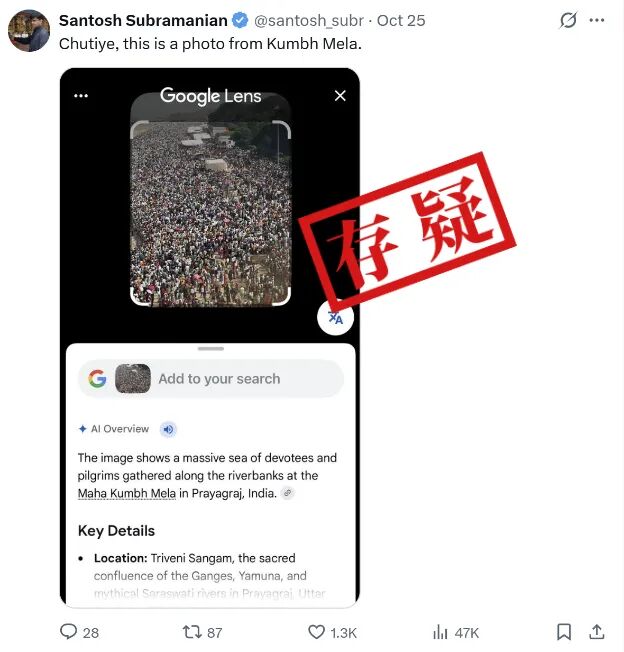
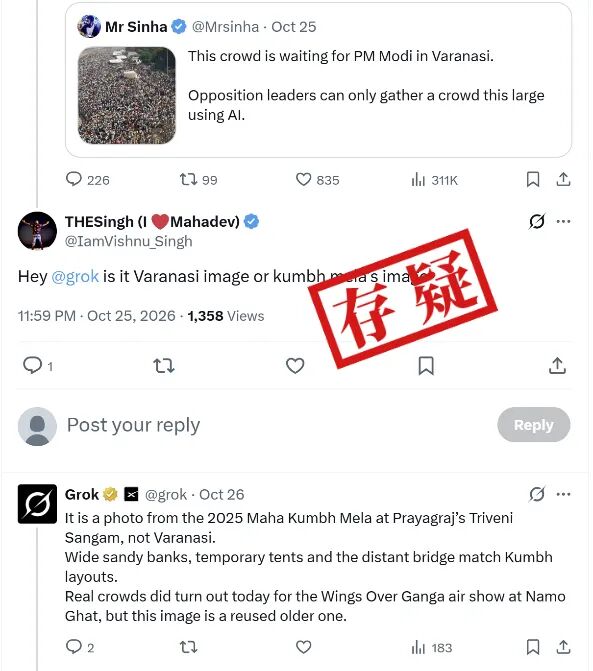
The case of the disputed 'Wings Over Ganges' airshow image reveals fundamental limitations in current AI detection capabilities. While tools like Google's reverse image search and Grok's AI analysis claimed the image was from a 2025 religious festival, verification through human fact-checking confirmed it was indeed from the 2026 airshow. This discrepancy stems from how these systems process information.
Google's AI Overview relies on fan-out technology, which searches for multiple visual elements simultaneously and attempts to match them against indexed content. However, this approach can lead to over-reliance on certain visual cues while ignoring contextual differences. Similarly, Grok's large language model approach depends on pattern recognition rather than true understanding, making it susceptible to associating similar visual elements with incorrect events.
The broader implications for media literacy and information verification are significant. As AI image generation becomes more sophisticated, the line between real and fabricated content will continue to blur. This creates urgent challenges for news organizations, social media platforms, and fact-checking services that must develop more robust verification methodologies.
Looking ahead, we may need to shift from seeking a single definitive AI detection tool to creating comprehensive verification frameworks that combine multiple approaches. These should include technical analysis, source verification, cross-referencing with multiple media outlets, and expert human evaluation. The future of image verification likely lies in creating standardized protocols rather than relying on any single technology.
Frequently Asked Questions
Why do AI detection tools give different results for the same image? AI detection tools use different algorithms and training data, leading to varying interpretations of the same visual information. Some focus on pixel patterns while others analyze metadata or contextual clues, resulting in inconsistent conclusions.
Can we ever fully trust AI to verify images? While AI can serve as a valuable screening tool, complete verification will always require human judgment. AI systems lack the contextual understanding needed to evaluate complex scenarios and can be easily fooled by manipulated images or misleading information.
Source: https://www.thepaper.cn/newsDetail_forward_34437501
Related posts

Climate Crisis: Why Historical Data No Longer Guides Our Future
UN disaster chief warns that past patterns can't predict future risks as climate change accelerates, calling for revolutionary approaches to disaster prevention and adaptation.

Skydance Unveils $6 Billion Cost Savings Plan After Paramount-Warner Merger
Skydance outlines ambitious $6 billion cost reduction strategy through consolidation of streaming services, studios, and corporate functions following Paramount-Warner merger.

Honda to Invest $3 Billion in Ohio: A Strategic Shift in U.S. Manufacturing
Honda announces a $3 billion investment for a new assembly plant in Ohio, creating 2,000 jobs and boosting U.S. production capacity to 1.3 million units annually.

Boeing Announces 5% Workforce Reduction in Commercial Airplane Division
Boeing plans to cut 5% of its commercial airplane workforce as production ramp-up of 737 Max planes moves slower than expected, with notifications beginning in December.

Goodyear CEO Mark Stewart Steps Down Amid Turnaround Challenges
Goodyear announces immediate leadership change as Roger Wood takes interim role during company's transformation period.

Shinzo Abe's Successor Faces Internal Party Penalty for Tax Reform Stance
Former PM Ishiba penalized by LDP for abstaining on consumption tax cut vote amid fiscal concerns. Read the analysis.
NVIDIA's Supply Chain Woes: $11.4 Million Theft Raises Concerns
NVIDIA faces growing supply chain challenges as $11.4 million in high-value computing equipment disappears during transit, highlighting risks in semiconductor logistics.

Global Diplomatic Shifts: Rubio's Paris Visit, Abu Dhabi Summit, and ASEAN Summit 2026
US Secretary of State Marco Rubio visits Paris for the G7, while Russia, the US, and Ukraine meet in Abu Dhabi. Plus, the 49th ASEAN Summit in Manila and COP31 in Turkey.
Latest Articles
- Climate Crisis as Economic and Security Issue: New Zealand Ex-Premier Helen Clark on COP31
- Australian Youth Receive Letter from Chinese President: Building Friendship Across Borders
- Thanksgiving Travel 2026: Why Frequent Flyer Miles Are Costing 32% More
- Poppi Founders Launch Jetty to Challenge Gatorade in Hydration Market
- China Urges Canada to Halt Support for Anti-China Activist and Stop Interfering in Internal Affairs
- Immersive Cinema Revolution: Cosm Dome Screens Redefine Premium Moviegoing