Scout Motors' 212,000 Reservations: A New Era for American EVs?
As Scout Motors completes its $2 billion South Carolina plant, the startup reveals 212,000 vehicle reservations. Here is an analysis of their strategy and market potential.
Source: CNBC
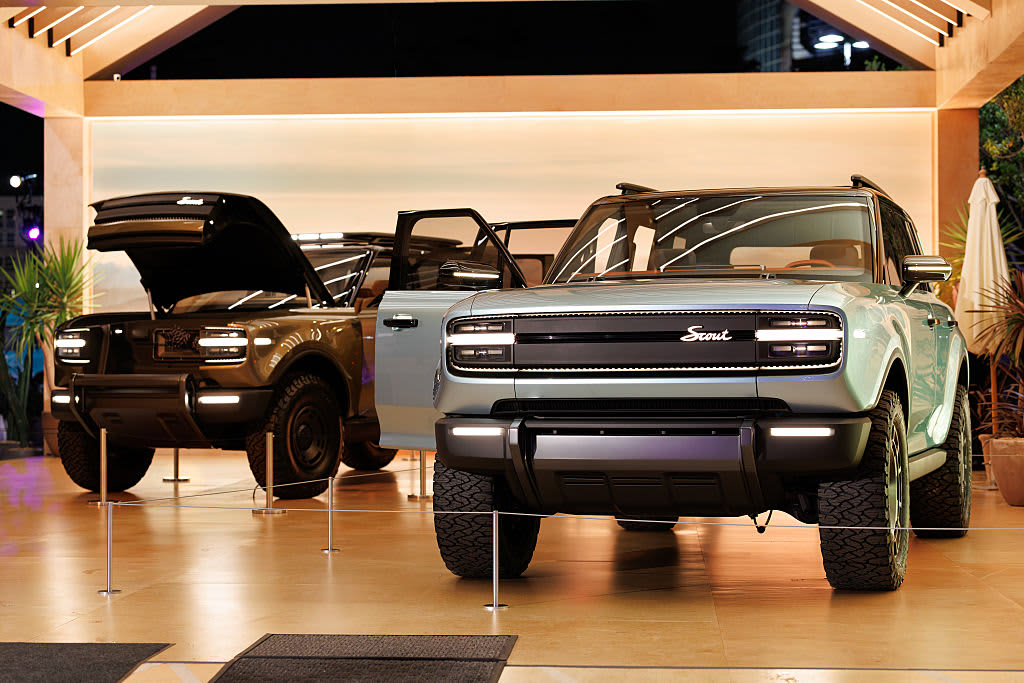
The electric vehicle (EV) landscape is rapidly evolving, and a new contender is emerging with a bold vision for American manufacturing. Scout Motors, a startup backed by Volkswagen, has announced a staggering 212,000 reservations for its upcoming Terra pickup truck and Traveler SUV. This figure comes as the company reaches a critical milestone: the final phase of construction for its massive $2 billion manufacturing facility in Blythewood, South Carolina. As the automotive industry shifts towards electrification, Scout's success—or failure—will serve as a critical case study for legacy automakers and new entrants alike.
Key Takeaways
- Massive Pre-Sales Interest: Scout Motors has secured 212,000 reservations for its Terra pickup and Traveler SUV, signaling strong early demand for its rugged, retro-inspired designs.
- Strategic Plant Completion: The company is in the final construction phase of a $2 billion South Carolina plant, aiming for full production to begin next year and customer deliveries starting in 2028.
- Dual Powertrain Strategy: To address adoption barriers, Scout will offer both all-electric models and Extended Range Electric Vehicles (EREVs), which feature a gas engine as a backup generator.
- Market Positioning: The company is targeting off-road enthusiasts and existing owners of vehicles like the Ford Bronco and Jeep Wrangler, with initial models priced under $60,000.
- Sales Conversion Focus: CEO Scott Keogh emphasizes converting reservations into actual sales, aiming for a 12-to-18-month order book to ensure production stability.
Deep Dive Analysis
The reservation numbers for Scout Motors present a fascinating paradox in the current automotive market. While the U.S. industry has seen high-profile launches like the Ford F-150 Lightning and Tesla Cybertruck generate immense hype that failed to translate into sustained sales volume, Scout appears to be approaching this challenge with a different strategy. The company's focus on a dual powertrain approach—offering both pure EVs and EREVs—suggests a pragmatic response to consumer range anxiety and charging infrastructure limitations. By including an internal combustion engine as a range extender, Scout is effectively offering a traditional truck experience with the benefits of electric motors, a move that could lower the barrier to entry for conservative buyers.
Furthermore, the decision to price the initial models under $60,000 is a calculated risk. In the current economic climate, where raw materials costs have driven up EV prices, positioning the Traveler and Terra as mid-range vehicles is a smart move to capture volume. This contrasts with the strategy of competitors like Rivian, which faced criticism for launching its R2 SUV with higher price points before establishing a foothold in the mass market. By aiming for a 12-to-18-month order book, Scout is prioritizing cash flow and production predictability over short-term profit maximization, a philosophy that is increasingly vital for startups navigating supply chain disruptions.
The demographic targeting is equally telling. By appealing to owners of the Ford Bronco and Jeep Wrangler, Scout is not just building cars; it is building a community. The reservation data, which shows 87% interest in EREV models and 75% in SUVs, indicates a strong preference for utility and versatility. This suggests that the company's retro-modern aesthetic is resonating with a specific segment of the market that values capability as much as technology. As the South Carolina plant nears completion, the real test will be whether these 212,000 reservations can be successfully converted into firm orders, proving that the hype aligns with actual consumer purchasing power.
Frequently Asked Questions
What is an Extended Range Electric Vehicle (EREV)?
An EREV is a type of vehicle that runs primarily on electricity stored in a battery, but it also includes a small internal combustion engine that acts as a generator to recharge the battery when it runs low. This allows the vehicle to have a much longer total range than a standard EV, combining the efficiency of electric driving with the long-distance capability of a traditional truck.
How does Scout Motors plan to compete with established brands like Ford and Tesla?
Scout Motors plans to compete by targeting a specific niche of off-road enthusiasts and full-size pickup truck owners. They are offering a unique blend of retro design and modern electric technology, starting with more affordable mid-level models (under $60,000) and a dual powertrain option (EREV) to address range anxiety, which are key differentiators in the current market.
When will customers actually receive their vehicles?
According to the company, full production is expected to begin next year, with customer deliveries scheduled to commence in 2028. The company is currently in the final construction phase of its $2 billion manufacturing facility in South Carolina.
Source: https://www.cnbc.com/2026/11/12/scout-motors-reservations-south-carolina-plant.html
Related posts

US Home Sales Plummet to 16-Year Low Amid Rising Mortgage Rates
Existing home sales drop to 3.75 million in October, marking the lowest level since 2010 as high mortgage rates continue to dampen the housing market.

The Truth About Vision Patches: Can They Really Reverse Myopia?
Investigation reveals how 'vision patches' on social media promise to reverse myopia but often use clinics without proper medical licenses. Learn the risks of these unverified treatments.

Building a Constructive Strategic Relationship Between US and China
Analysis of Liu Haixing's call for establishing a stable foundation for US-China relations through mutual respect, cooperation, and shared responsibility.
Immersive Star Wars Experience: Disney's New Dome Partnership
Experience the galaxy far, far away in 12K resolution. Disney's new deal with Cosm brings Star Wars to massive domes for a 50th anniversary celebration.

Indonesian Vice President Resigns Amid Political Turmoil and Power Shift
Indonesia's Vice President Gibran Rakabuming Raka steps down following legal challenges, signaling potential realignment in the nation's political landscape.

Vance Seeks Direct Iran Talks as Tehran Dismisses Proposal as 'Fantasy'
US Vice President Vance considers direct dialogue with Iranian hardliners amid escalating tensions, while Iranian officials reject the approach and threaten European bases.

CANARX Executive Arrested in Major Drug Importation Scheme
US authorities arrest top Canadian healthcare official on charges of illegal prescription drug importation, raising questions about alternative funding programs.
Gasoline Prices Drop Below $4: Why Gas Is Suddenly Cheaper
Gasoline prices have fallen below $4 a gallon for the first time in months. This analysis explores the seasonal shifts, oil market dynamics, and the geopolitical factors influencing fuel costs.
Latest Articles
- American Airlines Restores Fresh First Class Food: NY-Chicago Routes Revitalized
- JetBlue's CEO Betting on Premium Travel to Bounce Back
- Iran Unveils Underground Missile City, Boosting Regional Defense Capabilities
- AI Image Detection: How Reliable Are Current Verification Tools?
- Climate Crisis: Why Historical Data No Longer Guides Our Future
- Missing Chinese Mountaineer: 25-Year-Old Blue Sky Rescue Team Member Lost on Mount Fuji