Deadlocked Democracy: Netanyahu's High-Stakes Calculations in Israel
Israel's recent election resulted in a 53-48 deadlock. Explore the political deadlock, Netanyahu's strategy, and the historical challenges of forming a majority government.
Source: thepaper.cn
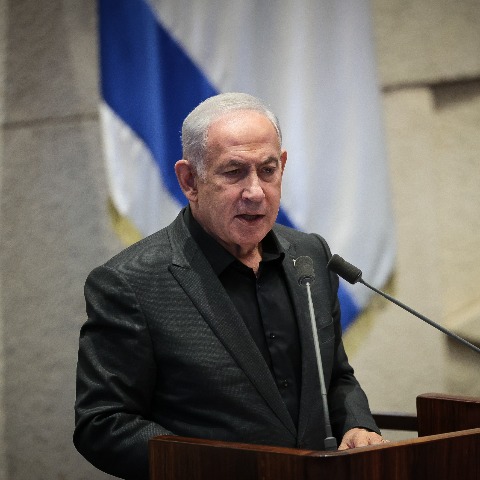
Israel's political landscape has once again descended into a complex deadlock, leaving the nation without a clear mandate just days after the polls closed. On October 27, the Central Election Commission released the final results, revealing a tight race that defies easy resolution. Prime Minister Benjamin Netanyahu's coalition secured 53 seats, while a formidable opposition led by former IDF Chief of Staff Gadi Eisenkot captured 48 seats. Adding another layer of complexity, the 19 seats held by Arab parties—unaffiliated with any bloc—further cemented the status quo. Neither side has reached the 61-seat threshold required to form a government alone, signaling a period of intense political maneuvering.
Key Takeaways
- The 61-Majority Threshold: Unlike many democracies, Israel requires a 61-seat majority in the 120-seat Knesset to form a stable government. This rigid requirement often leads to fragmented results.
- Fragmented Politics: The split between Netanyahu's right-wing bloc and Eisenkot's center-left opposition, combined with the Arab parties, creates a fragmented landscape.
- Political Deadlock: The lack of a clear majority means a period of negotiation and coalition-building is inevitable.
- Historical Context: This pattern of deadlocked elections is not new; it is a recurring feature of Israeli politics, often referred to as the "political stalemate."
- Strategic Maneuvering: Netanyahu is expected to employ various strategies to secure support, including legal challenges, negotiations with smaller parties, and leveraging his position as Prime Minister.
- National Unity Challenges: The deep societal and political divisions make it difficult to form a broad-based coalition, often leading to minority governments.
- Impact on Policy: The uncertainty can hinder policy-making and strategic decisions, particularly in sensitive areas like security and the economy.
In-Depth Analysis
The latest election results underscore a profound structural flaw in the Israeli political system. The requirement for a 61-seat majority in a 120-seat parliament creates a "winner-takes-all" dynamic that often prevents any single party from achieving a clear mandate. This fragmentation forces parties into difficult coalition negotiations, where compromise is often necessary. The inclusion of Arab parties, which hold significant sway in this specific election, highlights the growing influence of minority voices in Israeli politics.
Netanyahu's strategy appears to be one of calculated resilience. Despite facing legal challenges and a divided opposition, he retains the advantage of incumbency. His ability to navigate the complex web of smaller parties and factions will determine his future. The opposition, led by Eisenkot, faces the challenge of unifying disparate groups under a single banner. This internal cohesion is critical for them to overcome Netanyahu's entrenched position.
The political stalemate has significant implications for Israel's future. It limits the government's ability to enact sweeping reforms and creates uncertainty for investors and international partners. The constant need for coalition-building can also lead to policy paralysis, particularly in areas requiring long-term strategic planning. Furthermore, the deep societal divisions revealed by the election results pose a challenge to national unity.
The historical context of these elections is crucial. Israel has never had a government with a clear majority since its founding in 1948. This pattern of "cohabitation" between different political forces has become a defining characteristic of Israeli democracy. It reflects the country's diverse society and the challenges of governing a nation with competing ideological visions. The current deadlock is not an anomaly but a continuation of a long-standing trend.
Frequently Asked Questions
Why is a 61-seat majority required in Israel?
Israel's Basic Law: The Knesset mandates that a government can only be formed if it commands the support of at least 61 members of the Knesset. This is because the Knesset operates on a system of proportional representation, meaning that no single party typically wins a majority of seats.
What happens if no government is formed?
If no government is formed within a certain timeframe (usually 42 days), the President may ask another MK to form a government. If that also fails, new elections may be called. In extreme cases, the President may dissolve the Knesset and call for new elections.
How do Arab parties influence the political landscape?
Arab parties, while generally not part of the main coalitions, hold enough seats to act as a swing factor. Their support is crucial for any coalition seeking to reach the 61-seat threshold, giving them significant leverage in negotiations.
Source: https://www.thepaper.cn/newsDetail_forward_34379119
Related posts
G20 Foreign Ministers' Ends Without Consensus on Geopolitical and Economic Security
The recent G20 Foreign Ministers' Meeting concluded without joint communiqué amid deep divisions over Ukraine crisis, US-Iran tensions, and trade policies.

Spanish Train Crash: Viral Video is Old Footage, Not Pre-Disaster Footage
Fact-check reveals the viral video of a swaying train is from 2020, not the recent Toledo crash. Learn why misinformation spreads.

Binance Security Incident: $6.3 Billion Frozen After Hack
Binance confirms a significant security breach involving a compromised DevOps engineer's laptop. Over $6.3 billion in assets have been frozen by the exchange and stablecoin partners.

Binance $6.3B Crypto Heist: North Korean Cyber Warfare Explained
The massive $6.3 billion hack of Binance reveals the growing threat of state-sponsored cyber warfare and the regulatory gaps in the crypto industry.

AI Giants Face Critical Risks: Supply Chain and Technology Obsolescence
Explore the two most pressing challenges for AI companies like Anthropic: Taiwan's semiconductor dependence and the threat of outdated technology locking in expensive contracts.

Data Center Plans Threaten West Virginia's Wilderness and Dark Skies
A massive data center project in West Virginia raises concerns about environmental impact, light pollution, and the future of the region's pristine wilderness areas.

How Automakers Are Revolutionizing Manufacturing with 3D Printing
Ford, Rivian, and GM are democratizing 3D printing to cut costs, accelerate production, and transform automotive manufacturing processes.
Ukraine Expands Strikes, Russia Denies Progress: The Core Conflict Remains
As diplomatic talks loom in Abu Dhabi, Russia and Ukraine escalate military capabilities. Explore the stalled peace process and the deepening rift between Moscow and Washington.
Latest Articles
- EU-Canada 'Associate Member' Proposal: Ursula von der Leyen's Strategic Move Amidst Internal Divisions
- Poland's Constitutional Crisis: President Returns, PM Accused of Coup
- Global Perspectives on China's Party Discipline: Analysis of the 20th CPC Central Committee Fifth Plenum
- Starbucks Q4 2026 Earnings: U.S. Turnaround Gains Momentum Despite Missed Targets
- North Korea Linked to $6.3B Binance Hack: Cybercrime Analysis
- Budget Cars Flying Off Lots as Affordability Crisis Hits Auto Market