How Automakers Are Revolutionizing Manufacturing with 3D Printing
Ford, Rivian, and GM are democratizing 3D printing to cut costs, accelerate production, and transform automotive manufacturing processes.
Source: CNBC
The automotive industry is undergoing a quiet revolution as major manufacturers embrace 3D printing technologies to transform their production processes. What was once a niche technology has now become a critical tool for reducing costs, increasing speed, and enhancing flexibility in vehicle manufacturing. As competition intensifies in the electric vehicle market, automakers are discovering that additive manufacturing offers unprecedented advantages in rapid prototyping, custom tooling, and even production parts. This technological shift represents not just an evolution in manufacturing techniques but a fundamental rethinking of how vehicles are designed and built.
Key Applications in Automotive Manufacturing
-
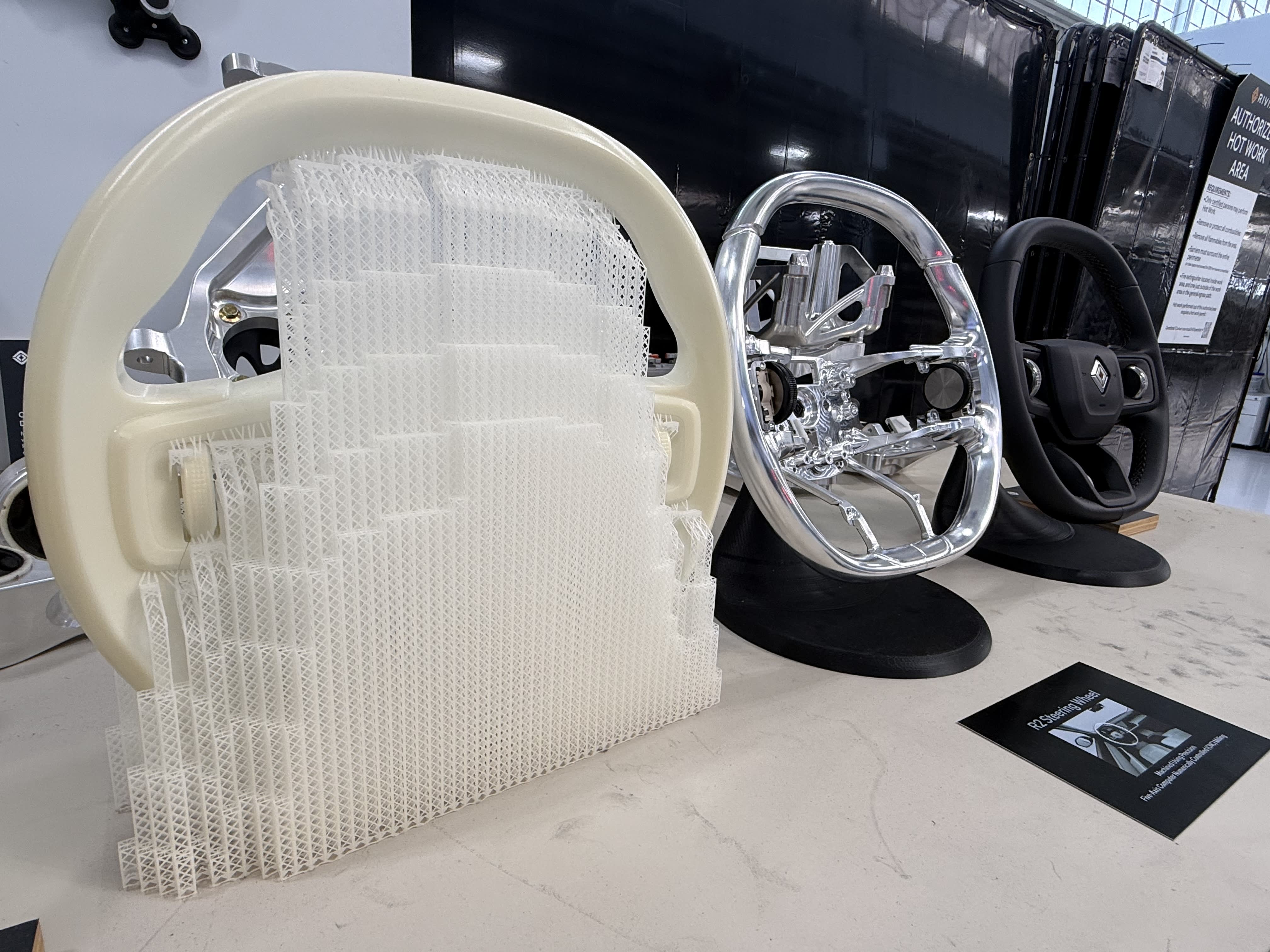
Rapid Prototyping and Design Iteration: 3D printing allows engineers to create physical models of parts in hours rather than weeks, dramatically accelerating the design cycle. This capability is particularly valuable for electric vehicle manufacturers like Rivian, which must constantly innovate to stay competitive in a rapidly evolving market.
-
Custom Tooling and Assembly Aids: Automakers are producing specialized tools and fixtures on-demand, eliminating the need for expensive custom manufacturing. Ford has implemented 3D-printed tools for torque applications, hood positioning, and adhesive smoothing, which can be designed and produced in days rather than months.
-
Production Parts and Components: While still limited in high-volume production, 3D printing is increasingly used for specialized components. GM incorporates 135 3D-printed parts in its Cadillac Celestiq, including unique components for the manual shifter knob, demonstrating the technology's capability for producing functional, end-use parts.
-
Spare Parts and Maintenance Solutions: The technology enables on-demand production of replacement parts, reducing inventory costs and downtime. Ford has used 3D printing to create critical replacement parts when suppliers couldn't deliver quickly enough, keeping assembly lines running during production interruptions.
-
Research and Development Applications: 3D printing facilitates the creation of complex test units and experimental components. Rivian uses the technology for electric motor models undergoing fluid testing, allowing engineers to validate designs more quickly and efficiently.
Industry Analysis and Future Outlook
The adoption of 3D printing in automotive manufacturing reflects broader industry trends toward digitalization and flexible production systems. As material science advances and printing technologies become more sophisticated, we can expect to see even greater integration of additive manufacturing across the entire production lifecycle. The economics are compelling—Rivian reports that their 3D printing machines typically pay for themselves within a year through reduced supplier costs, streamlined logistics, and dramatically shortened production times.
What's particularly noteworthy is how different automakers are approaching this technology. Rivian has centralized its 3D printing operations with dedicated bays at facilities, while Ford has distributed the technology across multiple plants with innovative solutions like vending machines for printed parts. GM has focused on standardizing and scaling the technology across its operations, particularly for low-volume and specialized vehicles.
Looking ahead, we can anticipate several key developments: increased use of multi-material printing, larger-format printers capable of producing bigger components, and greater integration of AI in optimizing printing parameters and designs. The technology will likely expand beyond prototyping and tooling to include more structural and functional components, potentially enabling entirely new vehicle architectures and manufacturing paradigms.
Frequently Asked Questions
How much are automakers investing in 3D printing technology? Rivian has invested over $5 million in 3D printing equipment with material costs reaching approximately $1.7 million annually. Ford has deployed more than 200 machines across its operations with plans to expand to over 23 plants by year-end, while GM has expanded its use of industrial Stratasys printers costing hundreds of thousands of dollars.
What types of materials are used in automotive 3D printing? Automakers utilize a wide range of materials including plastics, composites, ceramics, and metals. Recent advancements have enabled printing of flexible silicone parts, which opens new possibilities for seals, gaskets, and other components requiring flexibility and durability.
How does 3D printing actually save money for automakers? The technology reduces costs through multiple channels: eliminating expensive tooling for low-volume parts, reducing inventory needs by enabling on-demand production, minimizing downtime through rapid replacement of broken components, and decreasing logistics costs by producing parts locally rather than shipping them from suppliers.
Source: https://www.cnbc.com/2026/10/31/automakers-3d-printing-ford-rivian-gm.html
Related posts

Data Center Plans Threaten West Virginia's Wilderness and Dark Skies
A massive data center project in West Virginia raises concerns about environmental impact, light pollution, and the future of the region's pristine wilderness areas.

Ukraine Expands Strikes, Russia Denies Progress: The Core Conflict Remains
As diplomatic talks loom in Abu Dhabi, Russia and Ukraine escalate military capabilities. Explore the stalled peace process and the deepening rift between Moscow and Washington.

EU-Canada 'Associate Member' Proposal: Ursula von der Leyen's Strategic Move Amidst Internal Divisions
EU Commission President Ursula von der Leyen pushes for Canada to become an associate member, a bid to strengthen ties amidst US trade tensions and geopolitical shifts, despite significant internal resistance from member states.

Poland's Constitutional Crisis: President Returns, PM Accused of Coup
Poland's political standoff escalates as President Nawrocki cancels a trip and PM Tusk faces accusations of a judicial coup.

Global Perspectives on China's Party Discipline: Analysis of the 20th CPC Central Committee Fifth Plenum
International media examines how China's strengthened party discipline impacts governance, modernization, and global cooperation amid complex international challenges.

Starbucks Q4 2026 Earnings: U.S. Turnaround Gains Momentum Despite Missed Targets
Starbucks Q4 2026 earnings reveal a mixed bag: international underperformance vs. strong U.S. recovery. Discover how 'Back to Starbucks' strategy is driving growth.

North Korea Linked to $6.3B Binance Hack: Cybercrime Analysis
Blockchain intelligence firms confirm North Korea's elite unit, TraderTraitor, behind the record-breaking $6.3 billion crypto heist. Here's what happened.

Budget Cars Flying Off Lots as Affordability Crisis Hits Auto Market
Lower-priced vehicles are selling faster than premium models as consumers grapple with rising fuel costs and economic pressures, creating complex market dynamics.
Latest Articles
- South China Sea Tensions: China's Defense Ministry Responds to Philippine Actions
- North Korea Unveils New Stealth Drone at Major Aviation Exhibition
- Trump's Confrontation with Reuters Journalist Sparks Media Firestorm
- Bridging US-China Divide: Need for New Generation of China-Savvy Americans
- Chinese President Expresses Condolences Over Spain Train Accident
- The Blade Master: How an 80-Year-Old Ice Hockey Sharpener Became a Legend