South Korea's Impeached President Yoon Suk Yeol Faces Death Penalty in Second Trial for Insurrection
Special prosecutors seek the death penalty for former President Yoon Suk Yeol, citing a grave violation of constitutional order. Read the full analysis of this historic case.
Source: thepaper.cn
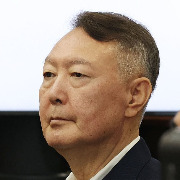
The political landscape of South Korea is currently witnessing one of its most dramatic and consequential legal battles. Former President Yoon Suk Yeol, who was impeached and arrested following a controversial martial law declaration, is now facing a potential death sentence in his second trial. The Special Counsel's office has formally requested the court to impose the harshest possible penalty, arguing that his actions constituted an unprecedented attack on the nation's democratic foundations. This development marks a critical juncture in South Korean history, raising profound questions about accountability, the stability of the constitutional order, and the future of the country's political institutions.
Key Details of the Case
- Death Penalty Request: The Special Counsel for the Dec 3 Martial Law Incident officially requested the death penalty for former President Yoon Suk Yeol during the second trial on October 29, 2026.
- Nature of the Crime: Prosecutors characterize the incident not merely as a political misstep, but as a calculated attempt to overthrow the government. They argue that the declaration of martial law was a direct assault on the constitutional order, aiming to turn back the clock on Korea's democratic progress by more than four decades.
- Legal Precedent: Under South Korean law, leaders of an insurrection can be sentenced to death or life imprisonment. The special prosecution team believes the gravity of the crime fully warrants the death penalty.
- Court's Role: The court is set to hear Yoon's final defense and personal statement on November 5. A ruling on the second trial is expected shortly thereafter.
- Prior Legal History: Yoon was first indicted in January 2026. In February 2026, the Seoul Central District Court found him guilty of leading the insurrection and sentenced him to life imprisonment. The special prosecution's new request for the death penalty represents a significant escalation of the legal proceedings.
- Prosecution's Rationale: The prosecution contends that the first trial did not fully uncover the truth of the event. They argue that a life sentence was insufficient to reflect the severity of the crime and the damage done to the nation's history and civic values.
- Absence of Mitigating Factors: The prosecution explicitly rejected the argument that the death penalty might be wrong due to a risk of wrongful conviction. They stated that the evidence is overwhelming and that South Korea's long-standing practice of not carrying out the death penalty cannot serve as a justification for leniency in this unique case.
In-Depth Analysis
This unprecedented legal pursuit of a former head of state for insurrection sends a powerful signal about the strength of South Korea's democratic institutions. The fact that the Special Counsel is seeking the death penalty indicates a determination to treat the martial law declaration as a grave constitutional crisis rather than a political scandal. It suggests a societal consensus that the erosion of democratic norms cannot be tolerated, regardless of the office held. The prosecution's emphasis on the 'destruction of constitutional order' frames the case not just as a crime against the state, but as an attack on the very identity of the Korean nation as a democracy.
The legal strategy appears to be aimed at setting a precedent. A death sentence would serve as a stark warning to future leaders and the public, reinforcing the principle that no one is above the law. However, the outcome of this trial will also have significant implications for the political climate. It could deepen the polarization that has characterized South Korean politics in recent years, with supporters viewing the prosecution as a political vendetta and opponents seeing it as a necessary step for justice. The court's decision will be closely watched not only in South Korea but also by international observers, as it tests the resilience of the country's judicial system under immense public pressure.
Frequently Asked Questions
Q: What was the 'Dec 3 Martial Law Incident'? A: On December 3, 2024, then-President Yoon Suk Yeol declared a state of emergency, citing the need to eliminate 'pro-North Korean forces.' The martial law was lifted the following morning after the National Assembly passed a resolution demanding its end, leading to Yoon's subsequent impeachment, arrest, and criminal trials.
Q: Why is the death penalty being sought now? A: The Special Counsel believes the first trial's sentence was too lenient. They argue that the act of a democratically elected president attempting a coup is an unforgivable crime that warrants the maximum penalty, and that the long-standing lack of executions in Korea should not prevent them from seeking this sentence in this specific case.
Q: What happens if Yoon is found guilty of insurrection? A: If the court upholds the death penalty, it would be the most severe punishment for a former president in South Korea's modern history. This would cement his legacy as a figure who attempted to dismantle the country's democracy, serving as a permanent cautionary tale in South Korean political history.
Source: https://www.thepaper.cn/newsDetail_forward_34358733
Related posts

COP17 in Yerevan: Global Biodiversity Framework Review and Funding Gaps
UN Biodiversity Conference reaches critical stage; 14 resolutions passed but funding and enforcement remain major hurdles.

Bolsonaro Son Vows Opposition to Lula Government from Abroad, Thanks Trump and Milei
Flavio Bolsonaro, defeated Brazilian presidential candidate, declares leadership from exile while thanking foreign allies amid political turmoil.

FedEx Exceeds Q3 Earnings Expectations, Raises Full-Year Outlook
FedEx reports stronger-than-expected quarterly results and boosts annual guidance following fiscal year realignment and FedEx Freight spinoff.

Lula Criticizes Bolsonaro Son's Fleeing Brazil as 'Shameful' After Election Defeat
Brazilian President Luiz Inácio Lula da Silva condemns Flávio Bolsonaro's departure to the US as 'shameful' despite a Supreme Court order to stay. Explore the political crisis and constitutional crisis.
China's Reduced Presence at ASEAN Defense Ministers' Meeting: A Sign of Deteriorating Sino-Philippine Relations
An analysis of China's decision to downgrade its participation in the ASEAN Defense Ministers' Meeting, highlighting the escalating tensions between China and the Philippines.

China Car Exports Surge Amidst Domestic Sales Slump
Why Chinese automakers are aggressively expanding overseas despite a 22% drop in domestic car sales driven by economic uncertainty.

US Military Costs Against Iran Top $4.7 Billion, Damages Unaccounted For
US spending on operations against Iran exceeds $4.7B, excluding critical base repair costs. Analysis of the escalating military expenses and regional impact.
Real Madrid Mbappe Controversy: AI-Generated Statement Debunked
Investigation confirms the viral Real Madrid apology screenshot was AI-generated. Here is the truth behind the Mbappe controversy and the official responses.
Latest Articles
- US Signals Potential Intense Military Action Against Iran After Midterm Elections
- Boeing 737 Max Production Delayed Until Late 2027
- Honda warns 50% Canada auto tariffs would be catastrophic for industry
- AI Risk and Global Governance: The 20% Probability Dilemma
- Democratic Republic of Congo Ebola Cases Surpass 10,000 Amid Largest Outbreak in History
- Coca-Cola Raises Full-Year Outlook Despite North America Demand Weakness