Oil Exports Plummet as Iran Increases Attacks in Strait of Hormuz
Three oil tankers hit by mines in one week, causing a sharp drop in global crude exports. Read the analysis of the escalating crisis.
Source: thepaper.cn
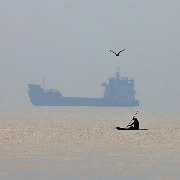
The Strait of Hormuz, the world's most critical oil transit chokepoint, has descended into a zone of extreme volatility. Recent weeks have witnessed a dramatic escalation in maritime attacks, with Iran intensifying its campaign against commercial shipping. This surge in violence has not only endangered global trade but has also triggered a severe disruption in oil supplies, causing crude export volumes to plummet back toward pre-war lows. The situation represents a direct challenge to global energy stability and highlights the fragile nature of maritime security in the Persian Gulf.
Key Developments and Attacks
- Rising Frequency of Incidents: In a shocking escalation, three oil tankers were hit by mines or suffered explosions within a single week. The most recent incident occurred on October 19, when a tanker violated navigation rules and struck a mine while attempting to leave the Strait.
- Targeting of Navigation Systems: Iran has explicitly stated that any vessel attempting to pass through the Strait with its GPS and navigation systems shut off will be treated as a hostile target. This policy has led to a wave of attacks against ships using unauthorized routes.
- Widening Target Scope: The violence is no longer limited to oil tankers. Recent reports indicate that container ships and bulk carriers have also been targeted. Singaporean authorities confirmed that a registered container ship was hit by an unknown projectile, resulting in a fire and subsequent sinking.
- Historical Highs in Attacks: According to the UK Maritime Trade Operations (UKMTO), the number of reported attacks in the region has reached an all-time high. During the week of October 5-11 alone, 12 ships were struck, with six attacked in a single day.
- Sinking of Commercial Vessels: The destruction of infrastructure is a major concern. The container ship 'GFS Pride' sank after being attacked, and the commercial vessel 'Cape Dao,' which was struck in September, has also been confirmed sunk by the International Maritime Organization.
In-Depth Analysis
The recent surge in attacks in the Strait of Hormuz is a calculated geopolitical maneuver by Iran designed to exert maximum pressure on the global economy and influence international politics. By targeting the arteries of global oil supply, Iran aims to destabilize energy markets and drive up oil prices, thereby undermining the economic recovery efforts of its adversaries.
A key insight into Iran's strategy is the targeting of the 'shuttle transport system.' To bypass the immediate threat in the Strait, Gulf nations have adopted a complex logistics strategy. They ship crude to a staging point in the Gulf of Oman, such as the port of Fujairah in the UAE, where it is transferred to larger tankers. While this system has successfully restored some export volumes to near pre-war levels, the recent escalation has severely damaged its efficacy. The data speaks for itself: oil exports through the Strait dropped from nearly 20.8 million barrels on October 8 to just 2.9 million barrels on October 11, a catastrophic 85% reduction in just three days.
Furthermore, Iran is leveraging the upcoming U.S. midterm elections as a timing factor for its operations. Anonymous U.S. officials have confirmed that the Revolutionary Guard is using small, unarmed observation boats to identify targets, allowing for precise strikes without immediate escalation to full-scale war. This strategy of 'controlled chaos' is intended to disrupt global energy security without triggering a direct military confrontation with the United States or Israel.
Frequently Asked Questions
Q: Why is the Strait of Hormuz so important? A: It is the only sea passage from the Persian Gulf to the open ocean. Roughly 20% to 30% of the world's petroleum passes through this narrow chokepoint, making it a critical artery for global energy supplies.
Q: How are countries protecting their ships? A: Many nations have increased naval patrols in the region, and shipping companies are adopting stricter navigation protocols, such as maintaining constant GPS signal and avoiding known 'no-go' zones.
Q: What is the 'shuttle transport system'? A: It is a workaround strategy where crude oil is first transported by smaller vessels to a safer anchorage in the Gulf of Oman, like Fujairah, and then transferred to larger tankers for the final leg of the journey to international markets.
Source: https://www.thepaper.cn/newsDetail_forward_34281638
Related posts

High-and-Mighty Cabinet: More Officials Visit Yasukuni Shrine Amid Rising Controversy
Environment Minister Miyamoto Hiroyuki joins a growing list of conservative politicians visiting Yasukuni Shrine, sparking diplomatic tensions and domestic debate.
Shanghai's Cultural Renaissance: Festival, Theater, and Consortium Illuminate the City's Artistic Future
Exploring how Shanghai's 25th International Arts Festival, Grand Theater, and Performing Arts Consortium are transforming the city into a global cultural hub through innovative programming and accessible art experiences.

Japan's High-profile Yasukuni Shrine Visit: A Challenge to Post-War Order
Prime Minister Sanae Takaichi and over 70 lawmakers attend the autumn festival, provoking international condemnation.

Netflix cuts 1,000 jobs as streaming growth slows and competition intensifies
Netflix lays off 6% of its workforce amid stagnating viewership and the rise of competitors like Skydance and YouTube.

U.S. Loosens Fuel Economy Rules: Boost for V-8 Engines and Pickup Trucks
The U.S. lowers fuel economy targets to 34.9 mpg by 2031. Automakers see a financial tailwind, leading to a resurgence of V-8 engines and a shift away from compliance-focused EV investments.

Noah Adams: NPR Icon And Voice For Rural America
Explore the legacy of NPR's Noah Adams, a master storyteller who captured the soul of rural America and shaped public radio journalism for decades.

Social Security Benefits Boost, Russia-Ukraine War Updates, And Global Geopolitical Shifts
Explore the latest Social Security increase, the strategic implications of Russia's Starshield, and the Houthis' attack on Aramco in this comprehensive global analysis.

COP17: Critical Moment for Biodiversity Framework Implementation
As the Kunming-Montreal Global Biodiversity Framework faces implementation challenges, COP17 must deliver concrete solutions to address funding gaps, subsidy reforms, and global cooperation.
Latest Articles
- Iran's Deep Involvement in Yemen Conflict and Egypt's Potential Military Intervention
- Haze from Kalimantan Forest Fires Reaches Jakarta Sky
- France Protests 2026: Mass Demonstrations Over Living Costs and Education
- Trump Signs Executive Order to Waive Key Sanctions on Russia Amid Energy Crisis
- LDP Senior Official Visits Yasukuni Shrine Amid Rising Regional Tensions
- Merck CEO: Cancer Vaccine Production Timeline to Shorten