AI Weather Forecasting: Tech Giants Lead, But Trust in Extreme Events Remains Elusive
Google, Huawei, Microsoft, and Nvidia race to dominate AI weather prediction, yet studies show AI models fail at extreme weather. Can they replace traditional forecasting?
Source: thepaper.cn
When Hurricane Melissa slammed into Jamaica in October 2025, its path was erratic and its winds reached nearly 300 kilometers per hour—a nightmare scenario for forecasters. Yet three days before landfall, the U.S. National Hurricane Center issued a stark warning: the storm would rapidly intensify from a Category 1 to a deadly Category 5. That lifesaving call was made possible, in large part, by an artificial intelligence model from Google DeepMind. This moment underscored a seismic shift in meteorology, as tech giants pour billions into AI-driven forecasting, challenging decades of supercomputer-based physics. But as these models dazzle with speed and accuracy, a critical question looms: Can we trust them when the stakes are highest—during unprecedented, record-breaking extreme weather?
The race to revolutionize weather prediction is no longer just about improving forecasts; it's about who will own the future of climate intelligence. With AI models now generating global predictions in seconds, the traditional bastions of meteorology are being forced to adapt or risk obsolescence. However, recent academic studies have exposed troubling blind spots in AI's ability to handle extremes, raising concerns about over-reliance on these black-box systems.
Key Developments
-
Google's DeepMind has emerged as a frontrunner. Its GraphCast model, first published in Science in November 2023, has been operational in hurricane forecasting since early 2025. A study in Nature (August 2026) showed that AI forecasts for hurricane track, intensity, and structure lead traditional models by a full day or more. For 5-day track predictions, Google's model is over 30 hours more accurate than the best public competitor. Google also launched the interactive Google Weather Lab in 2025 and the more powerful WeatherNext 3 model in 2026, offering global hourly high-resolution forecasts.
-
Huawei's Pangu-Weather model, unveiled in Nature in July 2023, uses a 3D transformer architecture and excels in tropical cyclone tracking. Its runtime is tens of thousands of times faster than traditional numerical models, making it a formidable contender, especially in the Asia-Pacific region.
-
Nvidia has been iterating on its FourCastNet model, first open-sourced in 2022, which uses Fourier neural operators. In January 2026, Nvidia released FourCastNet 2.0/3.0 NIM containers within its Earth-2 platform, capable of generating probabilistic global forecasts in seconds. This significantly reduces energy consumption compared to traditional models.
-
Microsoft Research entered the fray with Aurora, a 1.3-billion-parameter atmospheric foundation model released in June 2024. Aurora extends beyond weather to predict air quality and ocean waves. In July 2026, Microsoft launched Aurora 1.5, which deepens connections to operational business applications.
-
Even the European Centre for Medium-Range Weather Forecasts (ECMWF), the gold standard of traditional forecasting, has embraced AI. It operationalized its own AI model, AIFS, between late 2023 and 2025, signaling that even the most established institutions see the value of machine learning.
Despite these advancements, a chorus of academic studies has raised red flags. A May 2026 study in Science Advances by researchers from Karlsruhe Institute of Technology and the University of Geneva compared multiple AI models against top physical models in thousands of record-breaking weather scenarios. The result: AI models systematically underestimated the intensity and frequency of extreme heatwaves, cold snaps, and storms.
The root cause lies in AI's fundamental design. As researchers from the University of Chicago and New York University noted in PNAS (May 2025), AI models are pattern-recognition engines trained on 40 years of historical data. When faced with conditions never seen before, they tend to regress to the mean, severely downplaying disaster severity. Additionally, a structural analysis from Rice University (March 2026) found that AI-generated wind fields often violate basic atmospheric physics, such as gradient wind balance near the storm's eye.
In-Depth Analysis
The promise of AI weather forecasting is undeniable: speed, cost-efficiency, and impressive accuracy for routine forecasts. But the recent scrutiny reveals a paradox. AI models are essentially statistical mirrors of the past, and in a rapidly changing climate, the past is no longer a reliable guide to the future. This is not just a technical limitation—it's a matter of life and death. When a heatwave shatters records by 5°C or a storm intensifies beyond any historical precedent, AI models may offer dangerously reassuring forecasts. The 2025 hurricane season, including Melissa, showcased AI's strengths in predicting rapid intensification, but that success was partly due to the availability of similar past events. The real test will come with truly unprecedented extremes, which are becoming more frequent due to climate change.
The competitive landscape is also intriguing. Tech giants are not just building models; they are creating ecosystems. Google's WeatherNext 3, Nvidia's Earth-2, and Microsoft's Aurora are platforms that could integrate with their cloud services, giving them a strategic foothold in climate-related industries like agriculture, insurance, and disaster management. This has raised concerns about data monopolies and the transparency of proprietary models. Unlike traditional physical models, which are based on open scientific principles, AI models are often black boxes, making it difficult for meteorologists to understand why a forecast was made or to verify its reliability.
The consensus among experts, including MIT's Kerry Emanuel and the National Hurricane Center's Mike Brennan, is that AI should be treated as a powerful reference tool, not a replacement for traditional methods. The final decision in life-and-death situations must still rely on human experience and physical models. This hybrid approach—using AI to augment, not replace—may be the most pragmatic path forward. As we look ahead, the integration of AI with physics-based models, known as physics-informed AI, could bridge the gap, but it remains in its infancy. The race is not just about who has the best algorithm; it's about who can build a system that earns trust when the next 'unprecedented' storm hits.
Frequently Asked Questions
Source: https://www.thepaper.cn/newsDetail_forward_34022960
Related posts
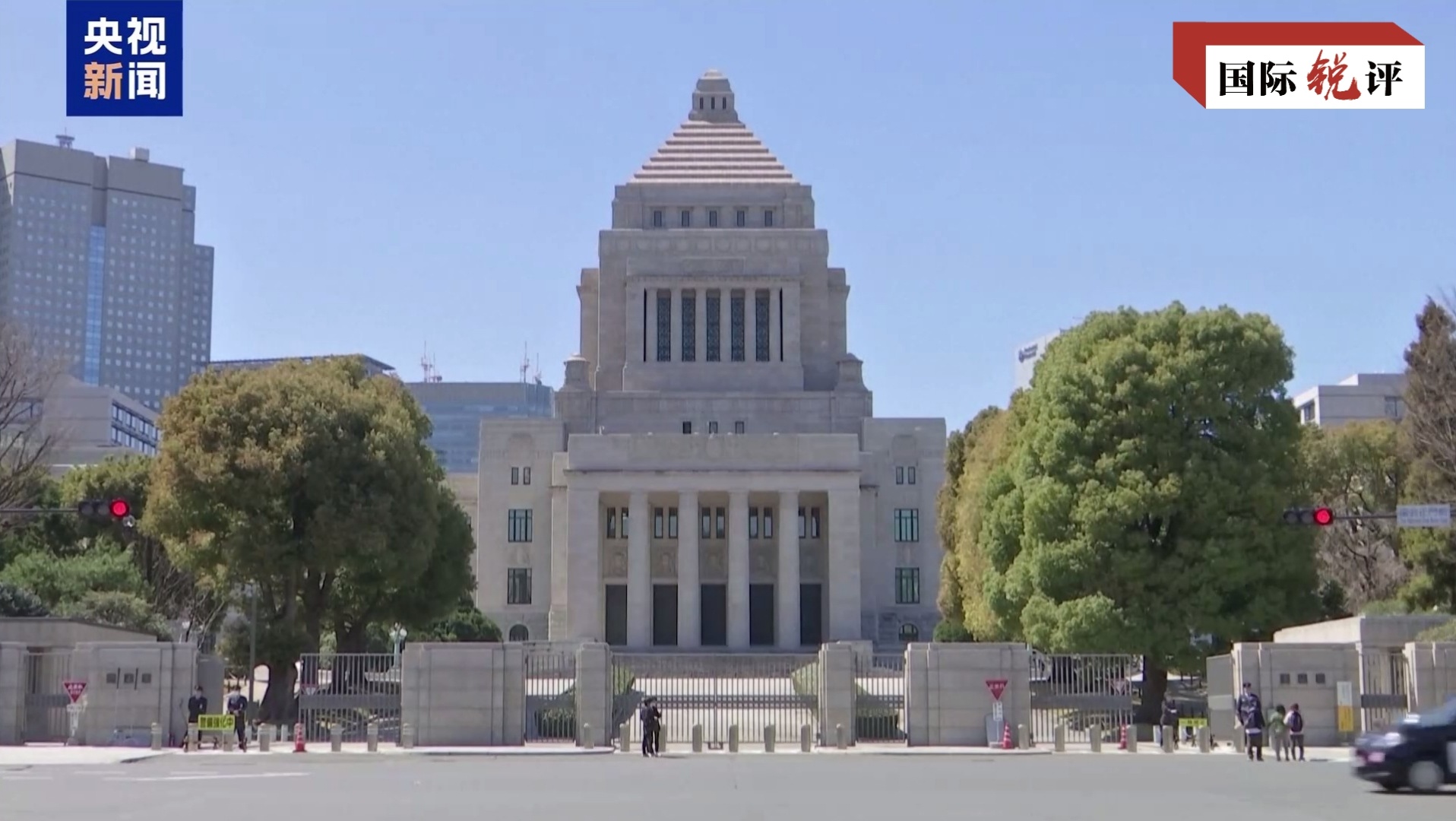
Japanese Politicians' Yasukuni Shrine Visits Spark International Concern
Recent visits by Japanese officials to the controversial war shrine raise alarms about historical revisionism and militarization in the region.

JPMorgan Chase's $5 Billion Defense Strategy: Robot Factories & Hypersonic Missiles
JPMorgan invests $5B in defense startups like Hadrian and Castelion to secure US supply chains against geopolitical threats.

Netflix cuts 1,000 jobs as streaming growth slows and competition intensifies
Netflix lays off 6% of its workforce amid stagnating viewership and the rise of competitors like Skydance and YouTube.

Shanghai's Cultural Renaissance: Festival, Theater, and Consortium Illuminate the City's Artistic Future
Exploring how Shanghai's 25th International Arts Festival, Grand Theater, and Performing Arts Consortium are transforming the city into a global cultural hub through innovative programming and accessible art experiences.

High-and-Mighty Cabinet: More Officials Visit Yasukuni Shrine Amid Rising Controversy
Environment Minister Miyamoto Hiroyuki joins a growing list of conservative politicians visiting Yasukuni Shrine, sparking diplomatic tensions and domestic debate.

Oil Exports Plummet as Iran Increases Attacks in Strait of Hormuz
Three oil tankers hit by mines in one week, causing a sharp drop in global crude exports. Read the analysis of the escalating crisis.

Food Bank Lines Surge Ahead of Midterms: US Families Face Inflation and Welfare Cuts
As inflation and federal budget cuts tighten their grip, long lines are forming at US food banks. This is the reality facing American families ahead of the 2026 midterm elections.
Japan's High-profile Yasukuni Shrine Visit: A Challenge to Post-War Order
Prime Minister Sanae Takaichi and over 70 lawmakers attend the autumn festival, provoking international condemnation.
Latest Articles
- U.S. Loosens Fuel Economy Rules: Boost for V-8 Engines and Pickup Trucks
- Noah Adams: NPR Icon And Voice For Rural America
- Social Security Benefits Boost, Russia-Ukraine War Updates, And Global Geopolitical Shifts
- COP17: Critical Moment for Biodiversity Framework Implementation
- Iran's Deep Involvement in Yemen Conflict and Egypt's Potential Military Intervention
- Haze from Kalimantan Forest Fires Reaches Jakarta Sky