US Colleges Adopt Direct Admission to Counter Enrollment Cliff
With fewer 18-year-olds, hundreds of US colleges now use direct admission to attract students. Learn how this trend reshapes higher ed recruitment.
Source: thepaper.cn
The demographic cliff has arrived on American campuses. With the number of 18-year-olds declining sharply, hundreds of US colleges are flipping the traditional admissions script: instead of waiting for students to apply, they are proactively sending out acceptance letters based on minimal criteria like high school transcripts. This shift from "student seeks college" to "college seeks student" marks a significant transformation in higher education recruitment, with implications for access, equity, and institutional survival.
Key Developments
-
Direct admission is expanding rapidly across the US. Over a dozen states now have direct admission programs, and the number of participating colleges on the Common App has more than tripled since the 2023-2024 academic year. Roughly one-fifth of Common App's partner institutions now offer this option, signaling a major shift in how colleges approach recruitment.
-
The process is dramatically simplified. Through platforms like Common App and Niche, students can receive admission offers by submitting only basic information such as high school grades. No essays, no extracurricular lists, no standardized test scores. The system automatically matches eligible students with colleges, reducing barriers and anxiety for applicants.
-
Average acceptance rates exceed 70%. According to the National Association for College Admission Counseling (NACAC), the average acceptance rate at four-year nonprofit universities surpassed 70% in 2023. With such high acceptance rates, the traditional application process becomes less meaningful for many institutions, making direct admission a more efficient approach.
-
Students receive multiple offers. On the Niche platform alone, over 160 colleges will offer direct admission this application season. Students can immediately see scholarship eligibility based on their grades and still apply for other financial aid. On average, students receive eight direct admission offers, giving them more choices than ever before.
-
Regional colleges see tangible benefits. Jacksonville State University in Alabama, which typically drew only local students, received about 2,000 applications after adopting direct admission last year, including students from southern and western parts of the state. Ultimately, 150-200 of those students enrolled, demonstrating the potential to broaden geographic reach.
-
Colleges are changing their mindset. Kalamazoo College in Michigan added direct admission this year through a matching platform. Its dean, Karin Crowley, noted, "We can no longer take a wait-for-students-to-come attitude." This reflects a broader recognition that colleges must actively compete for a shrinking pool of students.
-
Challenges remain in converting offers to enrollments. While direct admission generates many offers, the actual yield rate—the percentage of admitted students who enroll—is often lower than traditional admissions. Colleges must work harder to convince students to choose them, especially when students have multiple offers.
Financial transparency is a growing concern. Critics point out that some colleges do not clearly communicate the cost of attendance in their direct admission offers, creating a gap between being admitted and being able to afford it. In response, Alabama now requires participating colleges to include cost information in the initial offer letter.
In-Depth Analysis
The rise of direct admission is a direct response to the demographic cliff that has been looming over US higher education for years. The number of high school graduates peaked around 2025 and is now declining, hitting less selective institutions hardest. These colleges, often regional public universities or small private liberal arts colleges, face intense competition for a shrinking pool of students. Direct admission offers a way to cut through the noise and reach students who might otherwise not consider them.
However, this trend also reflects a deeper shift in the power dynamics of college admissions. For decades, the narrative has been about students competing for spots at elite institutions. Now, for the majority of colleges, the roles are reversed. This could have positive effects on access, particularly for first-generation and minority students who may be intimidated by complex application processes. By removing barriers, direct admission democratizes the initial step of college entry.
Yet, the model is not without its critics. Some worry that the proliferation of offers could overwhelm students and make the process more confusing, not less. The lack of clear financial information in some offers exacerbates this confusion, leading to mismatched expectations. As more states and platforms adopt direct admission, the key will be whether it can actually increase enrollment rates, not just the number of offers sent. Colleges will need to invest in personalized follow-up and financial counseling to convert offers into matriculation.
Looking ahead, we can expect direct admission to become a standard feature of the admissions landscape, especially for institutions that are not in the top tier. The next few years will be a test: can direct admission sustain enrollment and promote diversity, or will it become just another marketing tool that fails to address underlying issues of affordability and fit? The answer will shape the future of college access in America.
Frequently Asked Questions
What is direct admission? Direct admission is a process where colleges proactively offer admission to students based on limited information, such as high school transcripts, without requiring a traditional application. Students may receive offers through platforms like Common App or Niche, often with scholarship information included.
Does direct admission guarantee financial aid? Not necessarily. While some colleges provide scholarship offers based on grades, the total financial aid package may vary. Students are encouraged to review the cost and aid details carefully, as some states now require colleges to include cost information in the initial offer.
How can students benefit from direct admission? Direct admission reduces the stress and time associated with college applications. Students can receive multiple offers early, compare options, and still apply to other colleges. It also opens doors for students who might not have considered certain colleges due to application complexity.
Source: https://www.thepaper.cn/newsDetail_forward_34007024
Related posts

U.S. Loosens Fuel Economy Rules: Boost for V-8 Engines and Pickup Trucks
The U.S. lowers fuel economy targets to 34.9 mpg by 2031. Automakers see a financial tailwind, leading to a resurgence of V-8 engines and a shift away from compliance-focused EV investments.

Noah Adams: NPR Icon And Voice For Rural America
Explore the legacy of NPR's Noah Adams, a master storyteller who captured the soul of rural America and shaped public radio journalism for decades.

Social Security Benefits Boost, Russia-Ukraine War Updates, And Global Geopolitical Shifts
Explore the latest Social Security increase, the strategic implications of Russia's Starshield, and the Houthis' attack on Aramco in this comprehensive global analysis.

COP17: Critical Moment for Biodiversity Framework Implementation
As the Kunming-Montreal Global Biodiversity Framework faces implementation challenges, COP17 must deliver concrete solutions to address funding gaps, subsidy reforms, and global cooperation.

Iran's Deep Involvement in Yemen Conflict and Egypt's Potential Military Intervention
Saudi Arabia faces critical shortages in air defense due to Houthi attacks, prompting urgent requests for help. Reports reveal Iran's intelligence support for Houthi strikes, while Egypt prepares to defend Saudi sovereignty.
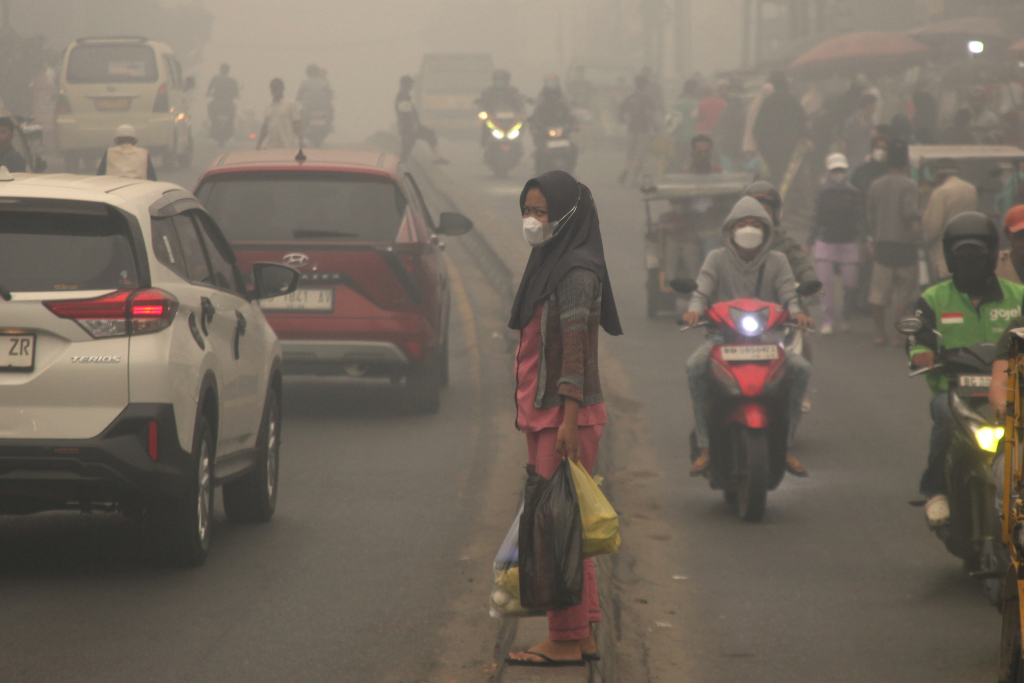
Haze from Kalimantan Forest Fires Reaches Jakarta Sky
Smoke from massive forest fires in Kalimantan, Indonesia, has drifted over the capital, Jakarta, creating hazardous air quality conditions and affecting neighboring Singapore and Malaysia.

France Protests 2026: Mass Demonstrations Over Living Costs and Education
Hundreds arrested in France as millions march against fuel prices, education cuts, and public service reforms. Explore the latest updates.

Trump Signs Executive Order to Waive Key Sanctions on Russia Amid Energy Crisis
Trump administration exempts major parts of the Graham Bill, including 500% tariffs on Russian imports, to stabilize domestic fuel markets.
Latest Articles
- LDP Senior Official Visits Yasukuni Shrine Amid Rising Regional Tensions
- Merck CEO: Cancer Vaccine Production Timeline to Shorten
- Porsche Unveils Mission S Concept: New Flagship Design Direction
- AI Startup Bankruptcies: The Reverse Acquihire Trend Explained
- IMF Secretary-General Warns: Strait of Hormuz Risks Remain High Amid Rising Attacks
- Trump's AI to SI Rename: Political Theater or Tech Revolution?