Ford Ramps Up F-150 Production as August Sales Drop 10.3%
Ford accelerates F-Series pickup production to recover from supplier fires, despite an 8th straight month of U.S. sales declines. Analysis and outlook.
Source: CNBC
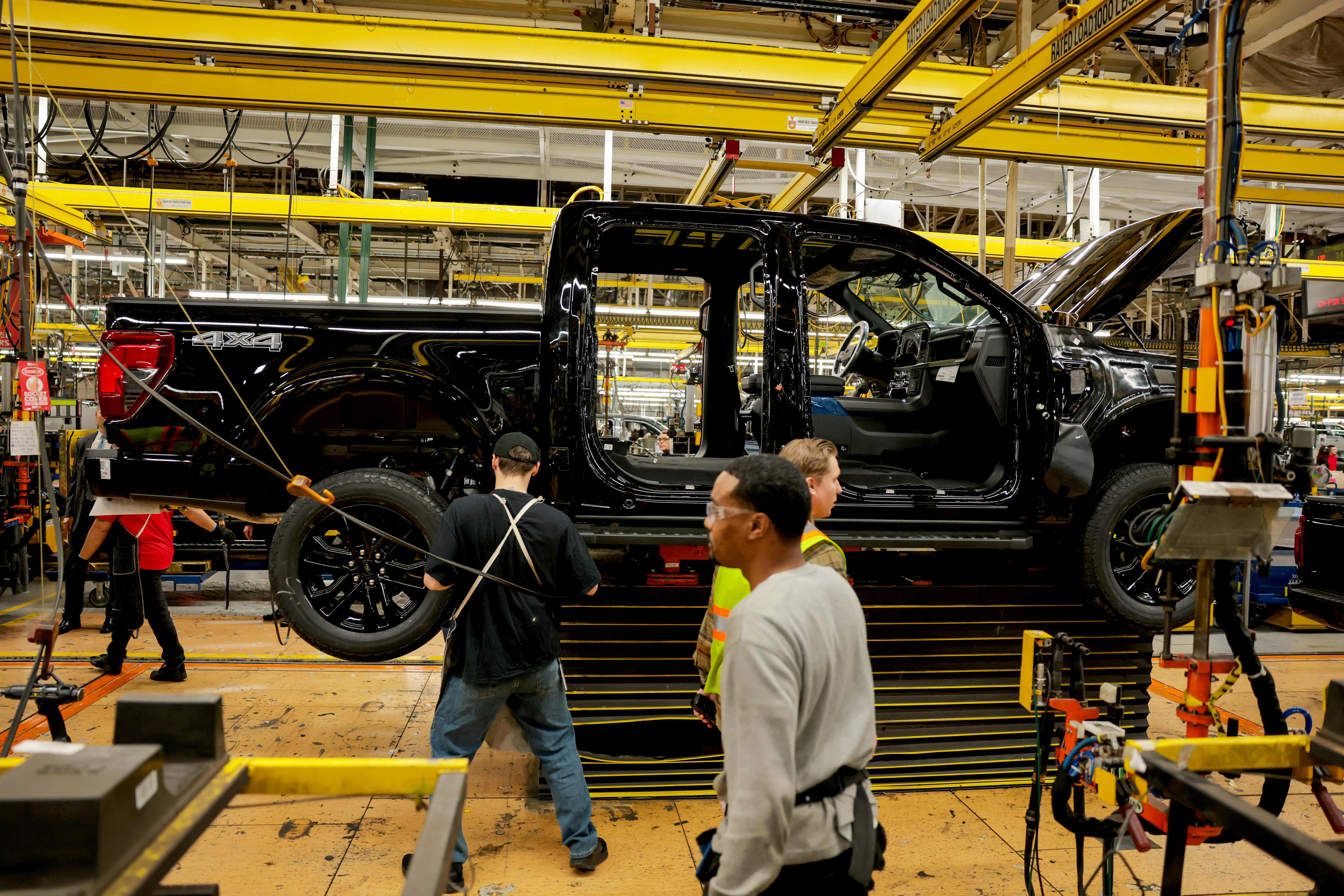
Ford Motor is navigating a delicate balancing act: ramping up production of its most profitable vehicles while U.S. sales continue to slide. On Wednesday, the automaker announced it is increasing output of its F-Series pickups—including the iconic F-150—after a year of disruptions caused by fires at an aluminum supplier. The move comes as Ford reports an eighth consecutive month of year-over-year sales declines, with August figures down 10.3%. This strategic push aims to replenish dealer inventories and meet pent-up demand, even as the broader automotive market cools.
Key Highlights
- Production Recovery: Ford's F-Series production has increased every month this year, with August's F-150 output reaching 57,504 units—the highest monthly figure in two years. This marks a significant rebound from the lows caused by the Novelis aluminum supplier fires.
- Dealer Inventory Improvement: The company expects dealers to see a noticeable influx of pickups over the next 30 to 90 days. Ford's head of U.S. sales, Rob Kaffl, noted that the supply chain is returning to normalcy, with a healthy pipeline of vehicles in transit.
- Sales Decline Context: Despite the production ramp-up, Ford's overall U.S. new vehicle sales fell 10.3% in August compared to the same month last year. This is the eighth straight month of year-over-year declines, reflecting broader industry headwinds.
- F-Series Sales Dip: F-Series sales are down 10.9% through August, including a 1.2% decrease in August alone. However, the production increase is aimed at closing the gap between supply and demand.
- Days' Supply Target: Ford currently has about 40 days' supply of pickups, roughly half of what is considered healthy. The company is targeting 50-60 days, still below the historical industry norm of 75-90 days, indicating a deliberate strategy to avoid overproduction.
- Impact of Supplier Fires: Two fires at a Novelis plant in New York last year halted operations, costing Ford an estimated $1.5 billion in 2026. The company has been ramping up production to make up for lost output.
- Additional Sales Pressures: Ford's sales have also been affected by the discontinuation of two vehicle models earlier this year and planned reductions in sales to daily rental fleets. The timing of Labor Day, which fell in September this year versus August last year, also skewed comparisons.
- Industry-Wide Slowdown: Ford estimates that the overall U.S. auto industry experienced a 6% decline in new vehicle sales, indicating that Ford's challenges are part of a larger market trend.
In-Depth Analysis
Ford's decision to increase pickup production despite falling sales is a calculated bet on the resilience of its most iconic and profitable product line. The F-Series has long been a cash cow for the automaker, and maintaining market share in this segment is critical for overall profitability. By prioritizing the replenishment of dealer lots, Ford aims to capitalize on pent-up demand from consumers who may have delayed purchases due to limited availability. However, this strategy carries risks. The broader market is slowing, and if demand softens further, Ford could find itself with excess inventory, forcing costly incentives to move vehicles off lots.
The supplier fire crisis exposed vulnerabilities in Ford's supply chain, highlighting the need for greater diversification and resilience. The $1.5 billion cost is a significant hit, but the company's ability to ramp production back to historical levels within a year demonstrates operational agility. Looking ahead, Ford's focus on balancing production with demand, as evidenced by its deliberate days' supply target, suggests a more disciplined approach compared to past cycles of overproduction.
Industry-wide, the 6% decline in sales signals a cooling market, influenced by high interest rates, inflationary pressures, and changing consumer preferences. Ford's ability to navigate these headwinds while maintaining its pickup dominance will be a key indicator of its overall health. As electric vehicles gain traction, the F-150 Lightning and other EVs will play an increasingly important role, but for now, the traditional F-Series remains the backbone of Ford's lineup. Investors and industry watchers will be closely monitoring whether this production ramp-up translates into improved sales in the coming months, or if it merely adds to inventory in a shrinking market.
Frequently Asked Questions
Why is Ford increasing pickup production if sales are falling? Ford is responding to a supply shortage caused by supplier fires, which left dealer lots with only about 40 days' supply—well below the healthy level. The company believes there is pent-up demand from customers who couldn't find the trucks they wanted. By ramping up production, Ford aims to meet this demand and regain lost market share.
How have the Novelis fires affected Ford's financials? The fires at Novelis's New York plant disrupted aluminum supplies, leading to production halts and lower sales. Ford estimates the impact will cost the company $1.5 billion in 2026, reflecting lost production and reduced revenue.
What is Ford's target for dealer inventory of pickups? Ford is aiming for a days' supply of 50 to 60 days, which is lower than the historical industry norm of 75 to 90 days. This reflects a more cautious approach to inventory management, ensuring production aligns closely with actual demand.
Source: https://www.cnbc.com/2026/09/02/ford-sales-f-150-production.html
Related posts

Trump's AI to SI Rename: Political Theater or Tech Revolution?
Examining the implications of Trump's controversial decision to replace 'AI' with 'SI' in all US government documents, analyzing the political motivations and global repercussions.
KFC Switches to Coca-Cola After Decades-Long Partnership with Pepsi
Breaking: KFC will replace PepsiCo with Coca-Cola beverages across all U.S. locations by Q1 2027, marking a major shift in the fast-food industry's beverage alliances.

Netflix Appoints Peter Rice as New Chief Content Officer to Revitalize Strategy
Netflix hires former Disney executive Peter Rice to lead content, replacing Bela Bajaria amid declining viewership and a massive workforce cut.

Nike's India Campus Strategy Amid China Sales Decline
Nike invests in Bengaluru campus as growth strategy while facing 26% revenue drop in China market.
China's Diplomatic Stance on Philippines: Navigating Tensions and Seeking Stability
China urges the Philippines to accurately understand its stance on improving bilateral relations amidst rising tensions and military rhetoric.
US Restrictions on Chinese Drones Backfire as Performance Gap Widens
American bans on Chinese drones are causing significant problems across multiple industries, with police departments and construction firms struggling to find affordable alternatives that match Chinese technology.

Strait of Hormuz Attacks Surge as Iran Seeks to Influence US Midterm Elections
Recent spike in vessel attacks in the Strait of Hormuz reveals Iran's strategy to impact global oil markets and US politics amid escalating tensions.
Southwest Airlines Overhauls Loyalty Program with New Tiers and Benefits
Southwest Airlines is replacing its two-tier frequent flyer program with silver, gold, and platinum levels, offering enhanced benefits and changing its approach to the Companion Pass.
Latest Articles
- Oregon School Shooting: Tragedy Sparks Debate on Gun Control
- The Billionaire Space Race: Musk vs. Bezos
- JetBlue BlueFirst: New Domestic First Class for Under $300
- Bank of America Spends Billions to Patch AI-Exposed Flaws
- Zelensky Announces Resumption of Strikes on Russian Oil Refineries
- SpaceX Starshield Cuts Ukraine's Starlink Speed: US-Government Pressure or Political Stunt?