China A-Share ESG Environmental Rankings 2026: Leaders and Laggards
NetEase Finance and Wind ESG release the first A-share environmental responsibility rankings. Who leads in carbon management, and who falls behind? Key insights and analysis.
Source: 163.com
As global sustainability momentum accelerates, ESG (Environmental, Social, and Governance) performance has become a critical lens for evaluating corporate value and competitiveness. In a pioneering move, NetEase Finance, in partnership with Wind ESG, has unveiled its inaugural ESG ranking series for China's A-share market, focusing on environmental responsibility. This ranking provides a snapshot of which companies are setting benchmarks in environmental stewardship and which are lagging, offering valuable insights for investors, policymakers, and corporate leaders alike.
Key Highlights
-
Comprehensive Evaluation: The ranking assesses 5,390 A-share listed companies using a semi-annual rolling evaluation framework. Scores range from 0 to 10, covering environmental, social, and governance dimensions, with a specific focus on environmental performance.
-
Two Distinct Lists: The environmental responsibility category is divided into a 'Pioneer List' for exemplary performers and a 'Negative Carbon List' for those with poor environmental records. Each list features the top 20 and bottom 20 companies, respectively, based on their comprehensive scores.
-
Top Performers: Leading the Pioneer List are AMEC (Advanced Micro-Fabrication Equipment), Hisense Visual Technology, Sunwave Communications, Unigroup, and Runhe Software. These companies span industries such as semiconductor equipment, consumer electronics, advertising, oil refining, and application software.
-
Industry Leaders: The photovoltaic (PV) equipment sector boasts the highest representation on the Pioneer List, with three companies: Sungrow Power, Risen Energy, and LONGi Green Energy. Additionally, application software and forestry products each have two companies on the list, showcasing their advanced environmental management and carbon reduction practices.
-
Laggards on the Negative Carbon List: The bottom five companies are ST Cuihua, Garden Engineering, ST Lingnan, Huaguang Ocean Shipping, and Guangju Energy. These companies operate in apparel, construction and engineering, maritime transport, and oil refining, indicating significant room for improvement in environmental responsibility.
-
Sectoral Concerns: The multi-category retail sector has the most companies on the Negative Carbon List, with four: Dalian Friendship, Central Mall, Baida Group, and Xingyun Technology. Construction and engineering follows with three companies, highlighting persistent environmental challenges in these sectors.

In-Depth Analysis
The release of this environmental responsibility ranking marks a significant step in China's evolving ESG landscape. By leveraging a robust dataset of over 5,000 companies, the ranking provides a transparent and systematic evaluation of environmental performance, which is crucial as China pushes toward its carbon neutrality goals by 2060. The inclusion of Scope 1, 2, and 3 emissions in the assessment underscores a growing sophistication in measuring corporate carbon footprints, aligning with international standards.
Interestingly, the Pioneer List features companies from high-tech and renewable energy sectors, reflecting a broader industrial shift toward sustainability. The prominence of PV equipment companies is not surprising, given China's dominance in solar manufacturing and the sector's inherent alignment with green energy. However, the presence of application software and forestry companies suggests that environmental leadership is not confined to traditional 'green' industries; it is also achievable through innovative practices and resource management.
Conversely, the Negative Carbon List reveals persistent challenges in retail and construction, sectors often characterized by fragmented supply chains and lower environmental scrutiny. These companies may face increasing regulatory pressure and investor scrutiny as ESG considerations become more mainstream. The ranking serves as a wake-up call for these laggards to accelerate their environmental initiatives or risk losing competitive advantage.
Looking ahead, we can expect such rankings to become more influential in shaping investment decisions and corporate strategies. As ESG data becomes more standardized and comprehensive, companies will likely compete not only on financial performance but also on sustainability metrics. This trend is already evident in global markets, where ESG funds are outperforming traditional funds in some regions. For China, this ranking could catalyze a race to the top, encouraging companies across all sectors to enhance their environmental practices.
However, it is essential to recognize the limitations of such rankings. The methodology, while robust, may not capture all nuances of environmental impact, particularly for companies with complex supply chains. Additionally, self-reported data can be subject to greenwashing, necessitating third-party verification. Nevertheless, the ranking provides a valuable starting point for dialogue and action.
Frequently Asked Questions
How are companies selected for the Pioneer and Negative Carbon lists? Companies are selected based on their comprehensive ESG scores, with the top 20 and bottom 20 in the environmental dimension forming the respective lists. The evaluation uses a 0-10 scoring system, covering environmental management, energy use, and climate change, including Scope 1, 2, and 3 emissions.
What industries are most represented on the Pioneer List? The PV equipment industry leads with three companies, followed by application software and forestry products with two each. This indicates that both energy-intensive and technology-driven sectors can excel in environmental responsibility.
Why do retail and construction companies dominate the Negative Carbon List? These sectors often have complex supply chains and lower environmental regulation intensity, leading to weaker environmental management practices. The ranking highlights the need for these industries to adopt more sustainable operations and transparency.
Source: https://www.163.com/money/article/L2RBMN2D00259SDO.html
Related posts
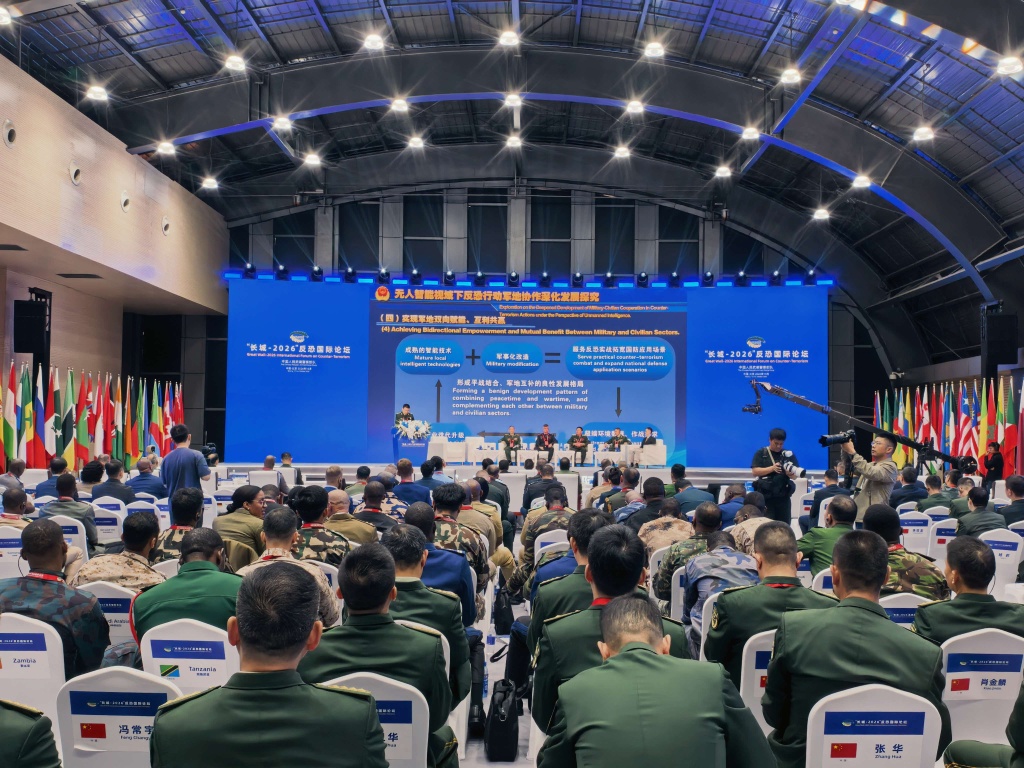
AI-Powered Counterterrorism: New Frontiers in the Fight Against Modern Terrorist Threats
Exploring how artificial intelligence is reshaping counterterrorism strategies worldwide, with insights from the 'Great Wall-2026' forum on emerging threats and defense innovations.
China Upgrades Asia-Africa Pavilion at CIIE to Boost Zero-Tariff Benefits
China's Ministry of Foreign Affairs announces enhanced Asia-Africa product zone at CIIE 2026 to help African nations capitalize on zero-tariff advantages.
Korea's Yoon Suk Yeol Prepares for Trump Golf Meeting
Yoon Suk Yeol's team is setting up a special working group for a potential golf meeting with Donald Trump. Explore the diplomatic strategy, recent controversies, and the political significance behind this high-profile sporting event.

Climate Journalism at the Tipping Point: Finding Action in Environmental Crisis
Exploring climate reporting's critical role in environmental awareness and action amid global climate tipping points.

US Lawmaker: AI Transcends Borders, Urging US-China Cooperation
Washington State Representative Roger Goodman emphasizes that AI risks don't recognize national boundaries, calling for enhanced US-China collaboration to ensure AI benefits humanity.

United Airlines 2027 Status Changes: Why Earning Top Tier is Getting Harder
United Airlines is removing flight segment requirements to reach elite status. Discover how the new points-based system works and what it means for your travel rewards.
US-EU Double Standards Exposed: Trump's Russia Diesel Deal Sparks Global Outcry
Trump's deal to buy Russian diesel while sanctioning others reveals a hypocritical US energy policy amid rising global inflation.
Walmart Expands Employee Healthcare: Free GLP-1s, Insulin, and More
Walmart is covering over 250 prescriptions, including insulin and GLP-1s, at no cost. Discover how the retail giant is reshaping employee benefits amid rising healthcare costs.
Latest Articles
- Travelers Beware: How Scammers Impersonate Consular Staff
- Ukraine Claims Drone Attacks Reduced Russian Online Propaganda
- Saudi Crown Prince's Evacuation: Escalating Conflict Threatens Vision 2030
- FAA warns U.S. airlines of safety risks over Saudi Arabia after attacks
- McDonald's Chicken and Beverage Strategy Faces Intense Competition
- Delta Air Lines Delays Saudi Arabia Launch Due to Airport Security Threats