US FAA Grounds Flights for Over 4 Hours: Can $50B Upgrade Fix Aging Air Traffic Control?
A massive nationwide flight halt exposed critical vulnerabilities in the FAA's aging infrastructure. This analysis explores the causes, financial implications, and the complex path toward modernization.
Source: thepaper.cn
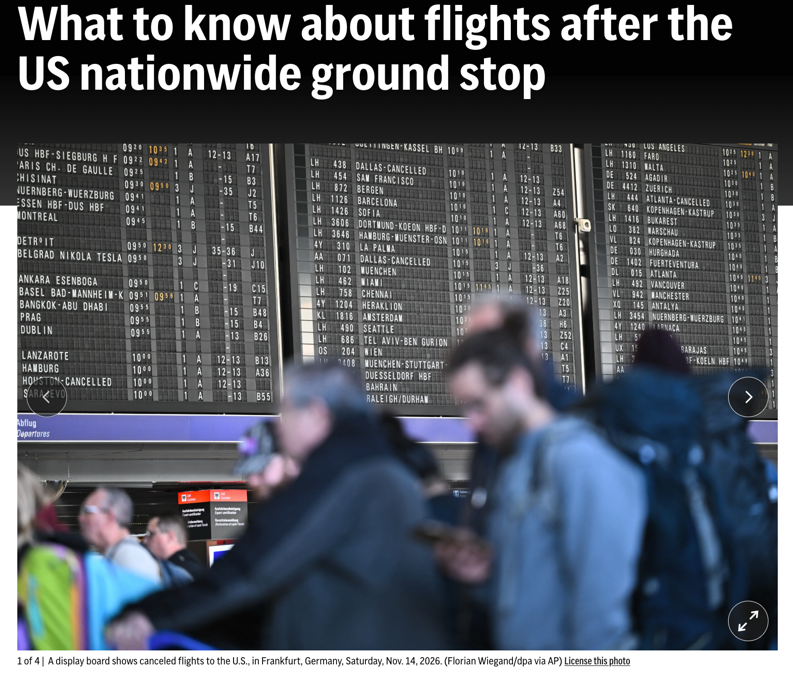
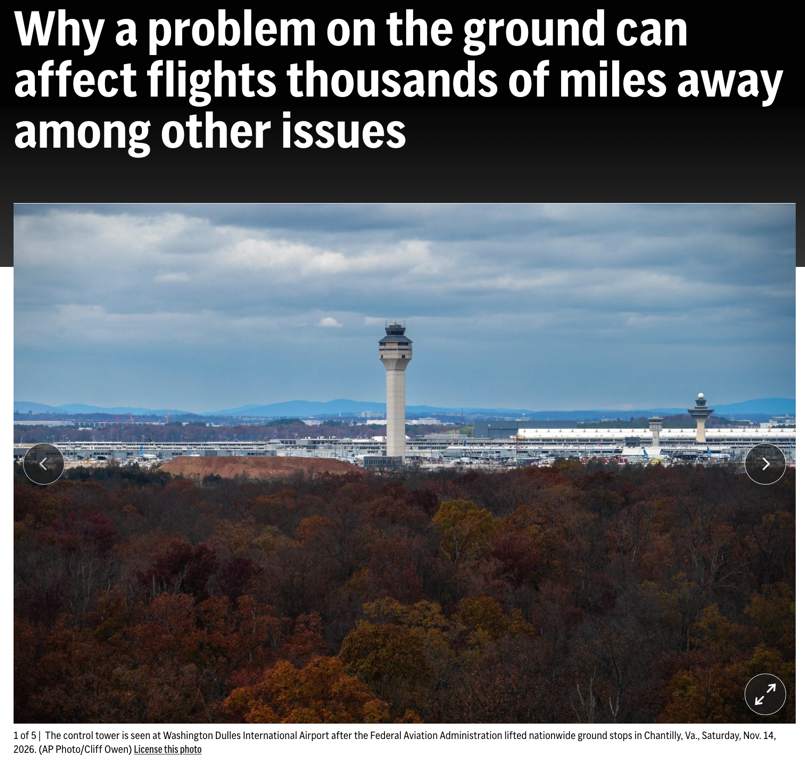
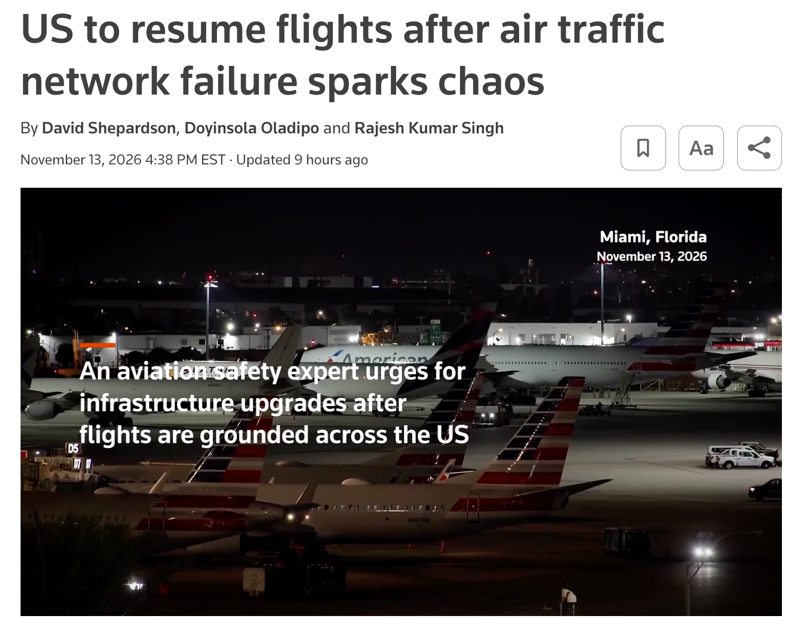
On a typical Tuesday afternoon in November, the United States' vast aviation network, which manages over 20,000 facilities, was suddenly frozen. Due to a critical anomaly in the air traffic control communication network, the Federal Aviation Administration (FAA) ordered a nationwide ground stop, grounding flights for over four hours. While the ban was lifted that evening, the ripple effects—mass cancellations and delays—plagued airports throughout the weekend. This event marks the second time in over two decades that the U.S. has faced a nationwide halt, following a similar incident in 2023. As travelers faced the prospect of sleeping in terminals, the root cause emerged: an attempt to upgrade outdated systems that was so fraught with instability it crippled the entire network.
Key Takeaways: The Anatomy of a System Failure
- Historical Precedent: This is the longest U.S. ground stop since the "9·11" attacks, highlighting a recurring vulnerability in national infrastructure.
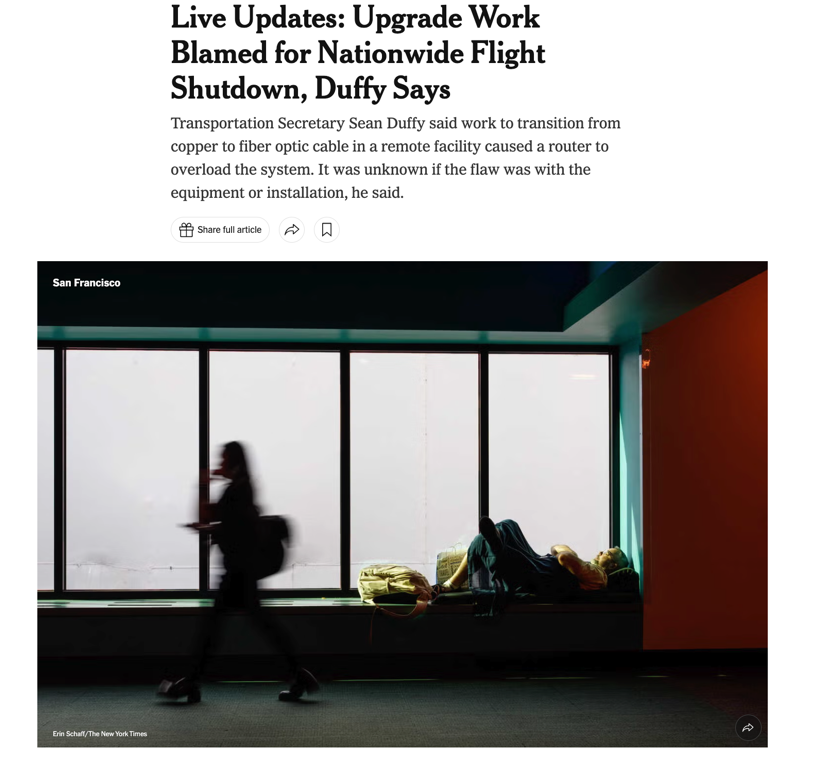
- Technical Trigger: The failure was reportedly caused by a contractor's upgrade process where new fiber-optic lines replaced old copper cabling, triggering network overload and data transmission errors.
- Infrastructure Aging: A significant portion of the air traffic control (ATC) system is over 30 years old, with some components dating back to the 1960s, creating a maintenance nightmare.
- Resource Shortages: There is a critical shortage of both replacement parts and skilled maintenance personnel to fix the aging fleet of equipment.
- Operational Risk: The FAA faces the impossible task of replacing a live, mission-critical network without ever taking it offline, forcing a risky "parallel run" approach.
- Financial Implications: Beyond the immediate operational costs, the $50 billion modernization fund faces scrutiny regarding how it will be allocated and implemented efficiently.
- Security Concerns: While initial reports rule out cyberattacks, the reliance on third-party contractors for critical infrastructure updates raises significant security questions.
Deep Dive: The Structural Crisis in American Aviation
This recent grounding is not merely a temporary glitch; it is a symptom of a decades-long neglect of the nation's digital backbone. The United States pioneered the use of radar and radio communication in the mid-20th century, creating a system that was once the envy of the world. However, a half-century later, that pioneering technology has calcified into a liability. The U.S. Government Accountability Office (GAO) has identified that approximately 76% of surveyed ATC systems are at high risk of failure. This is not just about old wiring; it is a systemic disconnect where modern digital data streams struggle to communicate with legacy analog hardware.
The financial and human costs of this aging infrastructure are mounting. The FAA has struggled to recruit and retain air traffic controllers, with staffing levels declining even as flight volumes have grown. This mismatch between demand and capacity creates a fragile environment where any minor technical hiccup can have cascading effects. The recent incident, which saw over 9,000 flights canceled, underscores the fragility of a network that handles tens of thousands of flights daily. The challenge now is not just about spending money, but about managing the complex transition from a disjointed, analog-heavy past to a unified, digital future without crashing the system in the process.
Frequently Asked Questions
Why did the FAA ground all flights?
The FAA ordered a ground stop after detecting anomalies in air traffic control communication networks. It was later determined that a contractor’s upgrade process—specifically replacing copper lines with fiber optics—caused data transmission errors and network overload, disrupting radar and radio communications at 17 of the 22 regional centers.
How much money is the U.S. investing in air traffic control upgrades?
Following the incident, Transportation Secretary Sean Duffy called for $50 billion in funding to accelerate the modernization of the air traffic control system. This comes on top of previous investments, such as $12.5 billion allocated in 2025, though critics argue that funding alone does not guarantee immediate safety improvements.
Is the U.S. air traffic control system safe?
While the FAA maintains that all aircraft were able to land safely and no centers lost all communication, the system is clearly under stress. The recurring nature of these outages suggests that the current infrastructure is reaching its breaking point, necessitating a comprehensive overhaul rather than piecemeal repairs.
Source: https://www.thepaper.cn/newsDetail_forward_34484590
Related posts

Inside the White House: Biden's Memoir Reveals Trump's Two Faces, Debate Failure, and Forced Exit
Former US President Joe Biden's new memoir details his strained relationship with Donald Trump, the controversy surrounding his 2024 campaign exit, and his defense of the chaotic Afghan withdrawal.

EV CEOs Say They Won't Rely on Democrats for Federal Support After Midterms
Rivian, Lucid, and Scout CEOs reveal they are not banking on new federal EV incentives following the Democratic midterm wins, focusing instead on long-term strategy.

Voyager 1 Reaches 1 Light-Day Distance: A Historic Milestone in Interstellar Exploration
NASA's Voyager 1 spacecraft, launched in 1977, is set to become the farthest human-made object, reaching 1 light-day from Earth on Nov 18, 2026. Explore the mission's legacy.

APEC Summit 2026: Over 100 Global Giants to Shape Future Trade
115 Fortune 500 companies, including nearly 20% from the US, will attend the APEC Business Leaders' Summit, signaling a pivotal shift in global economic diplomacy.

Shenzhen APEC Summit: How US-China Strategic Stability Shapes Asia-Pacific Prosperity
China's Ambassador to the US highlights the critical role of constructive strategic stability between the US and China in fostering regional economic growth and innovation at the upcoming APEC summit.
GM's CarBravo Strategy: Bridging the Gap Between Used Car Shoppers and New Vehicle Sales
General Motors is revolutionizing the used car market with its CarBravo program, aiming to convert used car buyers into new vehicle customers through certified pre-owned vehicles and dealership relationships.

Foundation Payroll Crisis: CEO Loan Sparks Investor Fury
Eric Trump-backed robotics startup Foundation missed payroll after CEO Sankaet Pathak borrowed $4.6M for a home. Explore the governance crisis and funding failures.

Retailers Are Betting Big On Entertainment To Win Consumer Attention
Gap Inc. and others are blending retail with entertainment to drive engagement. Discover why brands are investing in content and experiences.
Latest Articles
- EU, UK, France, Germany, Italy, Poland to Lead Ukraine Peace Talks: What's Next?
- US Air Traffic Control Failure: Trump Blames Aging Infrastructure
- US FAA Grounding Disrupts Major Sports Leagues: NBA, NFL, and NCAA Teams Face Travel Chaos
- European Aviation Safety Agency Halts All Flights to USA Due to FAA Technical Issues
- Youth as Climate Architects: Building a Sustainable Future
- ExxonMobil Revisits Venezuela: A Strategic Pivot in Global Oil Markets