Canada and EU Reduce US 'Indispensability' Amid Transatlantic Tensions
Analyzing how Canada and the EU are diversifying partnerships to mitigate risks posed by US trade policies and geopolitical shifts.
Source: thepaper.cn
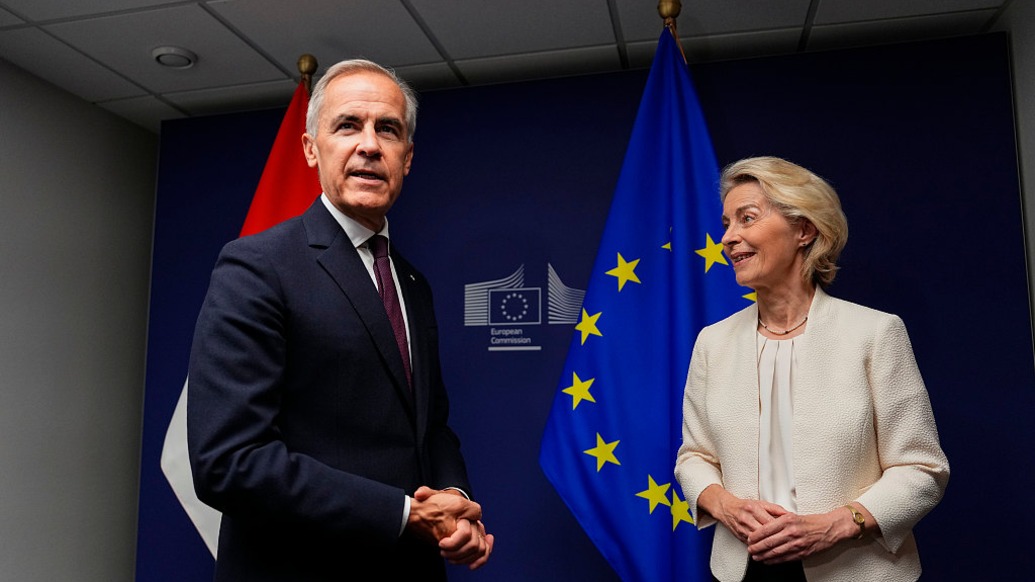
The recent diplomatic maneuvers between Canada and the European Union (EU) reveal a pivotal shift in the dynamics of the Transatlantic alliance. While geopolitical tensions often dominate headlines, the underlying economic and strategic adjustments are equally significant. Canadian Prime Minister Justin Trudeau has publicly acknowledged the "extreme tail risks" associated with U.S. President Donald Trump’s administration, specifically the possibility of military action or severe economic coercion. In response, both Canada and the EU are actively recalibrating their dependencies, seeking to reduce the United States' perceived "indispensability" in their economic and security calculations. This trend signals a move away from a purely unilateral reliance on Washington toward a more diversified, multipolar approach to international relations.
Key Developments in the Transatlantic Relationship
-
Economic Diversification: Canada is systematically reducing its dependence on U.S. technology and markets. The Canadian government has implemented measures to diversify its export channels, recognizing that a heavy reliance on a single superpower increases vulnerability to arbitrary policy changes.
-
EU-Canada Strategic Alignment: European Commission President Ursula von der Leyen has proposed elevating the relationship with Canada to a new level, moving beyond traditional trade deals. The EU views Canada as a crucial partner for energy security, critical minerals, and defense industries, aiming to reduce its own reliance on Russian and Chinese supply chains.
-
Defense and Security Cooperation: Both entities are deepening their defense cooperation. Canada has joined the EU's "European Security Action" plan and applied to join the UK-led Joint Expeditionary Force, signaling a willingness to integrate more closely with European security structures.
-
Impact of US Trade Policy: The U.S. has responded aggressively to these moves, threatening high tariffs and trade restrictions if Europe deepens ties with Canada. This has forced allies to make difficult choices between economic integration with the EU and maintaining stability with the U.S.
-
Market Access and Procurement: The U.S. has excluded certain Canadian goods from federal procurement, citing "Buy Canada" policies. This move has exacerbated existing trade frictions and highlighted the fragility of integrated North American markets.
Deep Analysis: The Geopolitics of Dependency
The friction between the U.S., Canada, and the EU exposes a fundamental contradiction in American foreign policy. For decades, the U.S. leveraged its vast market, military strength, and technological superiority to maintain dominance over its allies. However, when these advantages are weaponized through tariffs and trade bans, they inadvertently accelerate the very de-risking efforts they seek to prevent.
Europe and Canada are not seeking to decouple entirely from the U.S.; rather, they are pursuing "strategic autonomy." This concept involves reducing over-reliance on any single partner while maintaining cooperative relationships with all. By diversifying energy sources, securing critical minerals from Canada, and exploring new defense industrial bases in Europe, these nations are increasing their bargaining power. This shift is particularly evident in the technology and quantum sectors, where both the EU and Canada are investing heavily to reduce the risk of U.S. export controls stalling their innovation.
Furthermore, the proposal for Canada to become a "co-member" of the EU represents a significant, though nascent, institutional step. While currently lacking a clear legal definition, it reflects a desire to create a formal mechanism for cooperation that goes beyond the incomplete CETA (Comprehensive Economic and Trade Agreement). This move challenges the traditional hierarchy of the Transatlantic alliance, suggesting a future where the U.S. is one of several key partners rather than the sole guarantor of security and prosperity.
Frequently Asked Questions
Q: Why is Canada suddenly pivoting toward Europe?
A: While the U.S. remains Canada's largest trading partner, the volatility of American trade policy has forced Canada to look for alternatives. The U.S. market accounts for over 70% of Canadian exports, making the Canadian economy highly sensitive to changes in Washington. By expanding ties with the EU, Canada aims to mitigate these risks and create a more resilient economic structure.
Q: What is the "co-member" proposal?
A: Proposed by European Commission President Ursula von der Leyen, this concept envisions a deeper integration between the EU and Canada. It is not yet a formal legal status but implies closer cooperation in defense, energy, and digital trade, potentially giving Canada a more structured role in European strategic planning.
Q: How will this affect U.S.-Canada relations?
A: Relations are likely to remain tense but functional. The U.S. will likely continue to use economic leverage to discourage deepening ties with Europe, while Canada will continue to balance its need for security cooperation with the U.S. against the need for economic diversification.
Source: https://www.thepaper.cn/newsDetail_forward_34140470
Related posts

Navigating US-China Relations: Building a Constructive Strategic Stability
As 2026 marks a pivotal year for US-China relations, explore how the two nations are forging a new path of constructive strategic stability amid global challenges.
Historic Visit of Xi Jinping to the United States: A Milestone in Sino-American Diplomacy
This article delves into the significance of President Xi Jinping's state visit to the United States, analyzing its impact on Sino-American relations and the future of global diplomacy.
UK Returns 12 Cultural Artifacts to China in Historic Repatriation
The United Kingdom has repatriated 12 lost cultural artifacts to China, marking a significant achievement in international cooperation to protect cultural heritage.
2026 Global Governance Forum to convene in Xiongan New Area
China to host major international forum on global governance reform in Xiongan New Area this October, signaling new era in international cooperation.
Venezuela's Interim President Meets Trump in New York Amid Major Energy Deal
Historic meeting between Venezuelan interim president and Trump signals warming relations as $100B oil agreement transforms bilateral ties.
UK Regional Leaders Meet Amid Constitutional Crisis: Separation Dreams vs Reality
Analysis of the Cardiff Summit where Scottish, Welsh, and Northern Irish leaders convened to discuss potential UK dissolution, examining legal constraints, public opinion, and political implications.
Strategic Reset: Xi Jinping's Historic Return to the United States in 2026
An in-depth analysis of President Xi Jinping's state visit to the U.S., examining the implications for global stability and the future of Sino-American relations.
Trump's UN Address: Threats, Policy Shifts, and Global Reactions
Analysis of Trump's controversial UN speech featuring threats against Iran, Greenland military expansion, and renaming AI to 'super intelligence'.
Latest Articles
- Qantas New York to Sydney Nonstop: 18-Hour Flight Details & Project Sunrise
- China to Participate in ASEAN Defense Exercise 'Trident Resolve' in Indonesia
- Pakistan Police Camp Terror Attack: China's Firm Stance Against Terrorism
- Autonomous Trucking Revolution: Aurora Innovation's Path to Profitability
- Wreck Island Captive: A Story of Humanity Amidst War
- North Korea Unveils New Hypersonic Missile with Waverider Design