Trump Announces End of US Aid to Israel: Shockwaves in the Middle East
President Trump's surprise decision to halt $40 billion in annual aid to Israel has caused political instability. Here's what's happening and why it matters.
Source: thepaper.cn
In a stunning geopolitical move that has sent shockwaves through the international community, President Donald Trump announced that the United States will terminate its annual military aid package to Israel, a cornerstone of the alliance for decades. The decision, described by Israeli officials as a 'thunderbolt from the blue,' signals a potential seismic shift in the geopolitical landscape of the Middle East. With the aid set to expire at the end of the year, the region faces an uncertain future as both nations grapple with the immediate fallout of this abrupt policy reversal.
Key Developments
- $40 Billion Aid Package Terminated: President Trump confirmed that the approximately $40 billion in annual military aid to Israel will end this year, effectively scrapping the current security agreement that was set to last until 2028.
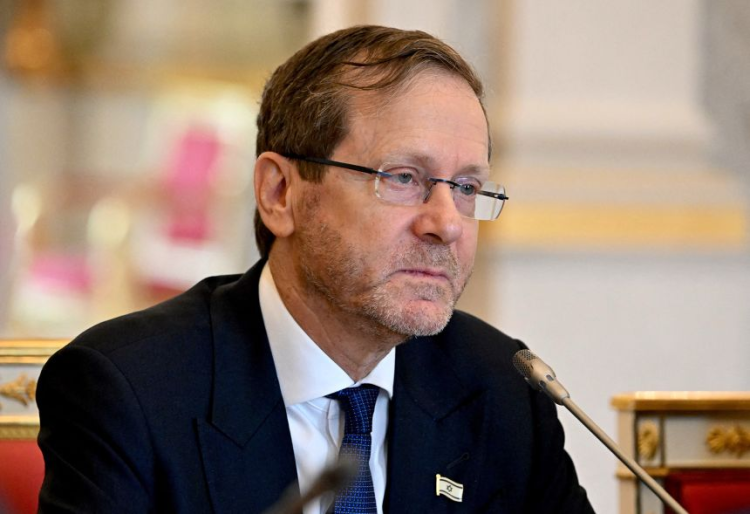
- Israeli President Herzog Expresses Shock: Isaac Herzog, the President of Israel, described the announcement as a 'thunderbolt' and expressed deep concern, stating that the move blindsided the nation and contradicts the signed Memorandum of Understanding.
- Political Crisis in Israel: With the aid cut, Israel faces a critical need to form a stable government quickly. President Herzog emphasized that the country must prioritize governance over repeated elections to address the crisis.
- Confusion Among Israeli Officials: Reports indicate that Israeli officials are 'confused and embarrassed' by the decision, struggling to understand if the aid cut is a serious policy shift or a political maneuver aimed at the upcoming U.S. midterms.
- Netanyahu's Silence: Prime Minister Benjamin Netanyahu has remained publicly silent on the issue, though he has previously advocated for reducing Israel's reliance on U.S. military aid over time.
Deep Dive Analysis
This abrupt decision by the Trump administration represents more than just a change in budget allocations; it reflects a potential restructuring of the strategic partnership between Washington and Jerusalem. Historically, U.S. aid to Israel has served as a stabilizing force, ensuring Israel's qualitative military edge (QME) in a volatile region. By suddenly pulling the plug, the U.S. is forcing Israel to confront its own defense capabilities and long-term strategic autonomy.
From a geopolitical standpoint, this move could have profound implications. A reduction in American military hardware and intelligence support might embolden adversaries in the region, potentially leading to a security vacuum that Iran and other hostile actors could exploit. Furthermore, the timing of the announcement—just as Israel is navigating a fragile political landscape—suggests that the decision was intended to be a high-impact political signal rather than a purely logistical budgetary adjustment.
The silence from Prime Minister Netanyahu is particularly telling. As a seasoned politician, his reticence implies that the situation is far more complex than it appears on the surface. It is possible that internal negotiations are underway to mitigate the damage, or that the Israeli leadership is calculating the long-term costs of severing ties with its primary security guarantor. Regardless of the internal dynamics, the trust between the two allies has undoubtedly been fractured, raising questions about the durability of future agreements.
Looking ahead, the international community will be watching closely to see how Israel adapts to this new reality. If the U.S. follows through on its threat, Israel may need to seek alternative security arrangements, potentially turning to European allies or increasing its own defense spending. However, such a transition would be fraught with challenges, as no other nation can fully replace the strategic depth and advanced technology provided by the United States. The coming months will be critical in determining whether this 'thunderbolt' will lead to a realignment of Middle Eastern power dynamics or a temporary diplomatic storm.
Frequently Asked Questions
Why is the U.S. cutting aid to Israel now?
President Trump stated that the decision was long-discussed and that Prime Minister Netanyahu himself had suggested the reduction in dependence on U.S. aid. However, Israeli officials suggest the timing may be politically motivated to impact the U.S. mid-term elections.
What is the 'Memorandum of Understanding' mentioned by President Herzog?
It is a formal agreement signed between the U.S. and Israel, originally set to last until 2028, which guaranteed $38 billion in annual military aid. Trump's announcement effectively voids this contract.
How will Israel respond to the loss of aid?
President Herzog has called for the immediate formation of a new government to address the crisis. The Israeli government is reportedly confused by the decision and is currently assessing the security and diplomatic implications of the aid termination.
Source: https://www.thepaper.cn/newsDetail_forward_34421073
Related posts

Grenada Election: Mitchell Wins Second Term, China Pledges Enhanced Cooperation
China congratulates Grenada Prime Minister Mitchell on reelection, emphasizing strengthened bilateral ties and mutual cooperation in the Caribbean region.
China Appoints New Ambassadors: Diplomatic Shifts in Europe, Pacific, and Nordic Regions
President Xi Jinping's recent diplomatic reshuffle involves key ambassadorial changes across Europe, the Pacific, and Nordic nations. Explore the strategic implications of these appointments and the evolving landscape of Chinese foreign policy.
Trump Stands By Iran War Decision Despite Election Loss
Analysis of Trump's unapologetic stance on the Iran conflict and its impact on US politics and global markets.
Wendy's Rejects $1.4 Billion Trian Takeover Proposal
Wendy's has formally rejected a $1.4 billion buyout proposal led by Nelson Peltz, deeming the offer to undervalue the fast-food chain's turnaround strategy.
Expedia CEO: AI Agents Won't Replace Human Booking Trust Yet
Expedia CEO Ariane Gorin explains why AI travel agents haven't changed booking habits despite industry hype. Discover the future of travel tech and Expedia's strategy.
Marc Lore's Wonder Files for IPO: A New Era for Food Delivery
Wonder confidentially files for IPO, aiming to raise funds for expansion after securing $3B+ in funding.

Holiday Shopping Trends: Physical Gifts Trump Travel Despite Consumer Wishes
Visa survey reveals consumers desire travel experiences but prioritize physical gifts due to economic pressures and rising costs.
Ireland's Ambassador: CIIE Bridges Human Connections in a Divided World
How Ireland's top diplomat views the China International Import Expo as a vital platform for dialogue and trade amid global tensions.
Latest Articles
- Jishan County: How a Coal Town Achieved High-End Breakthrough
- China Signs Landmark Agreement to Establish UNDP Global Sustainable Development Center in Shanghai
- E.l.f. Beauty Reports 51% Sales Surge, Boosts Full-Year Outlook
- Mogao Grottoes 45: Digital Access at Dunhuang Cultural Expo
- Binance $6.3 Billion Cyber Heist: Job Interview Ruse Exposed
- Trump Blames Fox News for Midterm Losses as Ratings Plummet