Hyundai Poised to Surpass Ford in Q3 Sales as Detroit Automakers Lag in Hybrid Market
South Korean automaker Hyundai expected to outsell Ford for the first time ever in Q3, highlighting Detroit's struggle with hybrid vehicles amid rising gas prices.
Source: CNBC
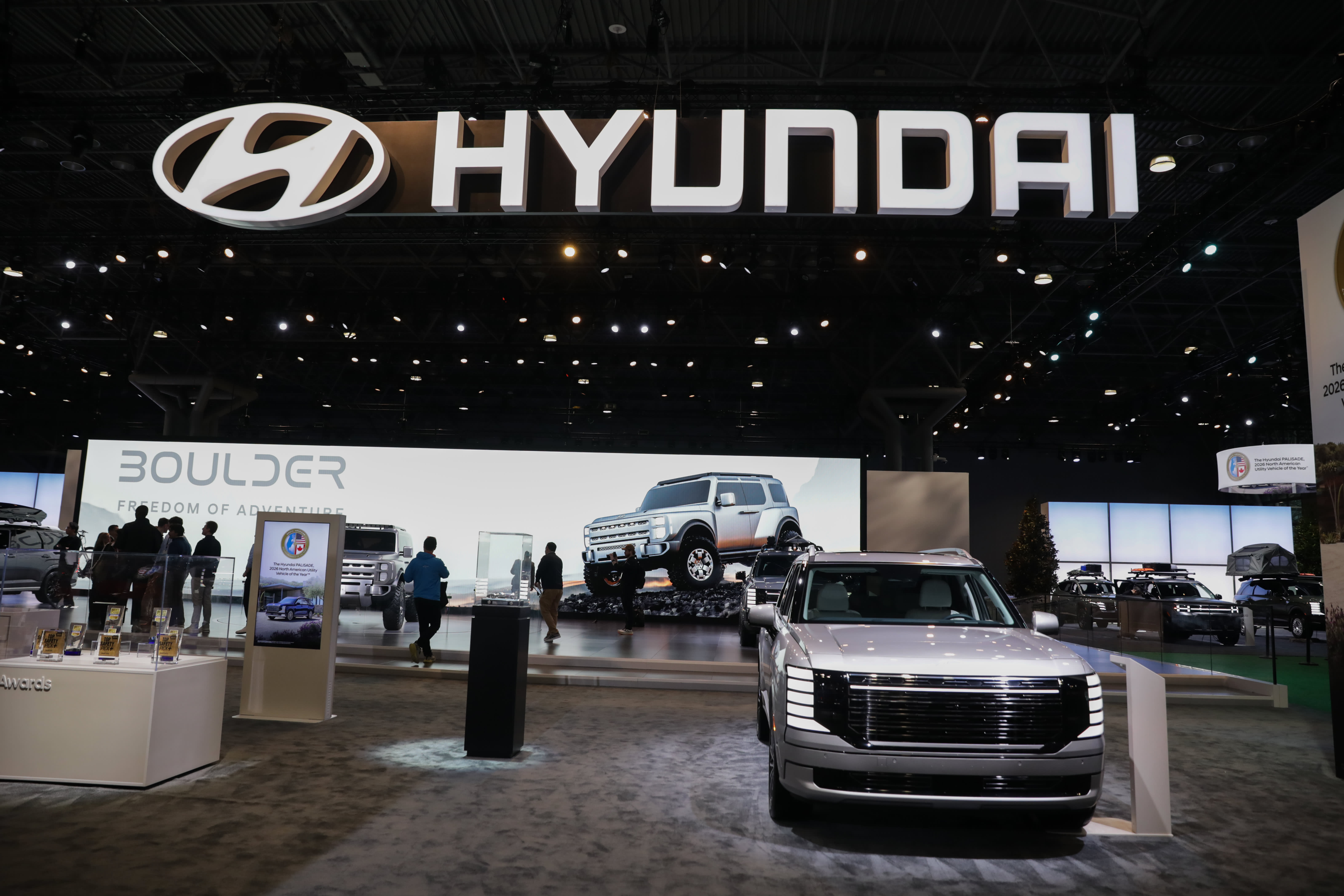
The automotive landscape is undergoing a significant transformation as Hyundai Motor prepares to achieve a historic milestone by outselling Ford Motor in quarterly U.S. sales for the first time. According to a recent forecast by Cox Automotive, Hyundai is projected to report a 6.5% increase in year-over-year sales from July through September, reaching 511,421 units. This remarkable performance contrasts sharply with Ford's expected 7.1% decline to 504,172 vehicles during the same period. If these projections hold true, Hyundai would become the third best-selling automaker in the U.S., trailing only General Motors and Toyota Motor, marking a significant shift in the competitive dynamics of the American automotive market.
Key Insights
-
Historic Sales Shift: Hyundai's projected Q3 sales represent not just a quarterly achievement but a long-term strategic success. The South Korean automaker's consistent focus on quality, design, and technological innovation has resonated with American consumers who increasingly value reliability and fuel efficiency in an era of economic uncertainty.
-
Hybrid Market Advantage: Unlike Detroit's Big Three, Hyundai has successfully capitalized on the growing hybrid vehicle segment, which has gained significant traction amid rising gas prices (currently averaging $4.48 per gallon nationally). The company's comprehensive hybrid lineup addresses consumer demand for more fuel-efficient options without compromising performance or utility.
-
Ford's Production Challenges: Ford's sales decline is largely attributed to persistent production issues with its crucial F-Series pickup trucks, which were disrupted by supplier fires last year. These setbacks have hampered Ford's ability to meet consumer demand for its most profitable vehicles, creating an opening for competitors like Hyundai to gain market share.
-
Toyota's Competitive Pressure: The competitive landscape is further complicated by Toyota's narrowing sales gap with General Motors. With Toyota trailing GM by fewer than 121,100 units so far this year, there's growing speculation that Toyota could overtake GM in annual sales for only the second time ever, following their previous achievement in 2021 during supply chain disruptions.
-
Market Resilience: Despite broader economic challenges, the automotive market has demonstrated unexpected resilience. Cox Automotive recently raised its 2026 forecast by 2% to 16.1 million units, indicating that consumer demand for new vehicles remains stronger than anticipated despite inflationary pressures and economic uncertainty.
In-depth Analysis
The projected sales leadership shift between Hyundai and Ford reflects deeper structural changes in the global automotive industry. Detroit's traditional reliance on large trucks and SUVs has become increasingly vulnerable as consumer preferences evolve toward more fuel-efficient alternatives. The Trump administration's rollback of emissions and fuel economy standards has encouraged GM, Ford, and Stellantis to double down on gas-guzzling V-8 engines in their larger vehicles, a strategy that now appears misaligned with market realities.
Hyundai's success story is particularly noteworthy given its strategic positioning across multiple segments. The company's focus on delivering high-quality, safe products with exceptional execution—coupled with its aggressive expansion of hybrid offerings—has created a perfect storm of market conditions that favor its growth trajectory. Meanwhile, Hyundai CEO José Muñoz's pragmatic approach to sales leadership—emphasizing product excellence rather than specific sales targets—has allowed the company to organically capture market share through superior customer value proposition.
Looking ahead, this sales milestone represents more than just a quarterly achievement; it signals a fundamental realignment of automotive market power. As traditional Detroit automakers struggle to adapt to changing consumer preferences and regulatory environments, Hyundai's demonstrated ability to anticipate and respond to market shifts positions it for sustained growth. The company's global perspective and diversified portfolio, including its successful Genesis luxury brand and Kia subsidiary, provide additional competitive advantages that Detroit's more domestically focused strategies currently lack.
Frequently Asked Questions
Why is Hyundai outselling Ford for the first time? Hyundai's success stems from its strategic focus on fuel-efficient vehicles, particularly hybrids, which align with current consumer preferences amid rising gas prices. Unlike Ford, which has faced production challenges with its key F-Series trucks, Hyundai has maintained consistent product availability and execution across multiple segments.
How significant is Toyota's potential overtaking of GM? If Toyota surpasses GM in annual sales, it would mark only the second time in history that the Japanese automaker has achieved this feat. This would represent a major milestone in the ongoing competitive shift between traditional American and Japanese automakers, potentially accelerating Detroit's reevaluation of its product strategy and technological priorities.
Source: https://www.cnbc.com/2026/09/24/hyundai-set-to-outsell-ford-in-q3-as-detroit-automakers-lack-hybrids.html
Related posts

Canada and EU Reducing US 'Indispensability' Within Transatlantic Framework
Analysis of how Canada and the EU are strategically diversifying partnerships while maintaining transatlantic ties amid shifting geopolitical dynamics.

Navigating US-China Relations: Building a Constructive Strategic Stability
As 2026 marks a pivotal year for US-China relations, explore how the two nations are forging a new path of constructive strategic stability amid global challenges.
Historic Visit of Xi Jinping to the United States: A Milestone in Sino-American Diplomacy
This article delves into the significance of President Xi Jinping's state visit to the United States, analyzing its impact on Sino-American relations and the future of global diplomacy.
UK Returns 12 Cultural Artifacts to China in Historic Repatriation
The United Kingdom has repatriated 12 lost cultural artifacts to China, marking a significant achievement in international cooperation to protect cultural heritage.
2026 Global Governance Forum to convene in Xiongan New Area
China to host major international forum on global governance reform in Xiongan New Area this October, signaling new era in international cooperation.
Venezuela's Interim President Meets Trump in New York Amid Major Energy Deal
Historic meeting between Venezuelan interim president and Trump signals warming relations as $100B oil agreement transforms bilateral ties.
UK Regional Leaders Meet Amid Constitutional Crisis: Separation Dreams vs Reality
Analysis of the Cardiff Summit where Scottish, Welsh, and Northern Irish leaders convened to discuss potential UK dissolution, examining legal constraints, public opinion, and political implications.
Strategic Reset: Xi Jinping's Historic Return to the United States in 2026
An in-depth analysis of President Xi Jinping's state visit to the U.S., examining the implications for global stability and the future of Sino-American relations.
Latest Articles
- Trump's UN Address: Threats, Policy Shifts, and Global Reactions
- Qantas New York to Sydney Nonstop: 18-Hour Flight Details & Project Sunrise
- China to Participate in ASEAN Defense Exercise 'Trident Resolve' in Indonesia
- Pakistan Police Camp Terror Attack: China's Firm Stance Against Terrorism
- Autonomous Trucking Revolution: Aurora Innovation's Path to Profitability
- Wreck Island Captive: A Story of Humanity Amidst War