Navigating US-China Relations: Building a Constructive Strategic Stability
As 2026 marks a pivotal year for US-China relations, explore how the two nations are forging a new path of constructive strategic stability amid global challenges.
Source: thepaper.cn
In an era of unprecedented global transformation, the relationship between the United States and China stands as the world's most critical bilateral connection. As 2026 unfolds, this pivotal year is being positioned as a 'historic and标志性 moment' that could redefine how these two great powers coexist and collaborate on the world stage. The recent high-level diplomatic engagements between President Trump and President Xi represent more than just routine statecraft—they signal a potential recalibration of the bilateral relationship toward a more stable, predictable future.
Key Developments
-
Historical Context: The current engagement builds on a rich history of US-China relations dating back to the groundbreaking 'ping-pong diplomacy' of 1971, when a simple sporting exchange thawed decades of frozen relations and opened the door to formal diplomatic recognition.
-
Strategic Reorientation: Following extensive talks in May 2026, both nations agreed to establish a 'constructive strategic stable relationship' as the new framework for their bilateral engagement, providing strategic direction for the next three years and beyond.
-
Principles of Stability: This new relationship is defined by four key principles: cooperation-driven positive stability, benign competition with appropriate boundaries, manageable differences as常态, and enduring peace as an achievable outcome.
-
Leadership Dialogue: The recent meetings emphasized mutual respect as a foundational value, with President Trump explicitly acknowledging his respect for President Xi and the Chinese people, while both leaders committed to addressing the 'three critical questions' facing their nations.
-
Global Significance: With China embarking on its 15th Five-Year Plan and the United States celebrating its 250th anniversary of independence, both nations face important developmental milestones that will be significantly influenced by the quality of their bilateral relationship.

In-Depth Analysis
The emergence of a 'constructive strategic stable relationship' represents a significant evolution in US-China dynamics, coming at a time when the world faces increasingly complex challenges that demand cooperation between these two global powers. This new framework acknowledges the reality of competition while establishing guardrails to prevent conflict and identify areas of potential collaboration.
Historically, US-China relations have followed a pattern of alternating between engagement and estrangement, with periods of cooperation often giving way to tensions over trade, human rights, and regional security. The current initiative appears to recognize that neither nation can afford a complete decoupling, nor can they maintain the status quo of perpetual competition without risk.
The timing of this diplomatic reorientation is particularly noteworthy. As both nations approach significant domestic milestones—China with its ambitious modernization goals and the United States with its semiquincentennial—there appears to be a shared understanding that stability in the bilateral relationship serves each country's national interest.
Looking ahead, the success of this framework will depend on concrete implementation across multiple domains: economic policy coordination, climate change cooperation, technological guardrails, and regional security mechanisms. The upcoming APEC and G20 summits will provide important venues for testing the durability of this new approach.
The 'three critical questions' posed by Chinese leadership—whether the nations can avoid the Thucydides Trap, address global challenges together, and create a shared future for their peoples—represent the fundamental tests of this relationship. The answers will likely shape not only US-China ties but the broader international order for decades to come.
Frequently Asked Questions
What does 'constructive strategic stability' mean in practice? This framework represents a commitment to managing competition while identifying areas for cooperation, establishing clear redlines for conflict, and maintaining open channels of communication to prevent misunderstandings from escalating into crises.
How will this relationship impact global markets and businesses? The increased predictability in US-China relations should reduce policy uncertainty for multinational corporations, though businesses will still need to navigate complex regulatory environments in both markets while adapting to the evolving dynamics of strategic competition.
Source: https://www.thepaper.cn/newsDetail_forward_34139556
Related posts

Canada and EU Reducing US 'Indispensability' Within Transatlantic Framework
Analysis of how Canada and the EU are strategically diversifying partnerships while maintaining transatlantic ties amid shifting geopolitical dynamics.
Historic Visit of Xi Jinping to the United States: A Milestone in Sino-American Diplomacy
This article delves into the significance of President Xi Jinping's state visit to the United States, analyzing its impact on Sino-American relations and the future of global diplomacy.
UK Returns 12 Cultural Artifacts to China in Historic Repatriation
The United Kingdom has repatriated 12 lost cultural artifacts to China, marking a significant achievement in international cooperation to protect cultural heritage.
2026 Global Governance Forum to convene in Xiongan New Area
China to host major international forum on global governance reform in Xiongan New Area this October, signaling new era in international cooperation.
Venezuela's Interim President Meets Trump in New York Amid Major Energy Deal
Historic meeting between Venezuelan interim president and Trump signals warming relations as $100B oil agreement transforms bilateral ties.
UK Regional Leaders Meet Amid Constitutional Crisis: Separation Dreams vs Reality
Analysis of the Cardiff Summit where Scottish, Welsh, and Northern Irish leaders convened to discuss potential UK dissolution, examining legal constraints, public opinion, and political implications.
Strategic Reset: Xi Jinping's Historic Return to the United States in 2026
An in-depth analysis of President Xi Jinping's state visit to the U.S., examining the implications for global stability and the future of Sino-American relations.
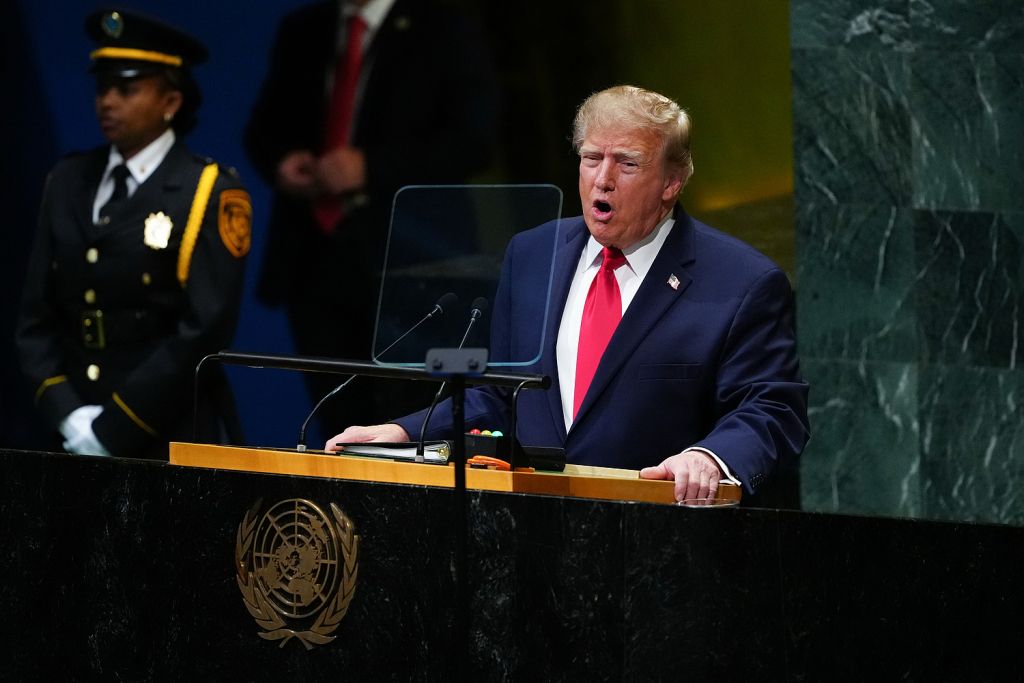
Trump's UN Address: Threats, Policy Shifts, and Global Reactions
Analysis of Trump's controversial UN speech featuring threats against Iran, Greenland military expansion, and renaming AI to 'super intelligence'.
Latest Articles
- Qantas New York to Sydney Nonstop: 18-Hour Flight Details & Project Sunrise
- China to Participate in ASEAN Defense Exercise 'Trident Resolve' in Indonesia
- Pakistan Police Camp Terror Attack: China's Firm Stance Against Terrorism
- Autonomous Trucking Revolution: Aurora Innovation's Path to Profitability
- Wreck Island Captive: A Story of Humanity Amidst War
- North Korea Unveils New Hypersonic Missile with Waverider Design