North Korea Unveils New Hypersonic Missile with Waverider Design
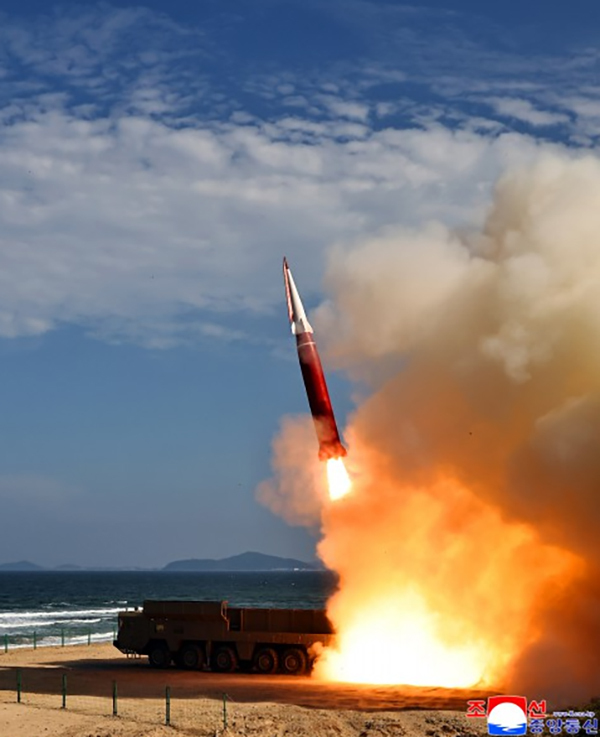
North Korea's latest hypersonic missile test showcases advanced waverider technology, marking the country's fifth public demonstration of hypersonic capabilities.
Source: thepaper.cn
North Korea has successfully test-fired a new hypersonic missile featuring a waverider design, marking a significant advancement in the country's missile technology. The test, conducted on September 20 and publicly announced on September 22, was personally observed by North Korean leader Kim Jong-un, who emphasized the importance of these advanced technologies for national defense and long-term military development.
Key Developments
- New Missile Design: The "Hwasong-11 Mu-1" hypersonic missile utilizes a waverider configuration for its gliding body, which improves aerodynamic efficiency and maneuverability at high speeds.
- Leadership Oversight: Kim Jong-un personally oversaw the test, highlighting the strategic importance of this technology to North Korea's defense posture and long-term military capabilities.
- Historical Context: This is North Korea's fifth publicly acknowledged hypersonic missile test since 2021, demonstrating a consistent development program in this advanced weapons category.
- Public Display: The missile was first revealed at the "National Defense-2025" weapons exhibition last October, suggesting a deliberate strategy to showcase technological progress.
- Technical Evolution: The new missile represents an evolution in North Korea's hypersonic technology, following earlier models with different glide body configurations including the initial "Hwasong-8" with waverider design and a second model using a biconic shape.
In-Depth Analysis
North Korea's rapid advancement in hypersonic technology represents a concerning development in global security dynamics. Hypersonic missiles, capable of traveling at speeds exceeding Mach 5 and maneuvering during flight, pose significant challenges to existing missile defense systems. The waverider design, which uses shock waves generated by the missile's own speed to improve aerodynamic efficiency, is particularly noteworthy as it represents a sophisticated approach to this technology.
The timing of this test, coming amid ongoing regional tensions and international diplomatic efforts, suggests North Korea is deliberately demonstrating its technological capabilities. The country's consistent development of multiple hypersonic missile variants since 2021 indicates a well-funded, sustained research and development program. This progression from concept to multiple operational systems in just five years is remarkable, though independent verification of North Korea's claims remains limited.
From a strategic perspective, these capabilities significantly alter the security calculus in Northeast Asia. Hypersonic missiles could potentially target regional allies and U.S. military installations with reduced warning time, complicating defense strategies. The international community faces the challenge of developing effective countermeasures while navigating complex diplomatic relationships with North Korea.
Looking ahead, North Korea is likely to continue refining its hypersonic technology, potentially focusing on improving accuracy, range, and payload capacity. The country may also seek to demonstrate these capabilities through additional tests, possibly timed to coincide with significant political or military events. The global arms control community will need to address this emerging threat while maintaining diplomatic channels to prevent further escalation.
Frequently Asked Questions
What makes hypersonic missiles particularly threatening? Hypersonic missiles combine high speed (Mach 5 or faster) with maneuverability, making them extremely difficult to detect and intercept with existing missile defense systems. Their ability to change trajectory during flight complicates tracking and interception efforts.
How does North Korea's hypersonic technology compare to other nations? While North Korea has made rapid progress, its capabilities likely still lag behind those of major powers like the United States, Russia, and China. However, the consistent pace of development and multiple successful tests indicate a more advanced program than many intelligence estimates previously suggested.
Source: https://www.thepaper.cn/newsDetail_forward_34122688
Related posts

Germany's Political Shift: AfD's Rise and the Fall of the Firewall
Why is Germany's political landscape fracturing? Analyzing the AfD's surge, the collapse of the firewall, and the rise of left-wing movements.

Verizon Fiber Cut Causes Major Flight Disruptions Across Northeast US
Construction accident in New Jersey cuts critical Verizon fiber cable, halting hundreds of flights to Newark, NYC, and Philadelphia airports.

Nissan Boosts U.S. Production with 2027 Rogue Hybrid Launch
Nissan eyes 3 shifts at US plants to boost production to 1M units with the new Rogue e-Power hybrid.

NVIDIA's AI Revolution: Transforming Industries with Cutting-Edge Technology
Explore how NVIDIA's latest AI innovations are reshaping industries, from healthcare to autonomous vehicles, and what this means for the future of technology.
Pakistan Police Camp Terror Attack: China's Firm Stance Against Terrorism
China strongly condemns Pakistan police camp terror attack, reaffirming unwavering support in global fight against terrorism.
China to Participate in ASEAN Defense Exercise 'Trident Resolve' in Indonesia
Chinese military to join multinational disaster response drill focusing on earthquake and compound disaster scenarios in Southeast Asia.

Budget Airlines Shift Strategy: Frontier, Allegiant, JetBlue Add Premium Seats
Bill Franke's Frontier Airlines leads a major industry shift by introducing first-class cabins. Why are ultra-low-cost carriers finally warming up to premium upgrades?

Philippine Vessel's 'Staged' Collision: Analyzing South China Sea Tactics
A deep dive into the recent 'staged' collision between the Philippine Coast Guard and Chinese Maritime Militia vessels in the South China Sea, revealing the strategic intent behind the provocation.
Latest Articles
- Ticket Prices Surge 45% For Macklemore Solo Concert Amid Ed Sheeran Tour Fallout
- The Three-Way Squeeze: How Tariffs, Fuel Costs, and Interest Rates Are Reshaping American Business
- Semaglutide Lawsuits: Link Between Diabetes Drug and Rare Vision Damage Under Scrutiny
- Caribbean Nations Seek Reparations from Britain: A New Era of Legal Action
- How The Federal Reserve Interest Rate Changes Impact Your Wallet And The Economy
- Russia's 2026 Duma Election: War, Drone Threats, and a Tightened Grip on Power