Europe Supermarket Freezer Attack: Cyber Attack Raises Temps to 50°C
A second wave of cyber attacks hits European supermarkets, raising freezer temperatures to 50°C and threatening food supply chains across eight nations.
Source: thepaper.cn
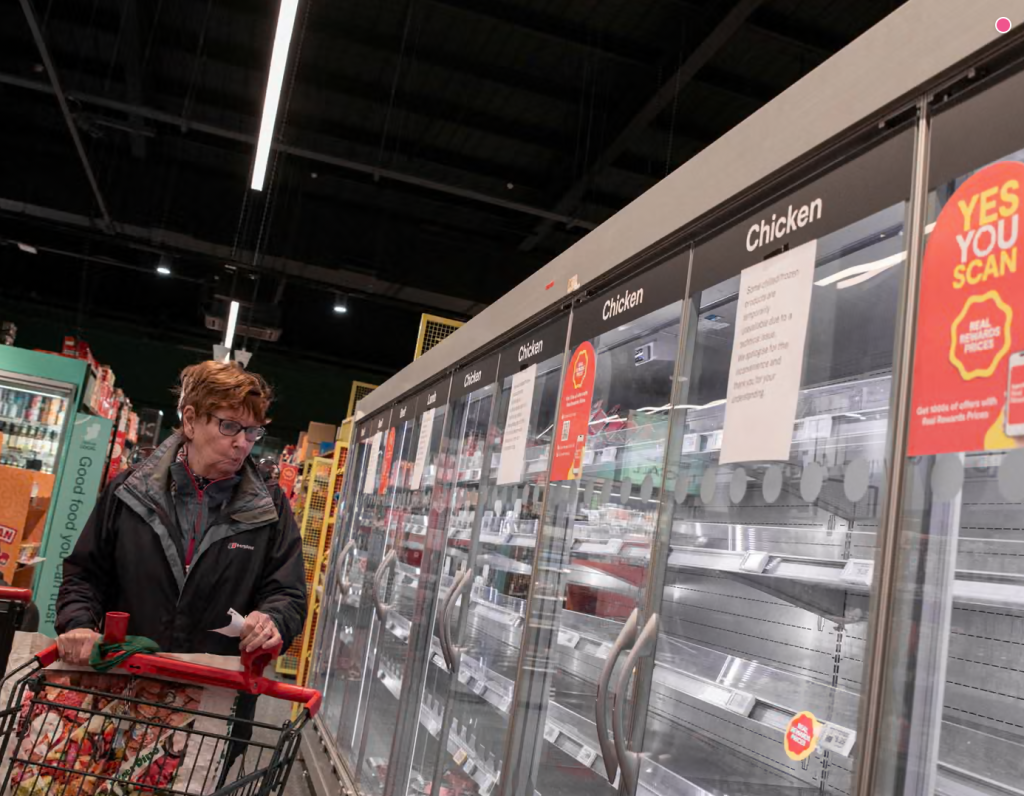
Imagine walking into your local grocery store only to find empty shelves and a sign blaming a mysterious digital intrusion. This is the unsettling reality for thousands of shoppers across Europe this week. On November 2, a coordinated cyberattack struck the refrigeration systems of major supermarket chains in at least eight countries, causing temperatures to skyrocket to a dangerous 50°C. This isn't an isolated incident; it is the second wave of attacks to hit European food retailers in just three weeks, raising urgent questions about the security of our physical supply chains and the vulnerability of everyday infrastructure.
Key Points of the Crisis
- Massive Operational Disruption: Major supermarket chains across eight European nations, including France, Belgium, Sweden, and Ireland, have reported severe damage to their refrigeration and freezing systems.
- Critical Inventory Loss: Stores were forced to discard perishable goods due to spoilage, resulting in significant financial losses estimated in the millions of euros for affected retailers.
- Escalating Threat: This incident follows a similar attack on French supermarkets just three weeks ago, indicating a coordinated and evolving cyber threat targeting the food industry.
- Targeting Industrial Controls: The hackers exploited vulnerabilities in the control systems of commercial cooling equipment, manipulating temperature settings remotely.
- EU Condemnation: The European Union has officially condemned the attacks as acts of "deliberate sabotage" aimed at undermining the food supply chain and consumer confidence.
- Vulnerable Infrastructure: Experts warn that these attacks highlight the danger of connecting industrial Internet of Things (IIoT) devices, like smart freezers, directly to the internet without robust security.
- Potential Attribution: While the motive remains unclear, cybersecurity analysts suggest the attacks could be state-sponsored signaling or the work of "lone wolf" hackers, though no ransom demands have been made.
Deep Analysis: The Digital-Physical Security Gap
This series of attacks represents a disturbing convergence of cyber warfare and physical reality. Unlike traditional ransomware that encrypts data, this operation targets the physical control systems of industrial equipment. By manipulating the temperature settings of commercial freezers, hackers have turned everyday appliances into tools of disruption. The fact that this happened just three weeks after the first attack implies a sophisticated, possibly state-backed, operation with a clear strategy to destabilize the European food retail sector.
The root cause of this vulnerability lies in the modernization of infrastructure. As supermarkets adopt smart technologies for efficiency, they often connect critical systems like refrigeration to the internet for remote monitoring. However, this convenience comes with a massive security cost. Many of these systems operate on outdated software with known vulnerabilities that have not been patched. As noted by cybersecurity experts, simply sending a few digital commands can destroy inventory overnight, forcing stores to shut down completely. The financial impact is twofold: the immediate loss of spoiled goods and the long-term cost of repairing compromised systems and restoring consumer trust.
Furthermore, the lack of ransom demands suggests a different kind of objective. Unlike typical cybercriminals, the perpetrators seem to be interested in causing chaos and demonstrating capability rather than making a quick profit. This aligns with concerns from the European Union that these attacks are a form of hybrid warfare designed to weaken critical infrastructure and erode public confidence in the food supply. The incident serves as a stark warning that as we digitize more of our physical world, our defenses must evolve just as rapidly to prevent these dangerous digital intrusions from turning into physical disasters.
Frequently Asked Questions
Q: How exactly did hackers control the freezers? A: Most commercial refrigeration systems are controlled via web interfaces. Attackers likely gained access using stolen credentials or exploited unpatched vulnerabilities to log in remotely and manually override the temperature settings to 50°C.
Q: Are there any risks to consumers' health? A: While the immediate danger to shoppers is low (the attacks targeted store inventory, not personal fridges), the secondary risk comes from the potential for food shortages or the sale of spoiled goods if stores attempt to salvage inventory after the systems are restored.
Q: Why haven't the attackers demanded a ransom? A: Cybersecurity analysts believe the lack of a ransom demand points to non-financial motives. It is more likely a demonstration of capability by a state actor or a political statement, rather than a traditional criminal enterprise.
Source: https://www.thepaper.cn/newsDetail_forward_34392904
Related posts
Merck's Keytruda Qlex Drives Q3 2026 Beat: How Pharma Giants Are Future-Proofing Blockbusters
Merck reports strong Q3 2026 earnings, beating estimates with Keytruda Qlex sales. Discover how the pharma giant is navigating patent cliffs and securing growth.

Middle East Peace: Wang Yi's Diplomatic Push for Dialogue in Iran Talks
Wang Yi meets Iranian deputy secretary to discuss regional stability, emphasizing dialogue over conflict and China's role in the Global South.

Belgian Prime Minister Resigns After Budget Talks Collapse Amid EU Pressures
Belgium faces political crisis as Prime Minister De Wever resigns following failed budget negotiations, with King Philip delaying decision amid EU fiscal requirements and NATO defense spending demands.

Cruise Lines Battle Fuel Costs: Hedging vs. Efficiency Strategies
How Royal Caribbean, Carnival, and Norwegian navigate rising oil prices with distinct financial strategies.

California's Billionaire Tax: Economic Revolution or Financial Disaster?
As California votes on America's first billionaire wealth tax, economists clash over whether it will raise billions or drive the wealthy out of state.
Spain Train Crash: 66 Victims Identified in Toledo Province Collision
Spanish authorities confirm the identities of 66 victims in the Toledo province high-speed train collision. Read the latest updates on casualties, nationalities, and the investigation.

Trump Administration Prepares for Potential Democratic Control of Congress After Midterms
Explore how the Trump team is strategizing to bypass a Democratic Congress, utilizing executive orders and administrative power to advance its agenda despite potential investigations.

Armenia Path: Global Community Re-calibrates Biodiversity Goals
COP17 concludes with the 'Armenia Path,' a critical framework to address biodiversity gaps, despite challenges in funding and implementation.
Latest Articles
- Data Center Plans Threaten West Virginia's Wilderness and Dark Skies
- Norwegian Cruise Line Surges 13% on Strong Q3 Results and 2026 Guidance
- Rivian Surpasses Q3 Earnings Expectations with Strong R2 SUV Performance
- Judge Dismisses Trump's $10 Billion Lawsuit Against Wall Street Journal Over Epstein Letter
- Binance Security Incident: $6.3 Billion Frozen After Hack
- Deadlocked Democracy: Netanyahu's High-Stakes Calculations in Israel