Spain Train Crash: 66 Victims Identified in Toledo Province Collision
Spanish authorities confirm the identities of 66 victims in the Toledo province high-speed train collision. Read the latest updates on casualties, nationalities, and the investigation.
Source: thepaper.cn
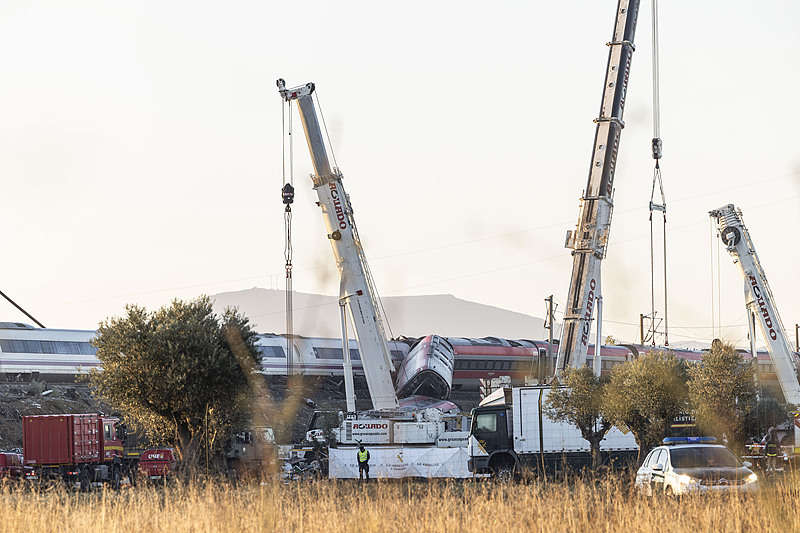
A catastrophic high-speed train collision in central Spain has left a trail of devastation, marking one of the country's most severe transportation disasters in recent history. The incident, which occurred in the Toledo province, has prompted a massive emergency response and a complex investigation into the causes of the crash. As the death toll stabilizes, the focus shifts to the human impact and the technical failures that may have led to the tragedy. The confirmation of nationalities among the victims highlights the international connectivity of modern rail travel, raising concerns about safety protocols across the European rail network.
Key Details of the Incident
- Casualty Statistics: Spanish officials have confirmed the identities of 66 out of the 69 individuals who lost their lives in the collision. This update brings the official death toll to 69, with three victims still awaiting identification.
- Nationality Breakdown: Among the confirmed victims, 54 were Spanish nationals, while the remaining 12 came from diverse backgrounds. Notably, four victims were American, and one each was from Argentina, Canada, the Czech Republic, France, Japan, Mexico, Portugal, and Tunisia.
- Missing Persons: The regional government reported 70 missing persons, though authorities have emphasized that the death toll may still rise as more information emerges.
- Geographical Impact: The crash occurred in the Toledo province, a region known for its historical significance but now grappling with the aftermath of the disaster.
- Investigation Status: The High Court of Castilla-La Mancha has taken charge of the investigation, with authorities working to determine the precise cause of the collision.
- Emergency Response: Rescue teams were deployed immediately after the crash, with emergency personnel working tirelessly to recover victims and assess the damage.
- Regional Leadership: Emilio García Pachón, the president of the Castilla-La Mancha region, has been actively coordinating the response and addressing the public's concerns.
In-Depth Analysis
The high-speed train collision in Toledo province is not just a local tragedy but a wake-up call for the global rail industry. High-speed rail systems are often lauded for their efficiency and environmental benefits, but this incident underscores the critical importance of rigorous safety protocols and infrastructure maintenance. The fact that the crash involved multiple nationalities suggests that the train was part of an international network, potentially connecting Spain with other European nations. This raises questions about the consistency of safety standards across different regions and the adequacy of cross-border emergency response mechanisms.
From an economic perspective, the disaster could have significant repercussions for Spain's tourism and transportation sectors. The Toledo province, a popular destination for history enthusiasts, may see a temporary decline in visitors as a result of the incident. Additionally, the investigation's findings could influence future rail policies across Europe, potentially leading to stricter safety regulations and enhanced training for personnel. The involvement of international investigators and the transparency of the process will be key to rebuilding public trust in rail travel.
Looking ahead, the recovery process will be as challenging as the investigation. The families of the victims will require extensive support, and the psychological impact on the community cannot be underestimated. As authorities piece together the events leading up to the crash, the focus must remain on preventing such tragedies in the future. This incident serves as a stark reminder of the inherent risks associated with high-speed travel and the need for continuous vigilance in maintaining safety standards.
Frequently Asked Questions
What caused the high-speed train collision in Spain? As of now, the exact cause of the collision has not been determined. Authorities are conducting a thorough investigation, which will likely include a review of the train's maintenance records, signaling systems, and human factors such as driver error or communication failures.
How many countries are represented among the victims? Twelve different nationalities are represented among the 66 confirmed victims. In addition to the 54 Spanish nationals, victims came from the United States, Argentina, Canada, the Czech Republic, France, Japan, Mexico, Portugal, and Tunisia.
What is being done to support the victims' families? The Spanish government and regional authorities have set up support services for the families of the victims, including counseling, financial assistance, and coordination with consulates for international families. A memorial service is also being planned to honor those who lost their lives.
Source: https://www.thepaper.cn/newsDetail_forward_34386966
Related posts

Trump Administration Prepares for Potential Democratic Control of Congress After Midterms
Explore how the Trump team is strategizing to bypass a Democratic Congress, utilizing executive orders and administrative power to advance its agenda despite potential investigations.
Armenia Path: Global Community Re-calibrates Biodiversity Goals
COP17 concludes with the 'Armenia Path,' a critical framework to address biodiversity gaps, despite challenges in funding and implementation.

Data Center Plans Threaten West Virginia's Wilderness and Dark Skies
A massive data center project in West Virginia raises concerns about environmental impact, light pollution, and the future of the region's pristine wilderness areas.

Norwegian Cruise Line Surges 13% on Strong Q3 Results and 2026 Guidance
Norwegian Cruise Line Holdings beats Q3 earnings expectations and raises 2026 outlook, driven by revenue growth and improved demand. CFO Mark Kempa to retire, replaced by Meghan Montana.

Rivian Surpasses Q3 Earnings Expectations with Strong R2 SUV Performance
Rivian beats Wall Street expectations in Q3 2026 with increased R2 deliveries and software revenue, narrowing losses while improving financial guidance.

Judge Dismisses Trump's $10 Billion Lawsuit Against Wall Street Journal Over Epstein Letter
Federal judge permanently dismisses Trump's defamation case against WSJ, ruling president failed to prove actual malice in Epstein letter reporting.

Binance Security Incident: $6.3 Billion Frozen After Hack
Binance confirms a significant security breach involving a compromised DevOps engineer's laptop. Over $6.3 billion in assets have been frozen by the exchange and stablecoin partners.

Deadlocked Democracy: Netanyahu's High-Stakes Calculations in Israel
Israel's recent election resulted in a 53-48 deadlock. Explore the political deadlock, Netanyahu's strategy, and the historical challenges of forming a majority government.
Latest Articles
- G20 Foreign Ministers' Ends Without Consensus on Geopolitical and Economic Security
- Spanish Train Crash: Viral Video is Old Footage, Not Pre-Disaster Footage
- Binance $6.3B Crypto Heist: North Korean Cyber Warfare Explained
- AI Giants Face Critical Risks: Supply Chain and Technology Obsolescence
- How Automakers Are Revolutionizing Manufacturing with 3D Printing
- Ukraine Expands Strikes, Russia Denies Progress: The Core Conflict Remains