China Warns Japan Against 'New Militarism' Over Joint Drills
China condemns Japan's 'Eastern Shield 26' drills with the US and Australia, accusing Tokyo of advancing 'new militarism' and regional instability.
Source: thepaper.cn
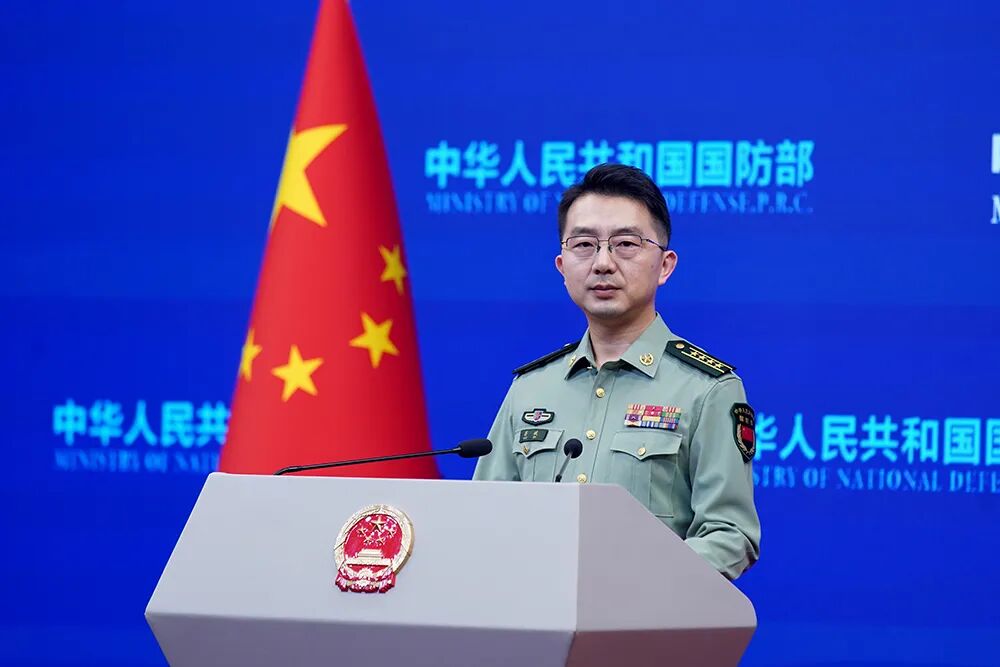
Recent military maneuvers in the Asia-Pacific have reignited concerns about regional stability, as China's Ministry of National Defense has issued a sharp rebuke against Japan's expanding defense posture. During a press briefing on September 14, 2026, Major General Jiang Bin of the Chinese Ministry of National Defense addressed the alarming implications of the "Eastern Shield 26" joint exercises conducted by Japan, the United States, and Australia. This operation, which took place from September 8 to 24, marked a significant escalation by deploying the US 'THAAD' intermediate-range missile system for the first time in a joint drill involving Japanese forces. This move is viewed by Beijing not merely as a standard military exercise, but as a dangerous step toward the normalization of offensive capabilities within the region.
Key Points
- Deployment of Offensive Systems: The 'Eastern Shield 26' exercises featured the first-ever participation of the US THAAD missile system in a drill involving Japanese forces, signaling a shift toward deploying strategic offensive weaponry in the region.
- Undermining Peace Principles: China argues that Japan is systematically eroding its long-standing 'peace constitution' and 'defense-only' principles to accelerate its 'remilitarization' and expand its military reach.
- Risk of Regional Arms Race: By integrating advanced US missile systems into joint exercises, the maneuver is perceived as a direct driver of an escalating arms race and heightened military confrontation in East Asia.
- Critique of 'New Militarism': Beijing explicitly labels Japan's actions as a move toward 'new militarism,' characterizing the shift as a departure from post-war pacifism and a pursuit of aggressive expansion.
- Negative Consequences for Japan: The Chinese statement warns that aiding Japan's military ambitions will not only destabilize the region but will inevitably bring disaster upon Japan itself.
- Call for Dismantling 'Camps': China urges Japan to stop accommodating external powers that seek to create 'camp confrontation' and to instead respect the legitimate security concerns of its neighbors.
- Demand for Corrective Action: The Ministry of National Defense demands that relevant parties cease actions that heighten regional tension and instead take concrete steps to contribute to regional peace and stability.
In-Depth Analysis
The Chinese Ministry of National Defense’s condemnation highlights a deep-seated strategic anxiety regarding the evolving security architecture of the Indo-Pacific. The reference to 'new militarism' is particularly significant; it suggests that Beijing views Japan’s current defense reforms—such as the acquisition of long-range strike capabilities and the reinterpretation of collective self-defense—as a fundamental departure from the pacifist trajectory established after World War II. By integrating the THAAD system into 'Eastern Shield 26,' the US and Japan are effectively normalizing the deployment of strategic offensive assets within the First Island Chain, a move that directly challenges China’s perceived security perimeter.
This incident underscores the intensifying 'security dilemma' in the region. As Japan deepens its security ties with the US and Australia, Beijing interprets these alliances not merely as defensive pacts but as mechanisms to encircle and contain China. The Chinese response emphasizes that these actions are not isolated events but part of a broader pattern of Japan 'breaking through' its constitutional limits to pursue military expansion. From Beijing's perspective, the introduction of long-range missiles and the expansion of joint exercises are steps that push the region toward a 'dangerous vortex' of conflict, making the risk of miscalculation increasingly acute. The rhetoric used by Major General Jiang Bin indicates that China views the current trajectory of Japanese defense policy as a direct threat to the regional status quo, necessitating a firm and public diplomatic response to deter further escalation.
Frequently Asked Questions
Q: What is the significance of the THAAD system in this context?
A: The deployment of the THAAD system is a major escalation because it represents the introduction of strategic offensive missile defense capabilities into a joint exercise. For China, this signals a willingness to integrate long-range strike assets directly into the theater, which is viewed as a direct challenge to its own security and a violation of the regional balance.
Q: Why does China refer to this as 'new militarism'?
A: China uses the term 'new militarism' to describe Japan's shift away from its post-war pacifist constitution and 'defense-only' principles. It refers to Japan's increasing ability to project power beyond its borders, develop offensive weapons, and align closely with external powers, effectively reversing the post-WWII security order in the region.
Q: What are the broader implications for regional stability?
A: The joint drills and subsequent condemnation risk accelerating an arms race in the region. As Japan expands its military reach with US support, neighboring countries are likely to increase their own defense spending and military readiness, creating a cycle of tension that makes diplomatic solutions more difficult to achieve.
Source: https://www.thepaper.cn/newsDetail_forward_34066934
Related posts
China-Laos Defense Talks: Dong Jun Meets Khamliang in Beijing
China's defense minister Dong Jun met Laos' deputy PM and defense minister Khamliang in Beijing, reaffirming the two militaries' 'comrade-plus-brother' ties and regional security role.
Iran and the West: Empire, Revolution, and the Roots of the 2026 War
From the Persian Empire to the 2026 US-Israel-Iran war, a global-history reading of how revolution, oil, and hegemony locked Iran and the West into conflict.

Sweden Election 2026: One Seat, Deep Anxiety
Sweden's 2026 election hung on a single seat, 175 to 174. We unpack the Sweden Democrats' slide, gang violence, NATO, and why voters turned back to healthcare and inflation.
China's Diplomatic Envoys Local Tours: What Beijing's New Outreach Means
China's foreign ministry has upgraded its 'Local Tour for Diplomatic Envoys' program, pairing development and governance themes to shape how foreign diplomats read the country.

Indonesia Ferry Disaster: Why Java Sea Capsizing Keeps Repeating
An overloaded 1987-built ferry capsized in the Java Sea, leaving 130 missing. We break down Indonesia's systemic ferry safety crisis and what reform would require.
China Warns Citizens: Avoid Tajikistan-Afghanistan Border
China's foreign ministry and embassy urge citizens to leave the Tajik-Afghan border after stray bullets and illegal crossings caused casualties. What it means.
BRICS Summit 2026: Xi Jinping in India and the Global South Push
Xi Jinping's 24-hour New Delhi trip, the BRICS 'four pioneers' agenda, AI cooperation pledges, and a third China-hosted summit set for 2027.

Okinawa Governor Election: Pro-Base Candidate Wins, Shifting 12-Year Stance
Okinawa's governor election hands victory to a candidate backed by Japan's ruling bloc, signaling a pro-base shift after 12 years of opposition to the Henoko relocation plan.
Latest Articles
- Trump Backs Irish Unification: Why His Northern Ireland Remark Rattles London
- Lingyuan, China's Lily Capital: How One County Built a $140M Flower Economy
- Xi Jinping's Five BRICS Proposals: AI, Trade, and the Global South
- Xi Jinping Ties China's 15th Five-Year Plan to Global Cooperation at BRICS Summit
- Xi Jinping at BRICS New Delhi Summit: Five Proposals for the Global South
- Xi Jinping's BRICS 2026 Speech: Five Proposals for the Global South