Bank of America Q3 Outlook: Investment Banking Fees Fall Over 10%
Bank of America projects a double-digit decline in investment banking fees for Q3, signaling a cooling trend in the AI-fueled capital markets boom.
Source: CNBC
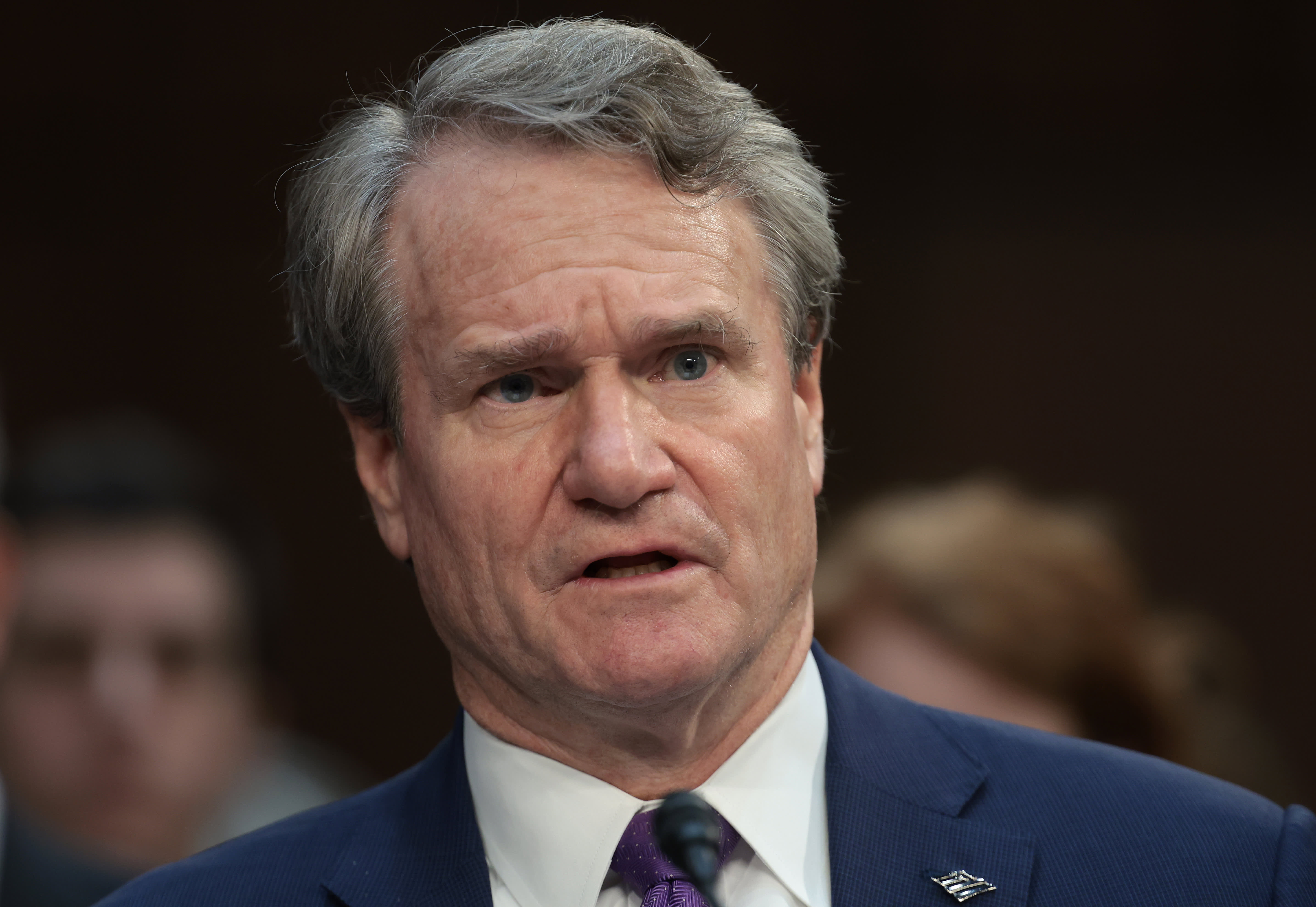
The relentless surge in investment banking activity, largely fueled by artificial intelligence, appears to be facing its first significant headwinds. Bank of America (BAC), a titan in the global financial sector, has signaled that the frenetic pace of the previous quarter is unlikely to be sustained. In a stark contrast to the robust performance seen in the second quarter, the bank’s CEO, Brian Moynihan, has forecasted a significant pullback in revenue streams, specifically within its advisory and trading divisions. This development serves as a crucial early indicator that the explosive growth witnessed across Wall Street may be entering a period of normalization or turbulence, prompting investors and analysts to re-evaluate the sustainability of the current market cycle.
Key Takeaways
- Projected Decline: Bank of America expects third-quarter investment banking fees to drop by more than 10% compared to the same period last year.
- Trading Stability: While advisory fees are projected to fall, trading revenue is anticipated to remain roughly flat, marking a shift from the previous quarter's growth.
- Market-Wide Context: CEO Brian Moynihan noted that the broader investment banking market is down approximately 10%, suggesting the decline is not unique to his institution.
- Pipeline vs. Performance: Despite a robust pipeline for deals, particularly in the middle market, the bank anticipates lagging behind competitors in high-activity sectors.
- Competitor Comparison: Citigroup has also reported a slowdown, projecting low-single-digit growth for investment banking and mid-single-digit growth for trading in the third quarter.
- Investor Reaction: Following the earnings outlook, Bank of America shares experienced a sharp decline of 5% in afternoon trading.
- September Significance: Analysts emphasize that the final weeks of the quarter are critical, with performance in September often determining the final quarterly results.
In-Depth Analysis
The divergence between Bank of America’s second-quarter success and its third-quarter forecast highlights the volatile nature of the current capital markets environment. The bank’s previous quarter saw a staggering 50% increase in investment banking fees and a 33% rise in trading revenue, largely attributed to the artificial intelligence boom and a general surge in corporate activity. However, the current outlook suggests that this momentum has been unsustainable. The projected double-digit decline in investment banking fees is not merely a reflection of Bank of America’s performance but a symptom of a broader market correction. By citing Dealogic data, which indicates the market is down 10%, Moynihan clarified that the bank is not uniquely underperforming but is simply facing the same headwinds as its peers. This context is vital for understanding the industry's trajectory; it suggests that the 'AI-fueled' boom, while powerful, may be cyclical rather than permanent.
Furthermore, the 'roughly flat' projection for trading revenue points to a maturation in the market. Trading, which often benefits from high volatility and rapid information processing—areas where AI excels—has hit a ceiling. This stabilization contrasts sharply with the explosive growth seen earlier in the year, implying that the initial wave of AI-driven trading strategies is being integrated into the market, dampening the sharp price movements that previously generated significant revenue. The bank’s specific admission that it is not as well positioned in certain high-activity businesses further complicates the narrative. While the overall deal pipeline remains robust, particularly in the middle market, Bank of America’s competitive positioning in the most lucrative sectors appears to be lagging, forcing a significant revenue reduction.
From a macroeconomic perspective, this slowdown could be an early warning sign for investors. The belief that capital markets activity would remain at peak levels indefinitely is being challenged. The projected decline in investment banking fees suggests that the rush of initial public offerings (IPOs), mergers and acquisitions (M&A), and bond offerings may be tapering off as market participants digest the current economic landscape. The commentary from Citigroup’s CFO, Gonzalo Luchetti, corroborates this trend, projecting low-single-digit growth for investment banking and mid-single-digit for trading. The consensus among major banks is that the 'super-cycle' of capital markets activity is cooling, moving from an era of explosive expansion to one of steady, albeit lower, growth. This shift will likely force banks to optimize their cost structures and focus on efficiency rather than just volume, fundamentally altering the business models of major financial institutions.
Frequently Asked Questions
Will the AI boom continue to drive investment banking fees?
While the AI boom has been a major catalyst for recent activity, the data from Bank of America suggests that the initial surge in fees is cooling. The projected double-digit decline indicates that the market is normalizing, and the most explosive growth phase may be over.
How did Bank of America perform in the previous quarter?
In the second quarter, Bank of America saw a 50% jump in investment banking fees and a 33% increase in trading revenue, outperforming many of its peers and reflecting a highly active market environment.
What does a 'roughly flat' trading outlook mean for the bank?
A flat trading outlook suggests that while revenue is not declining, it is also not growing significantly. This indicates that the market has stabilized after a period of high volatility, potentially reducing the profit margins that banks typically enjoy during turbulent times.
Source: https://www.cnbc.com/2026/09/14/bank-of-america-bac-q3-investment-banking-fees.html
Related posts

Main Street Millionaires: The Wealthy Class Hiding in Plain Sight
Discover the silent economic revolution driving wealth in America. Beyond billionaires, a vast network of Main Street millionaires controls the economy and shapes policy.

China Warns Japan Against 'New Militarism' Over Joint Drills
China condemns Japan's 'Eastern Shield 26' drills with the US and Australia, accusing Tokyo of advancing 'new militarism' and regional instability.
China-Laos Defense Talks: Dong Jun Meets Khamliang in Beijing
China's defense minister Dong Jun met Laos' deputy PM and defense minister Khamliang in Beijing, reaffirming the two militaries' 'comrade-plus-brother' ties and regional security role.
Iran and the West: Empire, Revolution, and the Roots of the 2026 War
From the Persian Empire to the 2026 US-Israel-Iran war, a global-history reading of how revolution, oil, and hegemony locked Iran and the West into conflict.

Sweden Election 2026: One Seat, Deep Anxiety
Sweden's 2026 election hung on a single seat, 175 to 174. We unpack the Sweden Democrats' slide, gang violence, NATO, and why voters turned back to healthcare and inflation.
China's Diplomatic Envoys Local Tours: What Beijing's New Outreach Means
China's foreign ministry has upgraded its 'Local Tour for Diplomatic Envoys' program, pairing development and governance themes to shape how foreign diplomats read the country.

Indonesia Ferry Disaster: Why Java Sea Capsizing Keeps Repeating
An overloaded 1987-built ferry capsized in the Java Sea, leaving 130 missing. We break down Indonesia's systemic ferry safety crisis and what reform would require.
China Warns Citizens: Avoid Tajikistan-Afghanistan Border
China's foreign ministry and embassy urge citizens to leave the Tajik-Afghan border after stray bullets and illegal crossings caused casualties. What it means.
Latest Articles
- BRICS Summit 2026: Xi Jinping in India and the Global South Push
- Okinawa Governor Election: Pro-Base Candidate Wins, Shifting 12-Year Stance
- Trump Backs Irish Unification: Why His Northern Ireland Remark Rattles London
- Lingyuan, China's Lily Capital: How One County Built a $140M Flower Economy
- Xi Jinping's Five BRICS Proposals: AI, Trade, and the Global South
- Xi Jinping Ties China's 15th Five-Year Plan to Global Cooperation at BRICS Summit