Lingyuan, China's Lily Capital: How One County Built a $140M Flower Economy
Lingyuan, a county of 513,000 people in western Liaoning, supplies 3 of every 10 Chinese cut lilies. Inside the land, labor and risk math behind its 1 billion yuan flower economy.
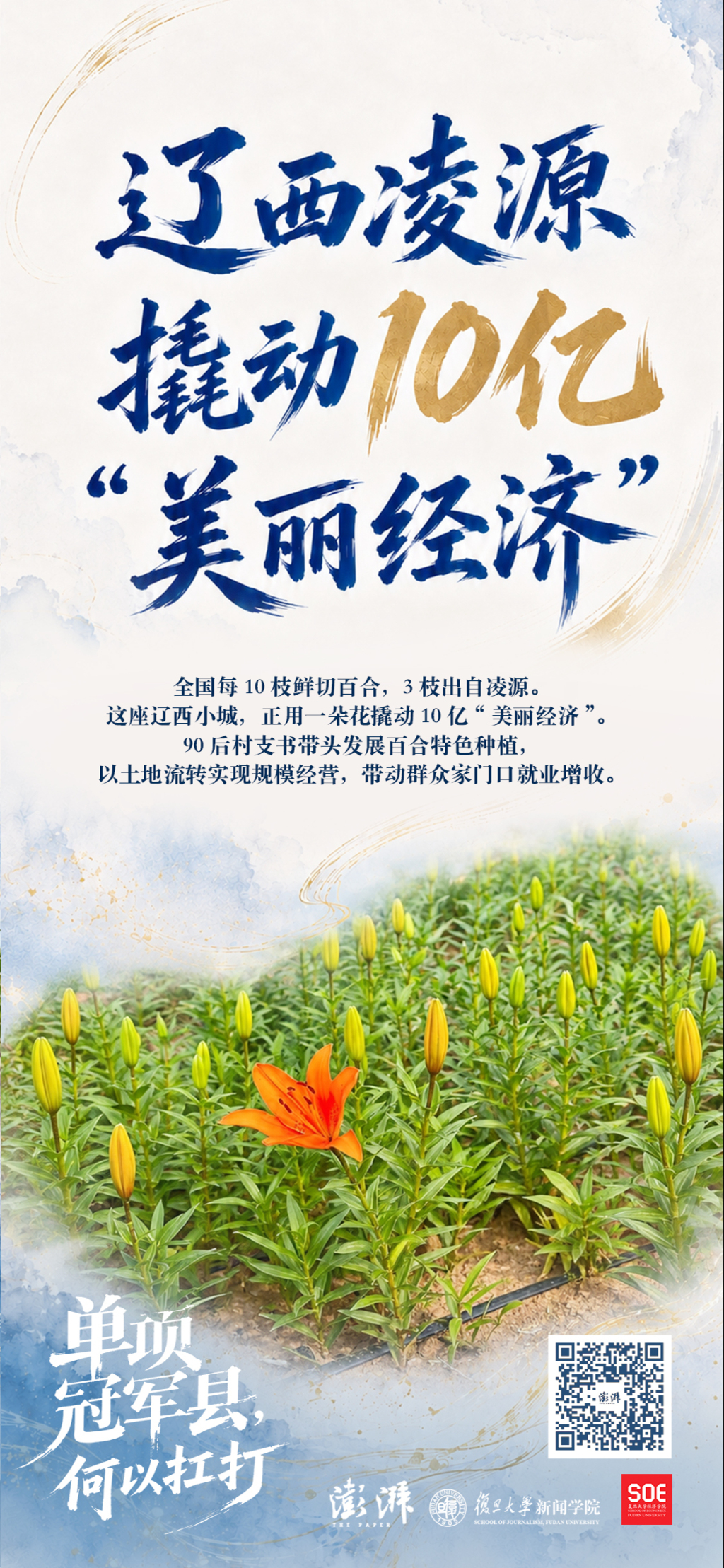
In a county of just 513,000 residents tucked into western Liaoning, a single flower has quietly become an economic engine worth more than 1 billion yuan (roughly $140 million) a year. Lingyuan grows the bulbs behind three out of every ten cut lilies sold in China, earning it the unofficial title of the country's lily capital. But the real story is not the flower — it is the ledger behind it: land consolidation, household risk, and a young village leader trying to keep more of the value chain at home.
Key Facts
- Scale and status. Lingyuan's flower sector spans about 48,000 mu (roughly 3,200 hectares) and generates annual output value above 1 billion yuan. The county is widely described as the leading cut-flower production base in northern China, with the saying "Yunnan in the south, Lingyuan in the north" capturing its position.
- A 36-year-old origin story. The industry began in 1990, when the local government distributed 30,000 Asian lily bulbs to farmers at no cost. Favorable sunlight, large day-night temperature swings and suitable soil later enabled multi-crop, off-season production techniques that competitors struggle to replicate.
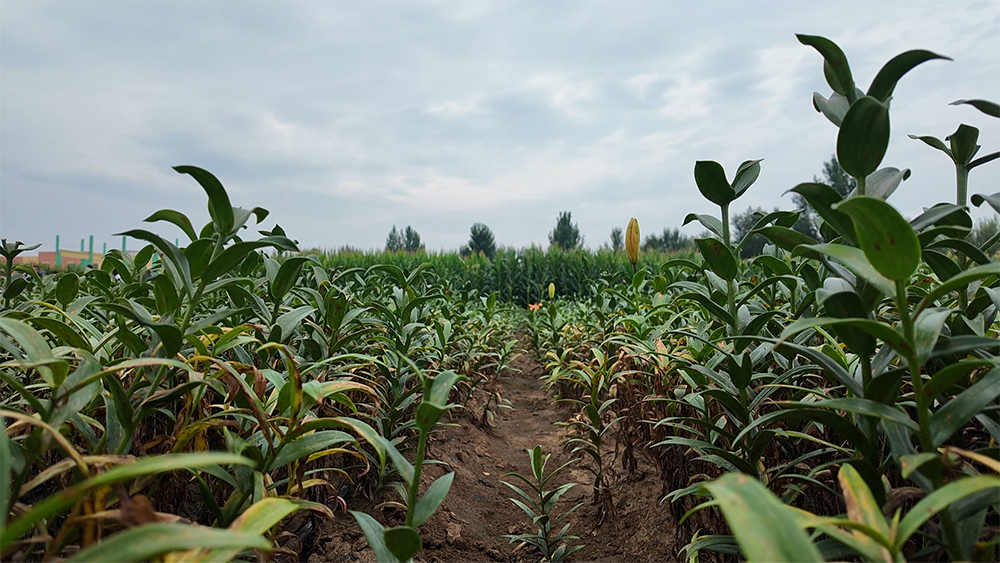
- The "vegetable lily" model. Unlike cut flowers, these lilies are grown for their bulbs. Farmers remove buds in early summer to push nutrients underground, harvest bulbs before the October frost, chill them for 110–120 days, then ship them south to Hunan and Hubei for a second planting before the scales are peeled, dried and sold as food or medicine.
- The per-mu math. One farmer-operator calculates input costs of about 17,000 yuan per mu: roughly 13,000 yuan for bulbs, 1,500 yuan for land rent, about 2,000 yuan for labor, plus fertilizer, pesticides, machinery and drip irrigation that must be replaced annually. With yields above 3,000 jin per mu and a 2025 purchase price near 13 yuan per jin, gross output reaches at least 39,000 yuan, leaving net profit above 22,000 yuan per mu.
- Volatile returns. Local industry figures recall that before 2023 a mu of vegetable lilies returned only 6,000–7,000 yuan. That climbed to around 10,000 yuan, then spiked as high as 40,000 yuan in a strong year. By contrast, corn on the same land historically produced total annual output of just 2,000–3,000 yuan per mu.
- Land consolidation as infrastructure. Since 2021 the village has acted as a no-markup intermediary, pooling scattered plots from aging households and leasing contiguous blocks to growers. Contracts now run to 2054, with rent stepping up from 1,300 yuan per mu in the first decade to 1,600 and then 1,900 yuan, building in room for inflation.
- Jobs at the doorstep. Lily cultivation remains labor-intensive. A 30–40 mu field can require nearly 200 workers at peak planting season, drawing laborers from neighboring counties. Women doing fine sorting and planting work can earn about 100 yuan a day, paid the same day.
- Seeds remain the bottleneck. The village currently handles only the first stage of bulb propagation. Local planners are pushing into breeding, processing, packaging, e-commerce and sales, and have developed more than 20 proprietary flower varieties. Domestic production of virus-free lily bulbs reached 500,000 units in 2025.
Deeper Analysis
The Lingyuan case is a useful counterweight to the assumption that Chinese rural revitalization is mostly about subsidies or tourism. What is happening here looks more like a genuine cluster economy: a specialized crop, a repeatable technical protocol, a land market that has been deliberately re-plumbed, and a labor pool that can be mobilized on short notice. That combination is what turns a single flower into a county-level industry rather than a seasonal gamble.
The most interesting variable is risk allocation. The headline number — 22,000 yuan net profit per mu — is real, but it sits on top of roughly 17,000 yuan of upfront spending, and the crop cannot be replanted on the same land in consecutive cycles. Farmers must constantly hunt for fresh plots, while price swings in southern markets transmit back to Lingyuan's buyers within weeks. In effect, the household absorbs the volatility. That is why the land-lease structure matters so much: by fixing rents in ten-year steps out to 2054, the village converts at least one major cost into something predictable, which is a quiet but powerful form of risk management.
The unresolved question is where the value accrues. Lingyuan's growers currently dominate the early, lower-margin stage of bulb propagation, then hand the product to southern partners for finishing. As one local leader put it bluntly, the bowl is still in someone else's hands. The county's push into proprietary varieties, domestic virus-free bulb production and preserved-flower processing is an attempt to climb the chain — and the export of more than 200,000 tulips to Europe suggests the quality bar has already been cleared. If Lingyuan can hold onto breeding and branding, the economics shift from farming to intellectual property.
There is also a demographic dimension that gets less attention. The village has already rehoused about two-thirds of its residents in high-rise buildings, with plans to move the rest, freeing land for concentrated production. Meanwhile, young people are returning — not only to farm, but to work as research assistants and e-commerce operators. That is the difference between a crop boom and an industry that survives its first generation of founders.
Frequently Asked Questions
Why is Lingyuan able to grow lilies that Yunnan, China's dominant flower region, cannot easily match? Lingyuan's advantage is geographic rather than financial. Its sunlight, wide day-night temperature differential and soil allow multi-crop, off-season production that extends the supply window. That is why the industry phrase pairs the two regions rather than treating them as direct substitutes — they serve different timing niches in the same national market.
Source: https://www.thepaper.cn/newsDetail_forward_33977674
Related posts
BRICS Summit 2026: Xi Jinping in India and the Global South Push
Xi Jinping's 24-hour New Delhi trip, the BRICS 'four pioneers' agenda, AI cooperation pledges, and a third China-hosted summit set for 2027.
Okinawa Governor Election: Pro-Base Candidate Wins, Shifting 12-Year Stance
Okinawa's governor election hands victory to a candidate backed by Japan's ruling bloc, signaling a pro-base shift after 12 years of opposition to the Henoko relocation plan.

Trump Backs Irish Unification: Why His Northern Ireland Remark Rattles London
Trump again says he supports a united Ireland, drawing sharp pushback from UK leaders. Here's what he said, why it matters, and what may come next.