China's GPU 'Big Four' Unite on STAR Market: Suiyuan Tech IPO
Suiyuan Technology's STAR Market IPO marks the convergence of China's 'GPU Big Four' in public markets. Explore the IPO details, financials, and strategic implications for China's AI chip industry.
Source: 牛嘉
China's domestic AI chip industry is reaching a pivotal moment as Suiyuan Technology (燧原科技) prepares to list on the STAR Market, completing the public-market lineup of the so-called 'GPU Big Four'—Suiyuan, Moore Threads, MetaX, and Biren Technology. This IPO isn't just a corporate milestone; it signals the maturation of China's push for self-reliant AI infrastructure amid escalating US export controls. With AI compute demand soaring, the convergence of these four companies in the capital markets underscores a strategic shift: China is betting big on domestic alternatives to Nvidia, and investors are paying close attention.
Key Highlights
-
IPO Details: Suiyuan Technology's STAR Market IPO is scheduled for subscription on September 2, 2026. The company plans to raise 6 billion yuan (approximately $840 million) to fund the R&D and industrialization of its fifth- and sixth-generation AI chips, as well as advanced AI hardware-software collaborative innovation projects. This capital injection is critical for sustaining its aggressive R&D roadmap.
-
Revenue Growth: Suiyuan's revenue has been climbing steadily: 301 million yuan (2023), 722 million yuan (2024), and 990 million yuan (2025). For the first half of 2026, revenue hit 1.12 billion yuan, already surpassing the full-year 2025 figure. The company projects Q3 2026 revenue between 2.3 billion and 3.0 billion yuan, a staggering 325%–455% year-over-year increase, indicating accelerating market adoption.
-
Persistent Losses: Despite revenue growth, Suiyuan remains unprofitable. Net losses were -1.665 billion yuan (2023), -1.510 billion yuan (2024), and -1.164 billion yuan (2025). H1 2026 losses narrowed to -632 million yuan. The company expects Q3 2026 losses to be between -860 million and -700 million yuan, showing a trend of gradual improvement but still far from profitability—a common trait among capital-intensive chip startups.
-
Product Portfolio: Founded in 2018, Suiyuan has developed five cloud AI chips across four generations of architecture. Its product suite spans AI chips, AI accelerator cards and modules, intelligent computing systems and clusters, and AI computing/software programming platforms. This end-to-end approach aims to compete directly with Nvidia's full-stack ecosystem.
-
Peer IPOs: The 'GPU Big Four' are all heading to the STAR Market. Moore Threads and Biren have already listed, while MetaX is expected to follow soon. This collective move provides a benchmark for investors to compare business models, technological approaches, and market traction within China's domestic GPU sector.
-
Other IPOs This Week: The week also features Baimeike (百迈科) on the Beijing Stock Exchange (Aug 31) and Xinowei (信诺维) on the STAR Market (Sep 3). Baimeike specializes in surgical sutures and peptide pharma equipment, ranking fourth in China's knotless suture market. Xinowei is a biotech with a pipeline targeting oncology and infectious diseases, expecting its first drug launch in 2026.

Deep Analysis
The simultaneous public listing of China's 'GPU Big Four' is more than a financial event—it's a strategic response to geopolitical pressures. With US export controls restricting access to advanced Nvidia chips, China's domestic AI chipmakers are positioning themselves as the backbone of the country's AI infrastructure. Suiyuan's focus on cloud AI chips is particularly crucial because data centers and cloud computing are the core of AI development. The company's revenue surge in 2026 suggests that Chinese cloud providers and enterprises are increasingly adopting domestic chips, driven by both policy incentives and practical necessity.
However, the path to profitability remains steep. The heavy R&D spending required to iterate chip architectures—Suiyuan is already on its fifth and sixth generations—means losses are likely to persist for several years. The IPO capital will help bridge this gap, but investors must weigh the long-term potential against near-term financial drag. The 'GPU Big Four' collectively represent a significant portion of China's domestic AI chip capacity, and their success is vital for reducing reliance on foreign technology. Yet, competition is fierce: Nvidia still dominates the global market, and domestic players like Huawei's Ascend series also pose a challenge. The next 12-18 months will be critical as these companies scale production, secure design wins, and demonstrate that their chips can deliver competitive performance in real-world AI workloads. If they succeed, China's AI ecosystem could achieve a level of self-sufficiency that reshapes the global semiconductor landscape.

Frequently Asked Questions
What is the 'GPU Big Four' and why does it matter? The 'GPU Big Four' refers to four Chinese AI chip startups: Suiyuan Technology, Moore Threads, MetaX, and Biren Technology. They are seen as China's main domestic alternatives to Nvidia in the AI accelerator market. Their collective listing on the STAR Market provides investors with exposure to China's semiconductor self-reliance drive and reflects the government's push to build a domestic AI supply chain.
Why is Suiyuan Technology still loss-making despite rising revenue? Suiyuan's losses are primarily due to massive R&D expenditures required to develop competitive AI chips. The company is investing heavily in next-generation architectures (fifth and sixth gen) and building a full software stack. This is typical for semiconductor startups, where upfront costs are enormous and profitability only comes after achieving significant scale and market penetration.
How does Suiyuan compare to Nvidia? Suiyuan's chips are designed for cloud AI workloads, similar to Nvidia's data center GPUs. While Nvidia currently leads in performance and ecosystem maturity, Suiyuan and other Chinese firms are focusing on optimizing for domestic needs, including compliance with local regulations and integration with Chinese software frameworks. The performance gap is narrowing, but Nvidia still holds a strong advantage in high-end training chips.

Source: https://mp.weixin.qq.com/s/Y18BT2w9LXRN-gZ1Tdf4pg
Related posts
Volkswagen to Cut 100,000 Jobs: Inside the Biggest Automaker Restructuring
Volkswagen plans 100,000 job cuts, four German plant closures, and a halved model lineup by 2035 as profits collapse and China earnings shrink.

Alibaba Scrapped Its P-Level System: What It Means for Your Company
Alibaba dismantled its 19-year-old P-level hierarchy in 2023. Here's why high-level 'performers' drain profits, and how smaller firms can cut layers before it's too late.
China's 2026 Unicorn Rankings: AI Reshapes the Top 10
China ranks second globally with 381 unicorns. AI leads the 2026 list as ByteDance, Ant Group, and DeepSeek dominate. Explore the shifting landscape.

ByteDance Boosts AI Talent Incentives with Doubao Stock Hike
ByteDance raises Doubao stock price by 14.6% to retain AI talent, expands equity incentives, and integrates teams to accelerate AI adoption in the workplace.
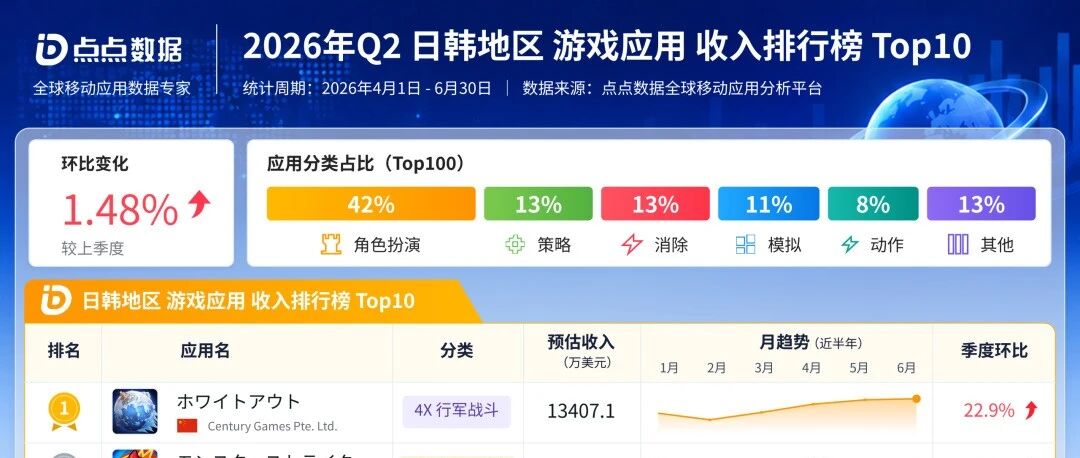
Chinese Mobile Games Dominate Japan & Korea Q2 2026 Revenue Charts
Diandian Interactive's Whiteout Survival and Kingshot top Japan/Korea Q2 2026 revenue rankings. Market shows steady growth with iOS users spending 1.2x more. Full analysis inside.
Global Mobile Gaming Revenue Dips 1% in August: Why Mid-Tier Games Are Losing
Sensor Tower's August report reveals a $66M monthly revenue drop in mobile gaming. Top titles grow while mid-tier suffers. Insights on market shifts, regional trends, and what it means for developers.
China Southern Airlines Incheon Airport Ground Staff Recruitment 2026: A Gateway for Bilingual Talent
China Southern Airlines is hiring ground staff at Incheon International Airport for 2026. Learn about the role, requirements, and why this is a strategic opportunity for Korean-Chinese bilinguals.
Korea Coast Guard 2026 Chinese Translation Exam: Key Dates & Rules
Korea Coast Guard's 2026 3rd recruitment Chinese translation written exam set for Sept 5. Learn schedule, scoring, ID rules, prohibited items, and results date.
Latest Articles
- China Upgrades Asia-Africa Pavilion at CIIE to Boost Zero-Tariff Benefits
- Korea's Yoon Suk Yeol Prepares for Trump Golf Meeting
- Climate Journalism at the Tipping Point: Finding Action in Environmental Crisis
- US Lawmaker: AI Transcends Borders, Urging US-China Cooperation
- United Airlines 2027 Status Changes: Why Earning Top Tier is Getting Harder
- US-EU Double Standards Exposed: Trump's Russia Diesel Deal Sparks Global Outcry