Volkswagen to Cut 100,000 Jobs: Inside the Biggest Automaker Restructuring
Volkswagen plans 100,000 job cuts, four German plant closures, and a halved model lineup by 2035 as profits collapse and China earnings shrink.
Volkswagen's supervisory board opened September with an announcement that shook the entire auto industry: the German giant is preparing the largest self-rescue in its history, an internal plan insiders describe as a "scraping-the-bone slimming surgery." The logic is blunt — cut every dead weight, then pour money and people into whatever still protects core competitiveness. For a company that once sat at the summit of global carmaking, this is no ordinary cost-cutting cycle. It is an admission that the old playbook has stopped working.
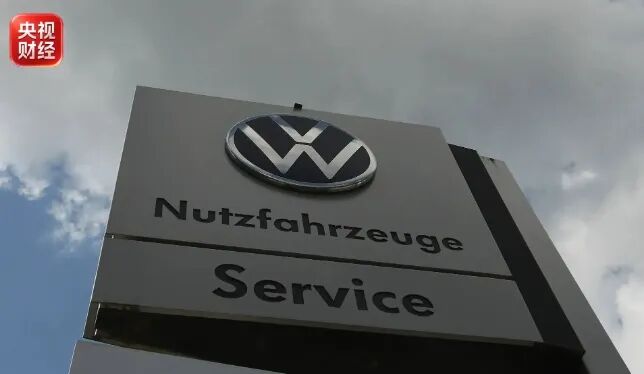
Key Facts Behind the Restructuring
- A profit collapse forced the decision. Volkswagen's 2025 results showed 8.98 million vehicles sold worldwide, with revenue roughly flat but operating profit halved — from €19.1 billion to €8.9 billion. The operating margin fell from 5.9% to 2.8%, a cut that leaves very little room for error.
- 2026 momentum is still negative. First-half sales dropped 4% and 8.6% across the two quarters. China, once the group's profit engine, has become its heaviest drag: earnings from Chinese joint ventures shrank by two-thirds between 2023 and 2025.
- The job cuts were doubled, not introduced. The original reduction plan has been expanded by another 50,000 roles, bringing the total to 100,000. More than 37,000 employees have already signed exit agreements, and management aims to complete 27,000 of those departures before the end of this year.
- The product lineup will be halved. Under the current roadmap, the number of models Volkswagen sells will be cut roughly in half by 2035. Fewer nameplates means lower development, tooling, and marketing costs across every brand in the group.
- Four German plants are on the closure list. Core manufacturing sites in Germany face shutdown, while other factories running below capacity are being offered to buyers. This is politically explosive in a country where plant closures were long treated as unthinkable.
- Roughly 970,000 units of European capacity sit idle. Rather than let those lines rust, Volkswagen is considering building Chinese-designed models in Europe to fill them. BYD, XPeng, and Chery have already approached the company about taking over part of that unused capacity.
- Leadership has framed the gap in stark terms. CEO Oliver Blume reportedly told staff privately that Volkswagen trails the industry's best players by around 20% in competitiveness, and that without fast change the pressure ahead could become unbearable.
Deeper Analysis
The most striking thing about this plan is not its size but its direction. Volkswagen is not simply shrinking; it is reallocating. Capital and engineering talent are being pulled out of legacy combustion programs and low-volume nameplates and pushed toward electric platforms, software, and the markets where growth still exists. That is a fundamentally different strategy from the across-the-board austerity European automakers practiced after 2008.
The China problem deserves particular attention. For two decades, Volkswagen's Chinese joint ventures functioned as an ATM that funded global expansion. Now that stream has narrowed to a third of its former size, and the cause is structural rather than cyclical: Chinese buyers have shifted decisively toward domestic EV brands that iterate faster and price more aggressively. Volkswagen cannot simply wait for the pendulum to swing back.
Using European factories to build Chinese-engineered vehicles is the boldest and most counterintuitive element of the plan. It effectively inverts the old joint-venture model — instead of Western technology flowing east, Chinese platforms and supply chains would flow west, filling German assembly lines. If the talks with BYD, XPeng, and Chery produce deals, Europe could gain a template for how legacy capacity is reused in the EV era. If they fail, those plants close permanently.
The human and political costs are unavoidable. Cutting 100,000 jobs touches suppliers, dealers, and entire regional economies, and German labor unions hold powerful veto points through co-determination. Expect the announced figures to be contested, delayed, or partially softened at the bargaining table. Investors, meanwhile, will judge success by margin recovery rather than headcount reduction alone.
Looking ahead, Volkswagen is betting that a smaller, leaner company can still be a global leader. The risk is that the cuts remove muscle along with fat, slowing the very EV and software programs meant to close the 20% competitiveness gap. The next 24 months of quarterly results — and the fate of those four German plants — will reveal whether this surgery heals the patient or merely buys time.
Frequently Asked Questions
Why is Volkswagen cutting so many jobs at once?
Because its profit margin has roughly halved and its Chinese joint-venture income has fallen by two-thirds, leaving the group with costs sized for a much more profitable era. Management concluded that gradual trimming would be too slow to close a competitiveness gap it estimates at around 20%.
What does this mean for car buyers outside Germany?
Fewer models will be available across Volkswagen's brands by 2035, and some nameplates will be discontinued entirely. At the same time, Chinese-designed vehicles built in European plants could reach European showrooms sooner than expected, potentially at more competitive prices.
Could Chinese automakers really take over Volkswagen's idle European factories?
Talks are reportedly underway with BYD, XPeng, and Chery, but nothing is confirmed. Such deals would give Chinese brands local production and tariff advantages while giving Volkswagen a way to keep plants running — a rare outcome where both sides gain.
Source: https://mp.weixin.qq.com/s/WDHNPYJ6eXpaYHThvuTANA
Related posts

Alibaba Scrapped Its P-Level System: What It Means for Your Company
Alibaba dismantled its 19-year-old P-level hierarchy in 2023. Here's why high-level 'performers' drain profits, and how smaller firms can cut layers before it's too late.
China's 2026 Unicorn Rankings: AI Reshapes the Top 10
China ranks second globally with 381 unicorns. AI leads the 2026 list as ByteDance, Ant Group, and DeepSeek dominate. Explore the shifting landscape.

ByteDance Boosts AI Talent Incentives with Doubao Stock Hike
ByteDance raises Doubao stock price by 14.6% to retain AI talent, expands equity incentives, and integrates teams to accelerate AI adoption in the workplace.