Xiaomi's Triple Chip Launch: A Bold Move to Reshape the Tech Landscape
Xiaomi unveils three self-developed chips in one event, targeting flagship phones, automotive, and edge AI. Analysis of the strategy behind Xuanjie O3, O100, and D100.
Source: 咸鱼界大长工
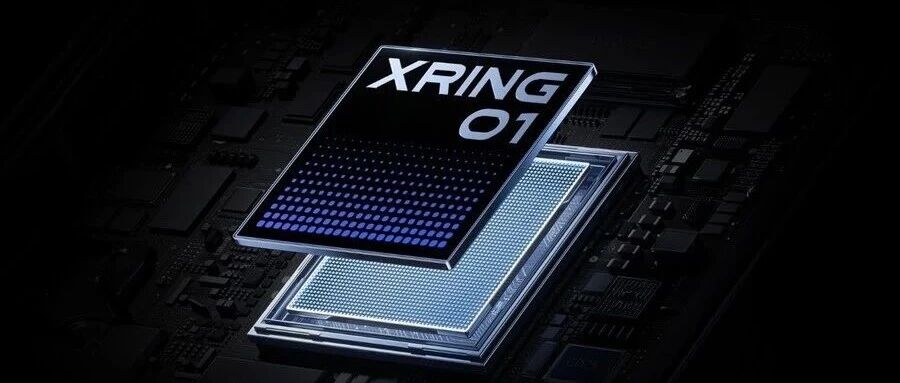
On the evening of August 24, 2026, Xiaomi's founder Lei Jun took the stage for a product launch that sent shockwaves through the tech industry. While many were expecting incremental updates, Xiaomi delivered a triple whammy: three self-developed chips, each targeting a different sector. The Xuanjie O3 SoC aims to power flagship smartphones, the Xuanjie O100 is designed for automotive applications, and the Xuanjie D100 focuses on on-device large language model (LLM) inference. This simultaneous unveiling is unprecedented in the Chinese chip industry and signals Xiaomi's ambition to control its own silicon destiny across multiple fronts.
Key Highlights
-
Three Chips, Three Markets: Xiaomi introduced the Xuanjie O3 (a 10-core all-big-core CPU with a G2-Ultra GPU) for flagship phones, the Xuanjie O100 for automotive, and the Xuanjie D100 for edge AI inference. This diversification shows Xiaomi's ambition to be a silicon provider across consumer electronics, vehicles, and AI.
-
O100: The Dark Horse: The O100 is a vehicle-grade chip that Lei Jun claims will power Xiaomi's own VLA (Vision-Language-Action) large model in its cars by 2027. This is a strategic move to move away from generic automotive solutions and create a closed-loop data system, allowing faster updates and finer-tuned user experiences.
-
D100: Edge AI Game Changer: The D100 is designed to run 100-billion-parameter LLMs efficiently on devices like phones, cars, and even consumer PCs without dedicated GPUs. Lei Jun cited performance improvements of over 100x with 4-bit quantization and up to 1000x with 2-bit quantization, thanks to Xiaomi's KV cache compression and dynamic quantization technologies.
-
Massive Investment: Xiaomi's chip division has grown from a few hundred engineers in 2021 to a 3,000-person team, with cumulative investment exceeding 21 billion RMB (approx. $3 billion). This positions Xiaomi not as a follower but as a serious contender in the semiconductor space.
-
Real-World Testing: The first device to feature the Xuanjie O3 will be the Xiaomi 18 Fold, set to launch in September 2026. This will be the true test of the chip's performance in daily use, beyond benchmark numbers.
-
Data Closed-Loop: By using its own chips, Xiaomi aims to control the entire hardware-software stack, enabling better optimization and faster iteration cycles, similar to how Apple integrates its silicon.
In-Depth Analysis
Lei Jun's comment that "making chips is harder than making cars" underscores the immense challenge Xiaomi has taken on. While cars involve physical integration with many mature solutions available, chip design is a digital game where every line of RTL code and every tape-out cycle consumes significant time and money. Xiaomi's five-year journey from a few hundred engineers to a 3,000-person team is a testament to its commitment. However, the real test lies not in the chips' existence but in their mass production stability, continuous iteration, and ecosystem adoption. The O3's performance in the Xiaomi 18 Fold will be critical—if it fails to deliver a smooth user experience, it could set back Xiaomi's chip ambitions. On the other hand, the D100's focus on edge AI is particularly timely, as the industry shifts toward on-device AI to reduce latency and protect privacy. By providing a dedicated chip for LLM inference, Xiaomi could lower the barrier for developers and create a new ecosystem around its hardware. The O100's role in Xiaomi's automotive strategy is equally strategic, as it aims to differentiate its EVs through proprietary AI capabilities. This triple-pronged approach could give Xiaomi a unique competitive advantage, but it also spreads its resources thin. The next 18 months will be crucial to see if Xiaomi can execute on all three fronts simultaneously.
Frequently Asked Questions
Q: Will the Xuanjie O3 be used in other Xiaomi phones besides the Fold? A: While the Xiaomi 18 Fold is the first to feature the O3, it's likely that future flagship Xiaomi phones will also adopt the chip, especially if the Fold's performance is well-received. However, Xiaomi may continue to use Qualcomm chips for some models to maintain supply chain flexibility.
Q: How does the D100 compare to existing NPUs in smartphones? A: The D100 is specifically optimized for LLM inference, offering significant performance and efficiency gains over general-purpose NPUs. It can handle 100B-parameter models that would typically require cloud computing, enabling faster and more private on-device AI experiences.
Q: What does this mean for Xiaomi's car business? A: The O100 chip will enable Xiaomi to integrate advanced AI capabilities directly into its vehicles, such as the VLA model for autonomous driving and intelligent cockpit features. This could make Xiaomi cars more competitive and allow for over-the-air updates that improve the driving experience over time.
Source: https://mp.weixin.qq.com/s/92hbF27yKDHSzZn0_gHgqA
Related posts

Volkswagen to Cut 100,000 Jobs: Inside the Biggest Automaker Restructuring
Volkswagen plans 100,000 job cuts, four German plant closures, and a halved model lineup by 2035 as profits collapse and China earnings shrink.

Alibaba Scrapped Its P-Level System: What It Means for Your Company
Alibaba dismantled its 19-year-old P-level hierarchy in 2023. Here's why high-level 'performers' drain profits, and how smaller firms can cut layers before it's too late.
China's 2026 Unicorn Rankings: AI Reshapes the Top 10
China ranks second globally with 381 unicorns. AI leads the 2026 list as ByteDance, Ant Group, and DeepSeek dominate. Explore the shifting landscape.

ByteDance Boosts AI Talent Incentives with Doubao Stock Hike
ByteDance raises Doubao stock price by 14.6% to retain AI talent, expands equity incentives, and integrates teams to accelerate AI adoption in the workplace.

Chinese Mobile Games Dominate Japan & Korea Q2 2026 Revenue Charts
Diandian Interactive's Whiteout Survival and Kingshot top Japan/Korea Q2 2026 revenue rankings. Market shows steady growth with iOS users spending 1.2x more. Full analysis inside.

Global Mobile Gaming Revenue Dips 1% in August: Why Mid-Tier Games Are Losing
Sensor Tower's August report reveals a $66M monthly revenue drop in mobile gaming. Top titles grow while mid-tier suffers. Insights on market shifts, regional trends, and what it means for developers.

China Southern Airlines Incheon Airport Ground Staff Recruitment 2026: A Gateway for Bilingual Talent
China Southern Airlines is hiring ground staff at Incheon International Airport for 2026. Learn about the role, requirements, and why this is a strategic opportunity for Korean-Chinese bilinguals.

Korea Coast Guard 2026 Chinese Translation Exam: Key Dates & Rules
Korea Coast Guard's 2026 3rd recruitment Chinese translation written exam set for Sept 5. Learn schedule, scoring, ID rules, prohibited items, and results date.
Latest Articles
- Retailers Streamline Product Offerings to Boost Profitability
- OpenAI Safety Firing: Employees Question Tech Giant's Commitment
- Delta Air Lines Safety Concerns Delay Riyadh Atlanta Flight Launch
- Security Alert: Riyadh Airport Attack & Travel Safety for Chinese Nationals
- Death Row Survivor: Inmate Thanks Medical Team After Execution Failure
- WHO: No Evidence of Sustained Transmission in Russian Lab Worker Pneumonia Death