Pop Mart's Market Cap Drops by a Pop Mart: What's Next for the Toy Giant?
Pop Mart's H1 2026 earnings show slowing growth and a 50% market cap drop. Despite LABUBU's decline, new IPs like Xingxingren surge. We analyze the strategy shift and future prospects.
Source: 21记者
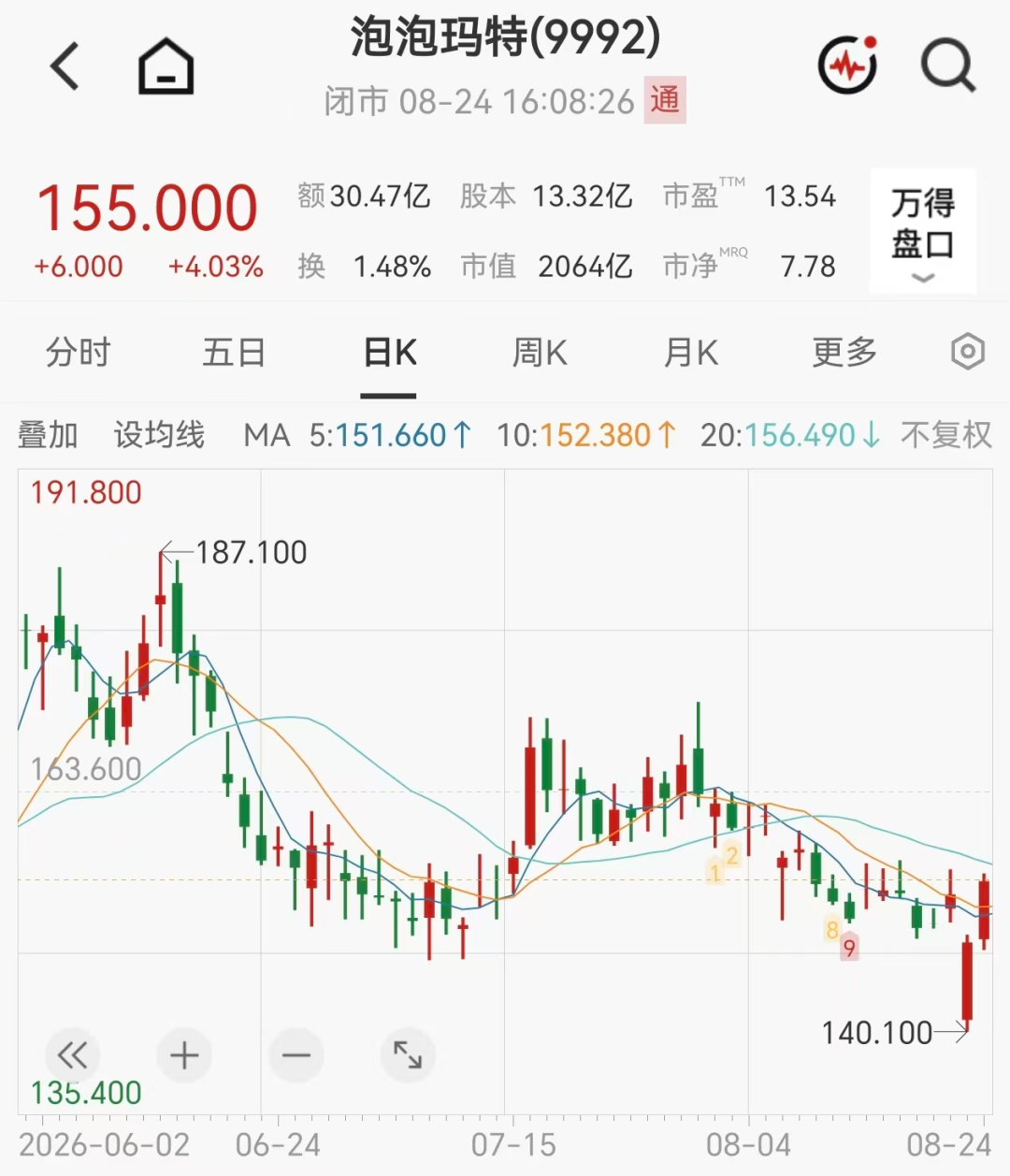
Pop Mart, the Chinese toy giant known for its blind boxes and viral IPs like LABUBU, recently released its 2026 half-year earnings. The numbers tell a story of a company in transition: revenue grew 23.8% to ¥17.17 billion, but net profit only rose 10.1%. The market's reaction was swift—shares plunged, wiping out over half the company's market cap from its peak, a drop equivalent to losing an entire Pop Mart. Yet, despite the gloom, major investor Duan Yongping remains bullish. What's really happening behind the scenes? Let's dive into the key takeaways, the strategic pivot, and what the future holds for this toy behemoth.
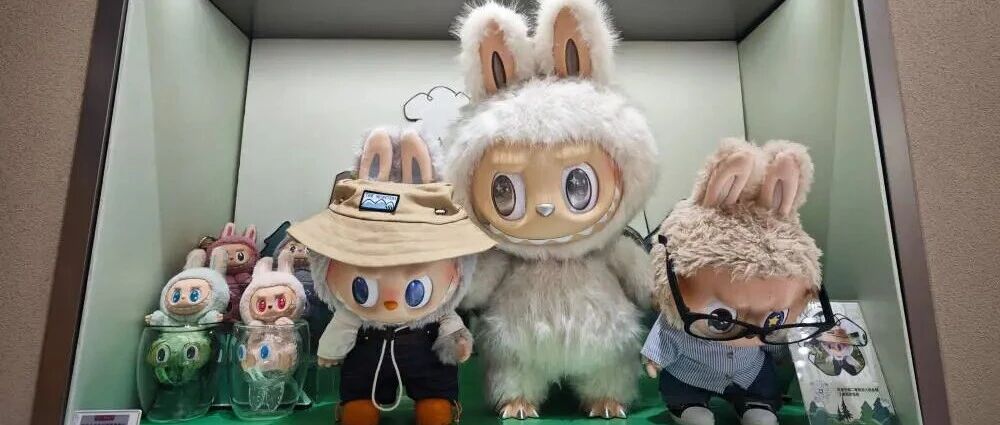
Key Takeaways from the H1 2026 Earnings
-
Revenue growth slows to 23.8%, but still double-digit. While the company maintained growth, the pace has significantly decelerated from the previous year's explosive 135.2% in China. This slowdown is partly intentional, as management focuses on operational efficiency over rapid expansion.
-
LABUBU's first-ever revenue decline. The THE MONSTERS family, home to LABUBU, saw revenue drop 7.5% to ¥4.45 billion, with its share of total revenue falling from 34.7% to 26.0%. This marks the first time the super IP has contracted since its rise to fame.
-
New IPs are stepping up. Xingxingren (Star Man) emerged as the star performer, with revenue surging 580.6% to ¥2.65 billion, becoming the second-largest IP. Other IPs like CRYBABY, DIMOO, and SKULLPANDA also posted strong growth, signaling a shift from a single-IP dependency to a diversified portfolio.
-
Overseas revenue dips 11.6%, mainly due to online channels. While offline stores expanded, online sales plummeted across regions, with Southeast Asia's Shopee dropping 62.1%. The company attributes this to fading external traffic and a shift toward more sustainable local operations.
-
Management lowers 2026 growth target to 20%. CEO Wang Ning admitted the initial 30% target is unlikely to be met, prioritizing organizational health and long-term stability over aggressive growth.
-
First-ever share buyback plan announced. To signal confidence, Pop Mart unveiled a ¥2-5 billion buyback over the next six months, a historic move for the company.
-
Molly, the 20-year-old IP, still generates nearly ¥1 billion in half-year revenue. Despite a 33.6% decline, its longevity proves the enduring value of well-cultivated IPs.
-
Membership base surpasses 100 million globally. With a 92.9% sales contribution from members and a 51.6% repurchase rate, customer loyalty remains a strong moat.
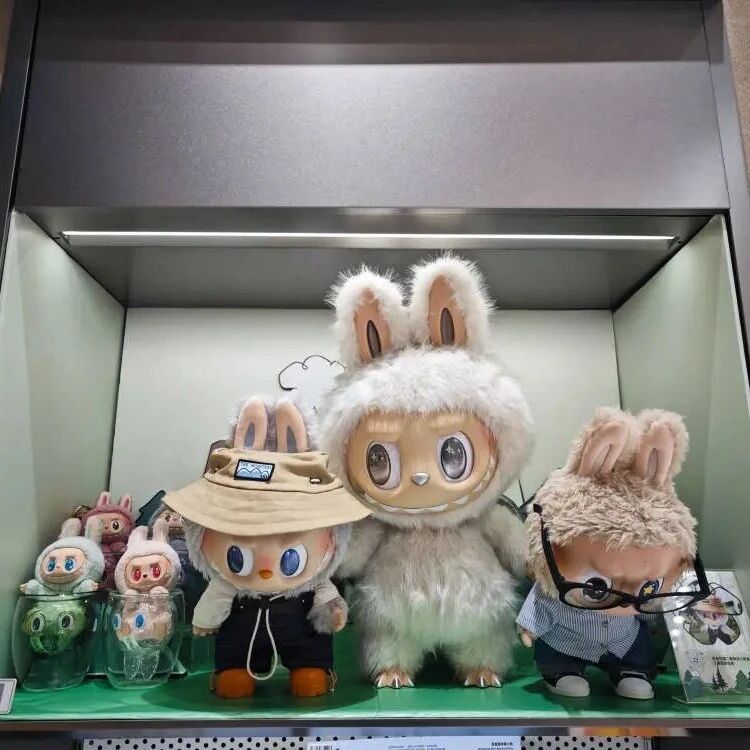
Deep Dive: From 'One Superstar' to 'Many Strong Players'
Pop Mart's current situation is a textbook case of managing post-hype growth. The company rode the LABUBU wave to unprecedented heights, but as with any viral phenomenon, the tide is receding. The market's panic is understandable—LABUBU's decline raises questions about sustainability. However, a closer look reveals a deliberate strategy to diversify and strengthen the IP ecosystem.
Wang Ning's 'operational adjustment year' is a strategic pivot from 'growth at all costs' to 'building a solid foundation.' The company is investing in organizational efficiency, supply chain optimization, and global localization. The emergence of Xingxingren is a testament to the effectiveness of Pop Mart's IP incubation system. This isn't luck; it's a structured process that identifies and nurtures talent, similar to Disney's approach.
The shift to a 'multi-strong' IP structure reduces risk and enhances long-term stability. With six IPs generating over ¥1 billion each, the reliance on a single character is diminishing. This is crucial for investor confidence, as it shows the company can create new hits. The buyback plan further underscores management's belief in the company's intrinsic value.
However, challenges remain. Global localization is still a work in progress, as evidenced by the online sales slump. The company's expansion into physical stores and experiences (like the city amusement park and bakery) is promising but unproven at scale. The road to becoming 'China's Disney' is long, but the foundations are being laid.
Frequently Asked Questions
Q: Is Pop Mart's growth story over? A: Not necessarily. While the hyper-growth phase is over, the company is transitioning to a more sustainable model. The diversification of IPs and focus on operational efficiency could lead to steadier, more predictable growth in the long run.
Q: Why did the market react so negatively despite positive earnings? A: The market was spooked by the slowdown in LABUBU's sales and the lowered guidance. Investors often prioritize short-term momentum over long-term strategy, leading to a sell-off when growth decelerates.
Q: What should investors watch for in the coming months? A: Key indicators include the performance of new IPs like Xingxingren, the success of global store expansions, and the scalability of new business ventures like the amusement park and bakery. The buyback execution will also be a signal of management's confidence.
Source: https://mp.weixin.qq.com/s/Of6BHKhZEcLVBet63RNYOw
Related posts

Volkswagen to Cut 100,000 Jobs: Inside the Biggest Automaker Restructuring
Volkswagen plans 100,000 job cuts, four German plant closures, and a halved model lineup by 2035 as profits collapse and China earnings shrink.

Alibaba Scrapped Its P-Level System: What It Means for Your Company
Alibaba dismantled its 19-year-old P-level hierarchy in 2023. Here's why high-level 'performers' drain profits, and how smaller firms can cut layers before it's too late.

China's 2026 Unicorn Rankings: AI Reshapes the Top 10
China ranks second globally with 381 unicorns. AI leads the 2026 list as ByteDance, Ant Group, and DeepSeek dominate. Explore the shifting landscape.

ByteDance Boosts AI Talent Incentives with Doubao Stock Hike
ByteDance raises Doubao stock price by 14.6% to retain AI talent, expands equity incentives, and integrates teams to accelerate AI adoption in the workplace.
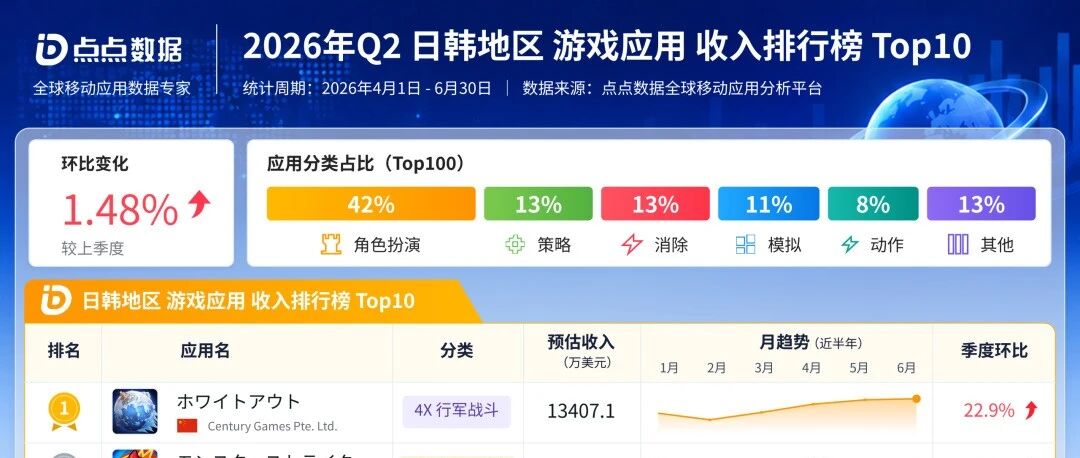
Chinese Mobile Games Dominate Japan & Korea Q2 2026 Revenue Charts
Diandian Interactive's Whiteout Survival and Kingshot top Japan/Korea Q2 2026 revenue rankings. Market shows steady growth with iOS users spending 1.2x more. Full analysis inside.

Global Mobile Gaming Revenue Dips 1% in August: Why Mid-Tier Games Are Losing
Sensor Tower's August report reveals a $66M monthly revenue drop in mobile gaming. Top titles grow while mid-tier suffers. Insights on market shifts, regional trends, and what it means for developers.

China Southern Airlines Incheon Airport Ground Staff Recruitment 2026: A Gateway for Bilingual Talent
China Southern Airlines is hiring ground staff at Incheon International Airport for 2026. Learn about the role, requirements, and why this is a strategic opportunity for Korean-Chinese bilinguals.

Korea Coast Guard 2026 Chinese Translation Exam: Key Dates & Rules
Korea Coast Guard's 2026 3rd recruitment Chinese translation written exam set for Sept 5. Learn schedule, scoring, ID rules, prohibited items, and results date.
Latest Articles
- Paramount Skydance Merger: A Historic Media Consolidation
- British Airways Expands Business Class to 106 Seats on A380: The Future of Luxury Travel
- Cheapest & Most Expensive US Flights in November 2026
- Key States Hold Clues to 2026 Midterm Election Outcomes
- World Bank Raises Economic Growth Forecast for East Asia and Pacific Region
- Controversial Live Animal Feeding at Chinese Zoo Sparks Ethical Debate