Kingsoft's Gaming Woes: JX3 Aging, Snowbreak's Fall, and Mechabreak's Miss
Kingsoft's 2026 H1 earnings reveal gaming revenue down 19% as WPS dominates. JX3 ages, Snowbreak collapses after censorship, and Mechabreak fails after 10 years. Only Goose Goose Duck shines—but it's not from Xishanju.
Source: en的幸福时光
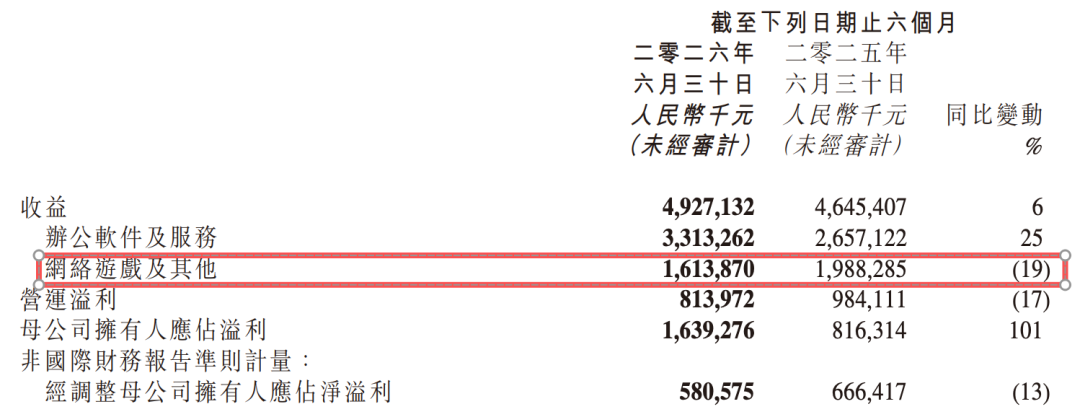
In the ever-evolving landscape of Chinese gaming, few stories are as telling as the recent struggles of Xishanju, the studio behind the legendary MMORPG JX3 (Jian Wang 3). Kingsoft's 2026 half-year report, released on August 19, paints a stark picture: while the company's overall revenue grew 6% to 4.927 billion yuan and net profit doubled to 1.639 billion yuan, the gaming division—the very heart of Xishanju—saw a 19% year-over-year decline in online game revenue, dropping to 1.614 billion yuan. This decline stands in sharp contrast to the broader Chinese gaming market, which grew 12.17% in the same period. For a studio that once defined the wuxia MMORPG genre and has been making games for 31 years, these numbers signal not just a rough patch, but a fundamental identity crisis. The company that gamers once knew as a "game company" is now, unmistakably, an office software giant that happens to make games. This article delves into the three pillars of Xishanju's current predicament—the aging JX3, the spectacular fall of Snowbreak: Containment Zone, and the decade-long disappointment of Mechabreak—while exploring what these failures mean for the studio's future and the industry at large.
Key Takeaways
-
Kingsoft's Gaming Revenue Drops 19% in H1 2026: Online game revenue fell to 1.614 billion yuan, while office software (WPS) surged 24.7% to 3.313 billion yuan, now accounting for 67% of total revenue. This shift underscores Kingsoft's transformation from a gaming company to an office software provider, with gaming now a secondary concern.
-
JX3, the 16-Year-Old Veteran, Is Showing Its Age: Despite ongoing updates like the "Dark Shadow Thousand Planes" expansion in April, JX3's revenue and popularity are naturally declining. While active users remain stable, the game's growth potential is exhausted. Kingsoft acknowledges the decline is due to "lifecycle changes and competitive pressures," but a 16-year-old MMORPG can only be revitalized so many times.
-
Snowbreak: Containment Zone's Collapse After Censorship: Once a breakout hit with over 1 billion yuan in annual revenue in 2024, Snowbreak faced a catastrophic controversy in February 2026 when a collaboration with China Post sparked public outrage. The game was taken offline for 66 days, and upon return, many skins and interactions were censored. Global mobile revenue plummeted to under $5,000 in July, and the project is effectively abandoned, with its lead producer leaving in June.
-
Mechabreak's 10-Year Development Ends in Failure: Initially conceived in 2014 and launched in July 2025, Mechabreak was Xishanju's ambitious attempt to break into the global hardcore mech PvP market. Despite hitting 317,000 concurrent players during testing, it now peaks at just 2,000-3,600 players. The game's core design—high-intensity 6v6 combat and a punishing economy—alienated casual players who just wanted to pilot mechs.
-
Goose Goose Duck: The Unexpected Savior (But Not from Xishanju): The party game, developed by Kingsoft's subsidiary Seasun Games (not Xishanju), became a massive hit, with 5 million new users on day one and monthly revenue exceeding 100 million yuan. It briefly entered the App Store top 5 after a collaboration with the TV drama "Empresses in the Palace." This success highlights that Kingsoft's gaming salvation came from outside Xishanju.
-
Kingsoft CEO's "Close, Stop, Merge, Spin" Strategy: In response to these challenges, CEO Zou Tao has signaled a strategic pivot: cut unprofitable projects, consolidate resources on JX3 and the JX series, and accept losses. This pragmatic approach reflects the harsh realities of the gaming industry, where sentiment takes a backseat to data.

In-Depth Analysis
The story of Xishanju's decline is more than a corporate earnings report; it's a microcosm of the challenges facing legacy game studios in a rapidly changing market. For decades, Xishanju was synonymous with Chinese wuxia gaming, and JX3 was its crowning achievement—a game that not only defined a genre but also built a loyal community that sustained it for over 16 years. However, the gaming industry is unforgiving, and the rise of mobile gaming, battle royale titles, and live-service models has fundamentally altered player expectations. Xishanju's reliance on a single flagship title, JX3, left it vulnerable when that title began to age. The studio's attempts to diversify—through Snowbreak and Mechabreak—failed for distinct but equally instructive reasons.
Snowbreak's collapse is a cautionary tale about the intersection of gaming and politics in China. The game's "ML" (Master Love) genre, which focuses on romantic relationships with characters, was already controversial for its suggestive content. The China Post collaboration was a misstep that triggered a nationalist backlash, leading to censorship and a loss of player trust. The rapid decline from a billion-yuan earner to near-zero revenue underscores how fragile success can be in a regulated market. For global observers, it highlights the risks of cultural and political misalignment in China's gaming sector.
Mechabreak's failure, on the other hand, is a classic case of product-market mismatch. The game was designed for hardcore competitive players, but the mech genre attracts a broader audience that primarily wants to experience the fantasy of piloting a giant robot, not engage in high-stress PvP. The game's steep learning curve and punishing economy alienated casual players, leading to a rapid exodus. This misalignment was compounded by a decade-long development cycle that likely inflated costs and reduced agility. The result is a cautionary tale about the importance of aligning game design with target audience expectations.
Looking ahead, Kingsoft's pivot toward office software is a rational business decision, but it raises questions about the future of its gaming division. With gaming now contributing less than a third of revenue, Kingsoft may further deprioritize game development, potentially leading to more cutbacks at Xishanju. The success of Goose Goose Duck, however, shows that Kingsoft still has the capacity to produce hits—just not through its traditional studio. This suggests a potential restructuring where innovative, smaller-scale projects are favored over ambitious, long-gestation titles. For Xishanju, the path forward may lie in leveraging its legacy IP, such as the JX series, in new formats, or in embracing a more agile development approach. The industry is watching closely to see if this 31-year-old studio can reinvent itself or if it will become a footnote in gaming history.
Frequently Asked Questions
Why did Snowbreak: Containment Zone fail so dramatically?
Snowbreak's downfall was triggered by a controversial collaboration with China Post in February 2026. The game, known for its suggestive character designs, faced public backlash and government censorship. It was taken offline for 66 days, and upon return, many features were modified, causing a massive player exodus. Revenue plummeted from millions of dollars per month to under $5,000, effectively ending the game's viability.
What went wrong with Mechabreak?
Mechabreak's core issue was a mismatch between its design and its audience. It targeted hardcore competitive PvP players, but the mech genre primarily attracts casual players who want to enjoy the fantasy of piloting mechs. The intense 6v6 combat, high difficulty, and a monetization system tied to hardcore gameplay alienated the broader audience, leading to rapid player loss after launch.
Is Kingsoft abandoning the gaming business?
Not entirely, but it's clearly deprioritizing it. Gaming now accounts for less than 33% of Kingsoft's revenue, and CEO Zou Tao has indicated a "close, stop, merge, spin" strategy to cut unprofitable projects. While JX3 will continue to receive support, new investments are likely to be conservative. The success of Goose Goose Duck, however, shows that Kingsoft still values gaming when it's profitable.
Source: https://mp.weixin.qq.com/s/Qaafz4rflKqFMVe431xgdQ
Related posts

Volkswagen to Cut 100,000 Jobs: Inside the Biggest Automaker Restructuring
Volkswagen plans 100,000 job cuts, four German plant closures, and a halved model lineup by 2035 as profits collapse and China earnings shrink.

Alibaba Scrapped Its P-Level System: What It Means for Your Company
Alibaba dismantled its 19-year-old P-level hierarchy in 2023. Here's why high-level 'performers' drain profits, and how smaller firms can cut layers before it's too late.

China's 2026 Unicorn Rankings: AI Reshapes the Top 10
China ranks second globally with 381 unicorns. AI leads the 2026 list as ByteDance, Ant Group, and DeepSeek dominate. Explore the shifting landscape.

ByteDance Boosts AI Talent Incentives with Doubao Stock Hike
ByteDance raises Doubao stock price by 14.6% to retain AI talent, expands equity incentives, and integrates teams to accelerate AI adoption in the workplace.
Chinese Mobile Games Dominate Japan & Korea Q2 2026 Revenue Charts
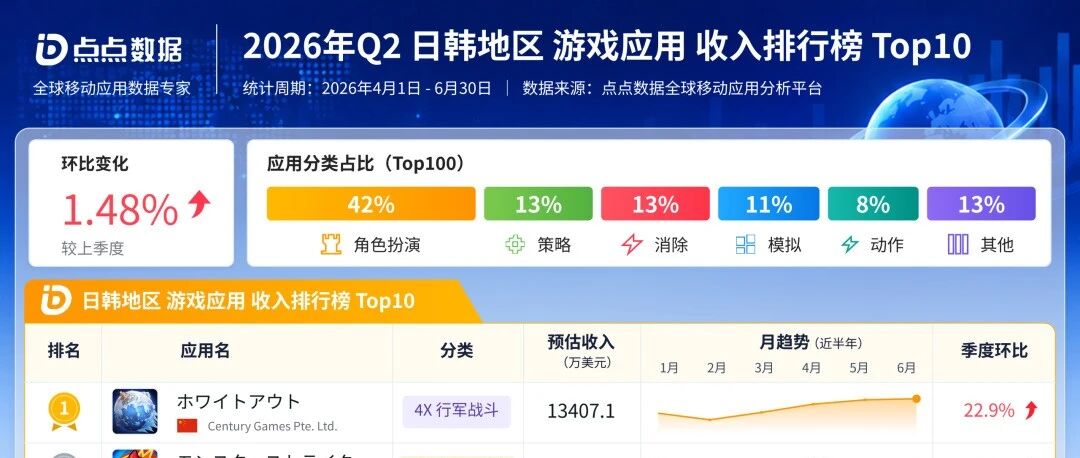
Diandian Interactive's Whiteout Survival and Kingshot top Japan/Korea Q2 2026 revenue rankings. Market shows steady growth with iOS users spending 1.2x more. Full analysis inside.

Global Mobile Gaming Revenue Dips 1% in August: Why Mid-Tier Games Are Losing
Sensor Tower's August report reveals a $66M monthly revenue drop in mobile gaming. Top titles grow while mid-tier suffers. Insights on market shifts, regional trends, and what it means for developers.

China Southern Airlines Incheon Airport Ground Staff Recruitment 2026: A Gateway for Bilingual Talent
China Southern Airlines is hiring ground staff at Incheon International Airport for 2026. Learn about the role, requirements, and why this is a strategic opportunity for Korean-Chinese bilinguals.

Korea Coast Guard 2026 Chinese Translation Exam: Key Dates & Rules
Korea Coast Guard's 2026 3rd recruitment Chinese translation written exam set for Sept 5. Learn schedule, scoring, ID rules, prohibited items, and results date.
Latest Articles
- Delta Air Lines Cuts 2026 Forecast Due to Fuel Surge, Despite Strong Demand
- Botswana President's State Visit to China: Strengthening Strategic Partnership
- US Budget Deficit Reaches $2 Trillion in FY 2026: A Warning Sign for Global Markets
- South Korea Successfully Tests First Indigenous Hypersonic Glide Vehicle
- EU Parliament Report on China: Diplomatic Response & Future Outlook
- Starbucks Acquisition of Chipotle: A Strategic Fit or Financial Overreach?