South Korea Successfully Tests First Indigenous Hypersonic Glide Vehicle
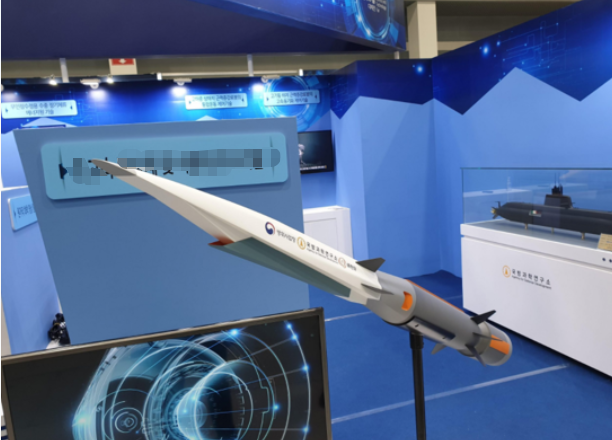
President Lee Jae-myung watches the successful launch of the Hycore hypersonic missile, marking a major shift in regional defense capabilities.
Source: thepaper.cn
The successful test launch of a domestically developed hypersonic glide vehicle (HGV) marks a significant milestone in South Korea's defense strategy. The event, attended by President Lee Jae-myung, underscores the nation's commitment to enhancing its strategic autonomy and military capabilities in an increasingly complex security landscape. This achievement not only validates advanced engineering efforts but also alters the regional balance of power by introducing a weapon system with unpredictable flight trajectories and high speeds.
Key Highlights of the Test
- Successful First Flight: The South Korean Defense Agency for Technology and Quality (DARQ) confirmed that the HGV was successfully launched and completed its flight mission as planned. The test aimed to verify critical technologies under extreme conditions.
- Validation of Extreme Conditions: The primary objective was to test the performance of materials capable of withstanding ultra-high temperatures generated during hypersonic flight, alongside the vehicle's guidance and control systems.
- Unpredictable Trajectory: The HGV operates by accelerating to the upper atmosphere and then separating from its booster. It then glides at lower altitudes, making its flight path extremely difficult to predict, a key advantage for evading missile defense systems.
- Strategic Asset: This capability is now considered a core strategic asset for the South Korean military, enhancing deterrence and strategic depth.
- Presidential Oversight: President Lee Jae-myung personally witnessed the test, followed by a visit to inspect the military's most powerful missile, the '玄武-5' (Pukguksong-5).
- Project Hycore: The technology is part of the Hycore project, a joint development effort between the government and Hanwha Aerospace. The design resembles the U.S. X-51A Waverider, utilizing a 'waverider' aerodynamic shape for efficiency.
- Three Main Types of Hypersonic Vehicles: The technology fits into the broader category of hypersonic systems, which include boost-glide vehicles, scramjets, and spaceplanes. South Korea is focusing on the boost-glide approach for this application.
- Limited Public Details: While the test was a success, the government has not released specific details or photos of the vehicle, maintaining a degree of secrecy around the new capability.
In-Depth Analysis
The successful test of South Korea's first indigenous hypersonic glide vehicle represents a pivotal shift in the security dynamics of Northeast Asia. Historically, the region has been dominated by the nuclear capabilities of North Korea and the advanced missile defense systems of the United States and its allies. However, the advent of hypersonic weapons—capable of traveling at speeds exceeding Mach 5 and maneuvering throughout their flight—has fundamentally changed the calculus of deterrence.
The Hycore project, developed in collaboration with Hanwha Aerospace, is not merely a technological showcase but a direct response to the evolving threat landscape. By developing a system that is difficult to intercept, South Korea is seeking to achieve 'strategic equality' with its adversaries. The use of a 'waverider' design, similar to the U.S. X-51A, suggests that South Korea is leveraging decades of global hypersonic research to accelerate its own development timeline.
Furthermore, the inclusion of materials capable of withstanding ultra-high temperatures highlights the immense engineering challenges involved. The flight test was designed to push these materials to their limits, proving that the vehicle can survive the thermal stress of hypersonic flight. This capability is crucial for the vehicle's ability to glide at low altitudes, where it remains most effective against radar systems.
Looking ahead, the deployment of this system will likely trigger a new arms race in the region. Neighboring countries may accelerate their own hypersonic development programs in response. For South Korea, this success bolsters its position in trilateral security cooperation with the U.S. and Japan, providing a more robust deterrent against regional threats. However, it also necessitates careful diplomatic management to prevent escalation and maintain stability in a volatile theater.
Frequently Asked Questions
What is a Hypersonic Glide Vehicle (HGV)?
An HGV is a type of hypersonic missile that travels at speeds greater than Mach 5. Unlike ballistic missiles, which follow a predictable arc, an HGV separates from its booster and glides on a low-altitude, maneuverable trajectory, making it extremely difficult for existing missile defense systems to track and intercept.
What is the Hycore missile?
Hycore is the name of South Korea's indigenous hypersonic missile project. It is a boost-glide vehicle developed jointly by the South Korean government and Hanwha Aerospace. The design is based on the 'waverider' concept, which uses shock waves to generate lift and increase aerodynamic efficiency.
Why is this test significant for South Korea?
This test marks the first successful flight of a domestically developed hypersonic system. It demonstrates South Korea's advanced technological capabilities and enhances its strategic deterrence, reducing its reliance on foreign military systems and addressing regional security concerns.
Source: https://www.thepaper.cn/newsDetail_forward_34216486
Related posts
US Budget Deficit Reaches $2 Trillion in FY 2026: A Warning Sign for Global Markets
The US fiscal deficit for FY 2026 has surged to $2 trillion, driven by massive spending increases in interest, defense, and social welfare. Here is a detailed analysis of the economic implications.
EU Parliament Report on China: Diplomatic Response & Future Outlook
China's Foreign Ministry responds to the European Parliament's recent report, condemning ideological bias and interference in domestic affairs.

Starbucks Acquisition of Chipotle: A Strategic Fit or Financial Overreach?
Starbucks reportedly explores buying Chipotle. Analyze the potential merger, synergies, and risks for both restaurant giants.
Japan Requests China Show 'Respect' to Prime Minister, Sparks Diplomatic Row
Japan demands China show proper respect to Prime Minister Sanae Takaichi after Chinese diplomats omitted her title in a press conference, escalating diplomatic tensions between the two Asian powers.

Skydance & Warner Bros. Merger: Building the Next Gen Media Giant
Skydance CEO David Ellison explains how combining Paramount and Warner Bros. creates a dominant global entertainment powerhouse.
PepsiCo Slashes Earnings Forecast as North American Turnaround Faces Delays
PepsiCo reports stronger international growth but lowers full-year earnings outlook due to underperformance in its North American market, where turnaround efforts are taking longer than anticipated.
German Intelligence Chief Arrested in Major Espionage Scandal
Former BND chief August Hanning arrested for allegedly leaking 2,000 classified documents to foreign intelligence agency, exposing critical security vulnerabilities.
US Company Accuses Chinese Entities of AI Attacks on Korean Banks
US cybersecurity firm CrowdStrike alleges Chinese individuals and organizations used AI tools to attack South Korean financial institutions, prompting diplomatic response.
Latest Articles
- Israel Closes UK Consulate in Jerusalem, Escalating Diplomatic Tensions
- Death Penalty Failure in Tennessee: Legal and Ethical Crisis After Krista Parker Survives Execution
- Levi Strauss Q3 2026: Profit Guidance Hikes Amid Tariff Refunds and DTC Challenges
- Lululemon's Strategic Product Shift: Athleta CEO Maggie Gauger Joins as Chief Product Officer
- Constellation Brands Strategic Pivot: Adapting to Beer Demand Shifts & Diversifying into RTD Beverages
- Used Car Prices Decline as Fuel Efficiency Demand Surges