Southwest Airlines Cuts 2026 Profit Forecast Due to Rising Fuel Costs
Southwest Airlines lowers 2026 profit outlook to $2.60-$2.85/share due to higher fuel prices, despite strong demand.
Source: CNBC
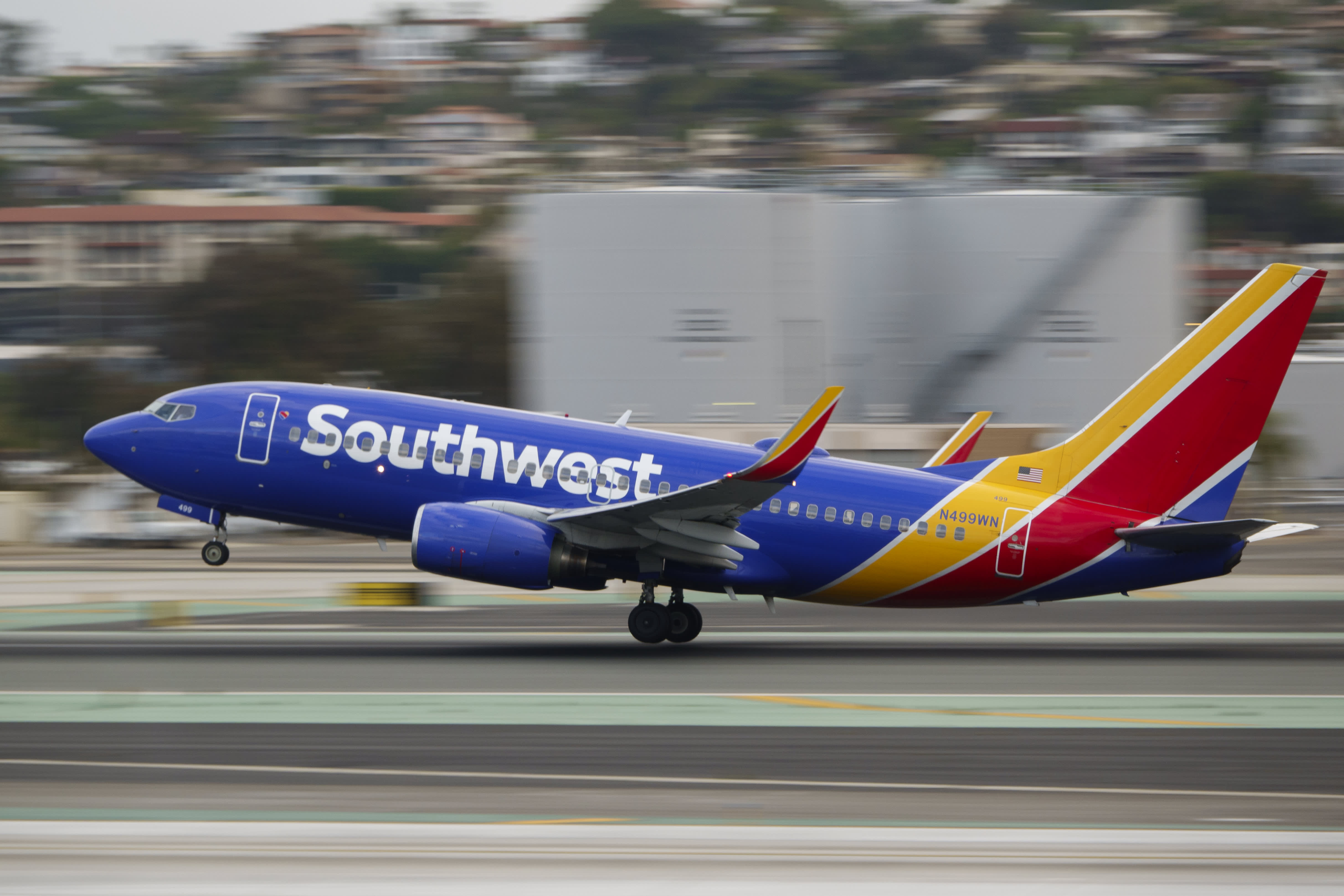
In a challenging environment for the aviation sector, Southwest Airlines has become the third major U.S. carrier to revise its 2026 profit forecast downward. The carrier, known for its unique business model, now anticipates adjusted earnings between $2.60 and $2.85 per share for the full year, a significant reduction from its previous projection of $3.25 to $4.25. This adjustment comes as the airline grapples with the dual pressures of soaring fuel expenses and evolving competitive dynamics.
Key Takeaways
- Reduced Profitability Outlook: Southwest Airlines has lowered its 2026 adjusted earnings guidance to a range of $2.60 to $2.85 per share, citing higher fuel costs as the primary driver.
- Strong Demand Persistence: Despite the forecast cut, CEO Bob Jordan reports that consumer demand remains robust, with travelers continuing to book despite rising fares.
- Revenue Growth: The airline is projecting a significant increase in unit revenue, potentially rising by as much as 21% year-over-year, driven by higher average passenger fares.
- Business Model Overhaul: To adapt to market pressures, Southwest has been remaking its long-standing business model, including scrapping free checked bags and implementing new seat assignment fees.
- Third-Quarter Performance: In Q3, Southwest reported a net income of $270 million, up from $54 million the previous year, with revenue climbing over 21% to $8.42 billion.
In-Depth Analysis
The recent downward revision in Southwest Airlines' profit forecast highlights the broader struggles facing the U.S. airline industry in 2026. While fuel prices have been a persistent headwind, they are now exacerbated by a broader economic tightening that is pressuring consumer discretionary spending. The airline's decision to lower its guidance to $2.60-$2.85 per share reflects a more conservative view of the macroeconomic environment compared to its July projection.
However, the airline's management maintains a strong belief in the durability of its earnings power. CEO Bob Jordan’s comments emphasize that demand is resilient, attributing this partly to the company’s ability to "lap" last year’s bag fee and other commercial initiatives. This suggests that while the industry faces headwinds, Southwest’s brand loyalty and operational efficiency continue to provide a buffer.
A critical factor in this narrative is Southwest’s aggressive restructuring. The airline is moving away from its legacy policies—such as two free checked bags and open seating—which were once its competitive moat. By adopting more traditional revenue-generating strategies like seat selection fees and checked bag charges, Southwest is aligning more closely with legacy carriers like Delta Air Lines and United Airlines. This shift is necessary to boost unit revenue, which is crucial for maintaining margins in a high-cost environment.
The reported 27% increase in average passenger fares in the third quarter underscores the success of this strategy. While higher fares may dampen demand volume, they are essential for offsetting the volatility of fuel costs. The fact that Southwest managed to grow revenue by over 21% in the third quarter, despite the economic headwinds, indicates that its pricing power is intact. This performance is particularly noteworthy given that both Delta and United also reported earnings misses for the same period, suggesting that Southwest’s restructuring efforts are yielding tangible results.
Looking ahead, the airline’s capacity growth projection of up to 4% year-over-year suggests a measured approach to expansion. This cautious optimism aligns with the broader industry trend of prioritizing profitability over growth in the short term. As Southwest continues to navigate this transition, its ability to balance cost management with customer satisfaction will be the key determinant of its long-term success.
Frequently Asked Questions
Q: Why did Southwest Airlines cut its profit forecast?
A: The primary reason for the forecast cut is the significant increase in fuel prices, which has raised operating costs. Additionally, the broader economic environment has led to a more conservative outlook for the year.
Q: Is Southwest Airlines seeing strong demand despite higher fares?
A: Yes, according to CEO Bob Jordan, demand remains strong. The airline believes that its earnings power is durable even with higher fuel costs, as travelers continue to book despite the price increases.
Q: What changes has Southwest made to its business model?
A: Over the past few years, Southwest has moved away from its traditional policies, such as two free checked bags and open seating. The airline has now implemented fees for seat assignments and added a bag fee, similar to its major competitors.
Source: https://www.cnbc.com/2026/10/21/southwest-airlines-luv-3q-2026-earnings.html
Related posts

eBay 9% Workforce Cut: Strategic Shifts & AI Investment in 2026
eBay cuts 1,000 jobs (9%) to streamline operations amid AI spending and Depop acquisition. Analyzing the second round of layoffs and strategic pivot.
The AI Stock Boom: Goldman Sachs, JPMorgan, and Morgan Stanley's Dominance
Discover how Goldman Sachs, JPMorgan, and Morgan Stanley are leading the AI stock boom, leveraging relaxed capital rules and hedge fund lending. Explore the strategies and market trends shaping this lucrative industry.

The 30,000 km Journey of Beijing Swifts: Understanding Transnational Bird Conservation
Discover how Beijing swifts' epic migration across continents highlights the critical need for international cooperation in wildlife conservation efforts.

Japanese Telecom Giant Admits CEO's Actions Caused Massive Mongolia Grassland Fire
KDDI admits its subsidiary Mobicon's CEO triggered a 530,000-hectare fire in Mongolia's Numrug Nature Reserve during a 4G trial, sparking international outrage.

Shanghai Cooperation Organization: Strengthening Global Governance and Future Collaboration
Explore Premier Li Qiang's key address at the SCO Dushanbe Summit, focusing on multilateralism, economic cooperation, and the strategic vision for the next decade.

Nvidia CEO Jensen Huang: Europe Must Act Fast or Risk Falling Behind in AI Race
Nvidia CEO Jensen Huang urges Europe to accelerate AI adoption, criticizing Germany's hesitation and questioning the UK's excessive caution in the global tech race.
Boeing 737 Max 10 FAA Approval: A Major Win After Years of Delays
Boeing secures FAA certification for the 737 Max 10 after significant delays, facing new competition from China and Europe. Discover the implications for airlines and the future of aviation.

General Motors Beats Q3 2026 Earnings Estimates, Announces $20B Buyback
GM beats Wall Street expectations with Q3 2026 earnings, raises free cash flow guidance, and announces a massive $20 billion stock buyback amid inflationary headwinds.
Latest Articles
- Netflix Q3 2026 Earnings: Ad Tier Growth vs. Stock Slump Analysis
- Japanese Politicians' Yasukuni Shrine Visits Spark International Concern
- Patriot Missile Holdback: Ukraine Faces Its Darkest Hour Since War Began
- Korea's Shrinking Military Pool: The Debate Over Gender-Equal Conscription
- JPMorgan Chase's $5 Billion Defense Strategy: Robot Factories & Hypersonic Missiles
- Netflix cuts 1,000 jobs as streaming growth slows and competition intensifies