Estate Planning Pitfalls That Lead to Family Legal Battles
New study reveals how common estate planning choices can trigger inheritance disputes among heirs, with insights on prevention strategies.
Source: CNBC
In an era where wealth transfer is becoming increasingly complex, a groundbreaking study has uncovered the specific estate planning choices most likely to ignite family conflicts that end up in court. As families navigate the delicate process of passing down assets, understanding these potential pitfalls has never been more crucial for preserving relationships and minimizing legal battles.
Key Findings
-
Single Trustee Arrangement: The study identified that selecting one child to control a family trust while siblings or other relatives benefit is a significant source of conflict. This arrangement combines ordinary sibling rivalry with genuine power imbalances, often leading to perceptions of parental favoritism.
-
High Rate of Trustee Misconduct: In 74% of contested cases, trustees were accused of misconduct, particularly breaching their duty of care or loyalty. This suggests that beneficiaries frequently suspect mismanagement or outright theft of trust assets.
-
Emotional Drivers Over Financial: Many inheritance battles appear driven more by emotion than money. The study found that when parties refused to settle due to emotional reasons, challengers typically lost their cases, with success rates dropping significantly when cases went to formal trial.
-
Lengthy Legal Proceedings: The average contested trust case lasted 481 days, including settlements. This prolonged litigation can deplete trust assets, as illustrated by the Mar siblings who spent their entire trust's cash assets and over five years in litigation.
-
Mediation Success: Cases that went to mediation had an 85% settlement rate compared to 47% without it, highlighting the effectiveness of alternative dispute resolution in family inheritance conflicts.

In-Depth Analysis
The study, analyzing 640 trust disputes from 2014-2020, provides unprecedented insight into the dynamics of inheritance litigation. The findings challenge the conventional wisdom that trusts automatically prevent family conflicts, revealing instead that poor planning choices can actually increase litigation risks. The research underscores that estate planning isn't just about legal structures but about managing complex family dynamics and emotional responses to wealth transfer.
From a market perspective, this study arrives at a critical time as wealth transfer accelerates globally. With baby boomers transferring an estimated $68 trillion to younger generations in the coming decades, the potential for family disputes is enormous. The legal industry is likely to see increased demand for specialized estate litigation services, while financial institutions may develop more sophisticated conflict-resolution protocols for trust administration.
Looking forward, we can expect to see greater emphasis on preventive estate planning strategies that address potential conflicts proactively rather than relying solely on legal provisions like no-contest clauses, whose effectiveness varies by jurisdiction. The study's authors recommend that parents engage in open conversations about estate planning choices while still alive and consider professional fiduciaries to reduce the potential for disputes.
Frequently Asked Questions
What percentage of trust disputes end up in court? The study found that approximately 75% of petitions resulted in settlement, though the exact percentage is unclear as about a third of cases were dropped without a ruling on the merits. The authors believe many of these were settled informally.
Are no-contest clauses effective in preventing inheritance battles? According to the study, parents cannot rely solely on provisions like no-contest clauses to prevent court battles. Their effectiveness depends on state law, and the authors recommend planning for conflict rather than assuming drafting can eliminate it.
How can families reduce the risk of inheritance disputes? The study suggests several strategies: having proactive conversations about estate planning choices while alive, considering independent or professional fiduciaries, and utilizing mediation services when conflicts arise. Open communication and professional guidance appear to be more effective than legal restrictions alone.
Source: https://www.cnbc.com/2026/09/25/study-estate-planning-heirs-legal-battles.html
Related posts

Eli Lilly's Dominance vs. Novo Nordisk: The Battle for the GLP-1 Future
As Eli Lilly expands its lead in the obesity drug market, Novo Nordisk faces a critical challenge to diversify its portfolio and maintain relevance beyond its blockbuster semaglutide franchise.

Airlines Waive Change Fees as Nor'easter Threatens East Coast Travel
Major US airlines waive flight-change fees ahead of weekend nor'easter bringing high winds and potential flooding to Northeast.
South China Sea Tensions Rise as Philippines Provokes China During National Holiday
China Coast Guard responds to Philippine provocation at Second Thomas Shoal during Chinese holiday, escalating regional tensions in the disputed South China Sea.
New Era of US-China Relations: Analyzing Xi Jinping's Historic 2026 Visit
An in-depth analysis of President Xi Jinping's speech at the 2026 White House State Dinner, exploring the historical context of US-China ties and the future of global diplomacy.

MGM Resorts Shares Plunge 11% After Barry Diller's People Inc. Withdraws Takeover Offer
Barry Diller's People Inc. has rescinded its $48.30 per share takeover proposal for MGM Resorts, causing the casino giant's stock to drop significantly. The decision comes amid concerns about the deal's complexity and potential debt burden.

Hyundai Poised to Surpass Ford in Q3 Sales as Detroit Automakers Lag in Hybrid Market
South Korean automaker Hyundai expected to outsell Ford for the first time ever in Q3, highlighting Detroit's struggle with hybrid vehicles amid rising gas prices.
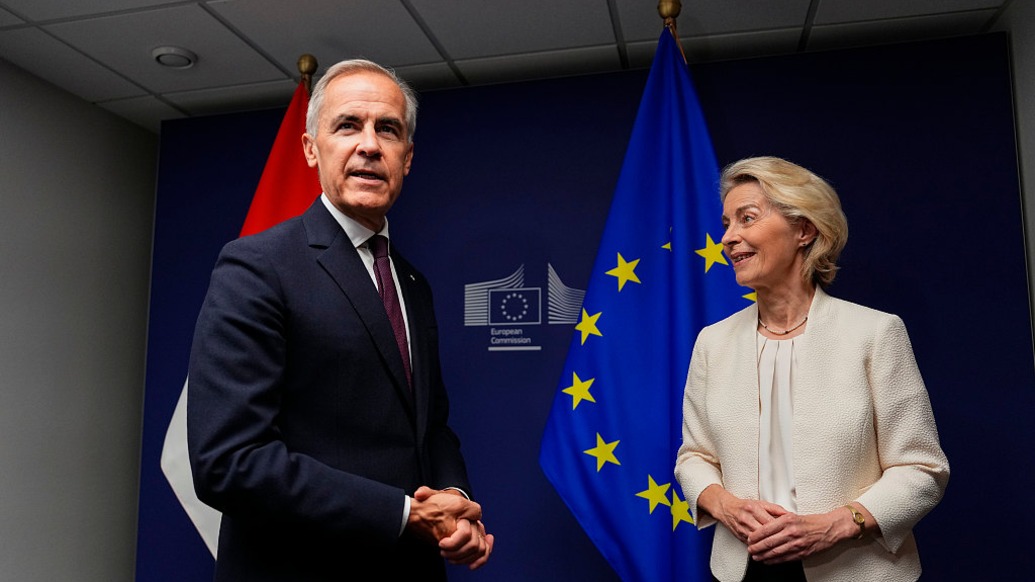
Canada and EU Reducing US 'Indispensability' Within Transatlantic Framework
Analysis of how Canada and the EU are strategically diversifying partnerships while maintaining transatlantic ties amid shifting geopolitical dynamics.

Navigating US-China Relations: Building a Constructive Strategic Stability
As 2026 marks a pivotal year for US-China relations, explore how the two nations are forging a new path of constructive strategic stability amid global challenges.
Latest Articles
- Historic Visit of Xi Jinping to the United States: A Milestone in Sino-American Diplomacy
- UK Returns 12 Cultural Artifacts to China in Historic Repatriation
- 2026 Global Governance Forum to convene in Xiongan New Area
- Venezuela's Interim President Meets Trump in New York Amid Major Energy Deal
- UK Regional Leaders Meet Amid Constitutional Crisis: Separation Dreams vs Reality
- Strategic Reset: Xi Jinping's Historic Return to the United States in 2026