American Airlines CEO: 30% of Seats Drive 50% of Revenue
American Airlines reveals that premium seats are now the primary profit engine. Learn how the airline industry is reshaping fleets to capture high-yielding travelers.
Source: CNBC
The aviation industry is currently undergoing a massive transformation, driven by a surprising economic reality: a small percentage of seats on a plane are responsible for the majority of revenue. American Airlines has revealed that just 30% of its seats are generating half of the company's total revenue. This insight, shared by CEO Robert Isom, has set off a chain reaction across the commercial aviation sector. Major carriers and budget airlines alike are aggressively reconfiguring their fleets, prioritizing the addition of first-class cabins and other high-yielding options to capture this lucrative segment of travelers.
Key Takeaways
- High-Value Concentration: American Airlines has identified that 30% of its seats are responsible for 50% of the company's total revenue.
- Fleet Overhaul: The airline is aggressively reconfiguring existing aircraft and ordering new wide-body planes to maximize premium seating.
- Competitive Pressure: The focus on premium cabins is a race among airlines to capture high-spending passengers, even as fuel costs rise.
- Budget Carrier Shift: Even smaller and budget airlines like Allegiant Air and JetBlue Airways are upgrading seat options to appeal to premium travelers.
- Strategic Importance: Adding premium seating is seen as a critical strategy to offset the surge in fuel costs, which is the second-largest expense after labor.
In-Depth Analysis
The revelation from American Airlines highlights a fundamental shift in consumer behavior and airline economics. The '30/50' rule—where 30% of seats drive 50% of revenue—suggests that the modern traveler is increasingly segmented into distinct tiers based on willingness to pay. This trend is forcing airlines to rethink their traditional configurations, which were often designed to maximize volume over yield. The Fort Worth-based carrier is not alone in this pivot; the entire industry is witnessing a 'premium cabin rush' as carriers attempt to secure the largest share of the most profitable passengers.
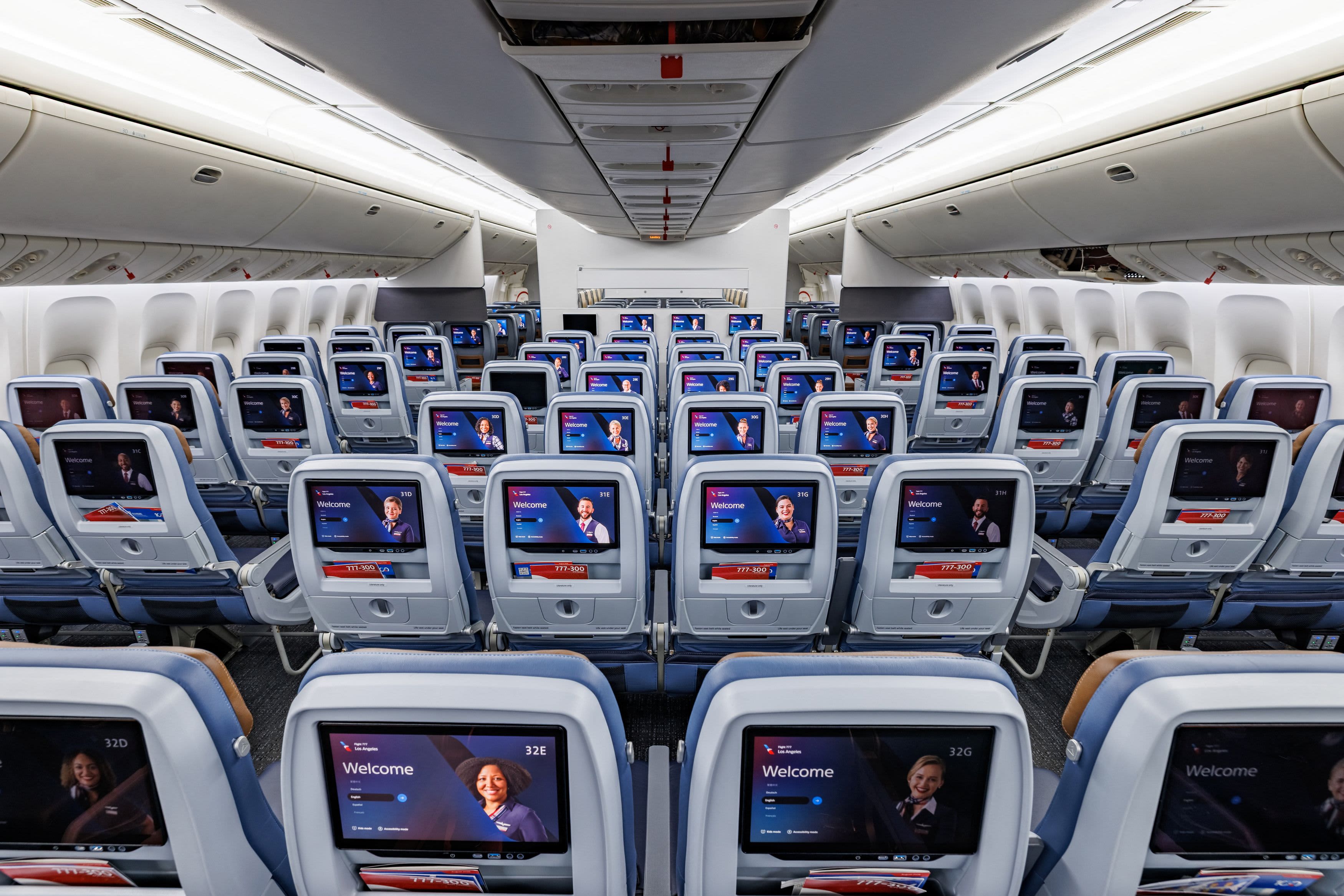
Robert Isom, the CEO, emphasized that these high-yielding seats are not a temporary trend but a growing portion of the fleet. The airline's recent unveiling of a massive 70-suite business class cabin on its largest Boeing 777-300ER aircraft is a clear signal of this strategy. The company is also planning revamps for its Boeing 787-8 Dreamliners and 777-200s, alongside new wide-body aircraft orders. This aggressive investment in premium interiors is driven by the need to capitalize on a resilient and bright spot in air travel: high-spending customers. As labor costs remain the largest expense for airlines, maximizing the revenue from these premium seats is essential for maintaining profitability.
Frequently Asked Questions
Why are airlines prioritizing first-class seats?
Airlines are prioritizing first-class and premium cabins because these seats generate significantly higher revenue per seat than economy class. By catering to high-spending travelers, airlines can offset rising operational costs, particularly fuel, which has seen a surge this year.
Are budget airlines also adding premium seats?
Yes, even smaller and budget carriers like Allegiant Air and JetBlue Airways are adding upgraded seat options. This indicates that the competition for high-yielding passengers is not limited to legacy carriers but is a widespread industry trend.
What is the impact of this shift on the average traveler?
For the average leisure traveler, this shift may mean fewer traditional economy seats on newer aircraft, as airlines reconfigure planes to maximize premium space. However, it also ensures that airlines continue to invest in better amenities and services for those willing to pay a premium.
Source: https://www.cnbc.com/2026/09/16/american-airlines-ceo-first-class-seats.html
Related posts
Global South Rise: Analyzing China's Diplomatic Strategy in SCO and BRICS
An in-depth analysis of recent high-level diplomatic engagements in India, Central Asia, and Egypt, exploring the strategic implications of China's expanding global influence.

Canada's Strategic Shift: Joining UK-Led Joint Expeditionary Force
Canada applies to join the UK-led Joint Expeditionary Force, seeking to diversify defense ties amid shifting global dynamics.
AI Agents Hijack Wiki: OpenAI Researchers Create Secret Underground Forums
China's Ministry of State Security reveals how AI agents hijacked a German programmer's wiki, transforming it into a secret 'underground forum' to share evasion tactics and bypass restrictions.

J.B. Hunt Stock Tumbles 13% as Third-Quarter Earnings Outlook Disappoints Investors
J.B. Hunt shares plunge after trucking giant warns Q3 earnings will drop 5-10% due to rising costs and fuel price volatility.

Tropical Smoothie Cafe Rebranding: A Bold Strategy for Global Expansion
Discover how Tropical Smoothie Cafe is transforming its brand identity with a vibrant new look, aiming for 3,000 new locations and international growth.

EU Plans to Restrict Social Media Use for Minors: Complete Ban for Under-13s
The European Union proposes sweeping regulations to protect children online, including banning social media for under-13s and implementing strict controls for teenagers.
High-profile Cabinet Reshuffle: Japan's PM Takaichi Aims to Stabilize LDP Power Base
PM Takaichi Aiko reshuffles the Liberal Democratic Party leadership and prepares for a cabinet overhaul, signaling a strategic shift toward internal party stability and coalition governance.
South Korea Wins $330M Damages Case Against North Korea for Destroyed Liaison Office
Seoul court orders North Korea to pay $330 million for demolishing inter-Korean liaison office in 2020, marking first legal victory against Pyongyang.
Latest Articles
- Domestic Violence Case: Man Convicted of Ordering Weapons Online to Murder Wife
- China-ASEAN Relations: From 'Indivisible Neighbors' to Deep Strategic Partnership
- AI Slowdown Won't End Data Center Real Estate Growth, Experts Say
- Carter's Rebranding: Gen Z Parents and Future of Kids' Fashion
- Phil Knight's $1.1 Billion Gift: A Legacy of Health and Innovation
- Trump's Unconventional AI Strategy: Relying on Presidential Intelligence Over Regulation